When Drying Gloves Changes the Morning Mood
Storing damp gloves in closed drawers traps moisture and odor; wall-mounted hooks promote faster drying and reduce hidden upkeep.
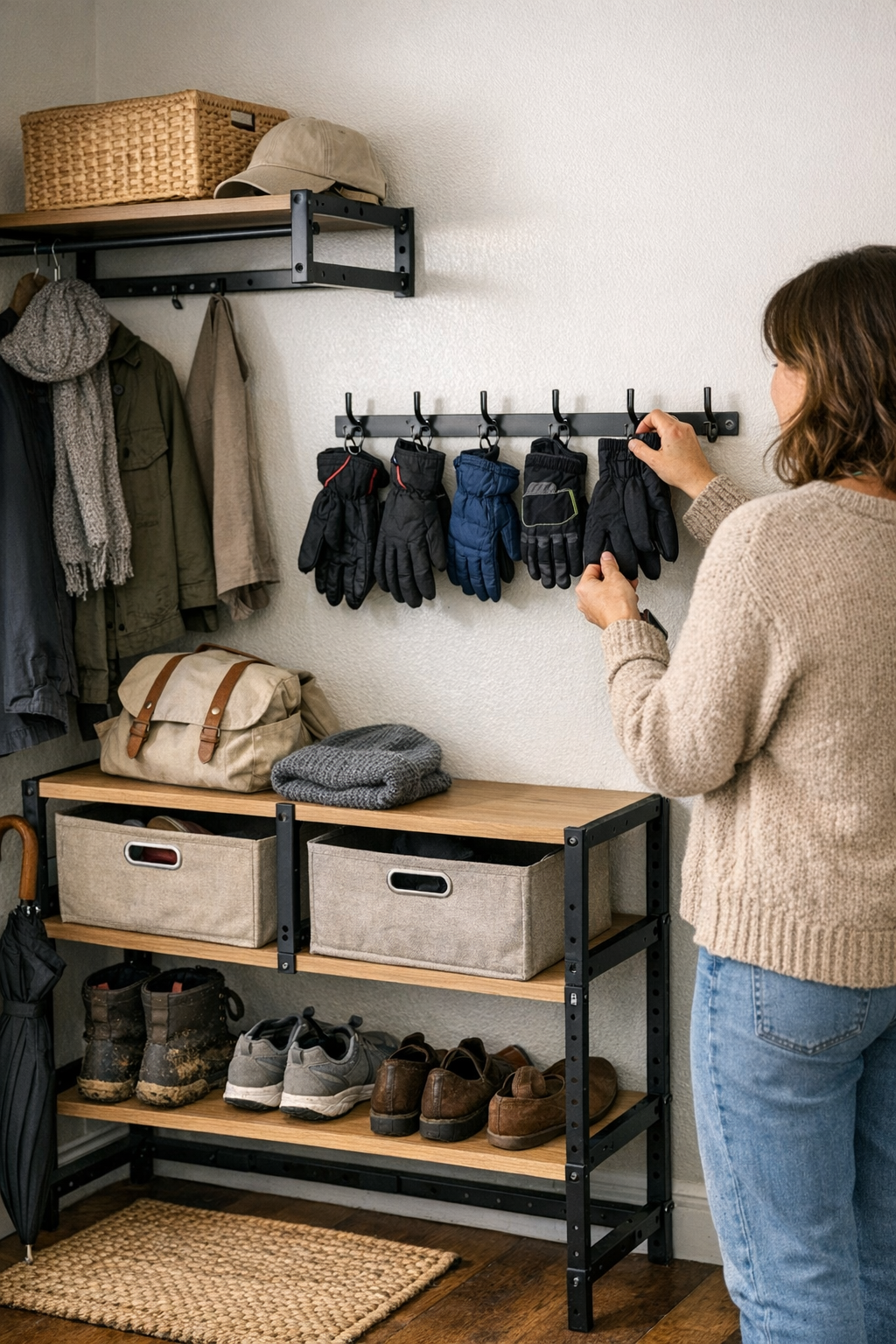
Never Quite Dry: Noticing the Small Friction Points
It took longer than expected to recognize the pattern. At first glance, the entryway always appeared organized—drawers lined up, gloves tucked away, everything seemed in place. But on wet, rushed mornings, a minor frustration crept in: the quiet discomfort of slipping on gloves that never felt completely dry. The transition zone at home, designed to smooth the flow between indoors and outdoors, was creating its own subtle obstacle just beneath the surface.
You don’t catch it right away. But you feel it—each time the routine repeats—the lingering dampness sitting at the threshold.
The Drawers Hide, But Don’t Reset
Closed storage, especially the kind meant to tuck things away, gives a sense of control to a space that’s often anything but controlled. The illusion works at first. Shoes line up in rows, scarves coil neatly on shelves, gloves disappear behind closed doors. But items that return day after day with coldness or moisture clinging to them—like gloves after rain or snow—turn drawer storage into a quiet trap for moisture and, eventually, a slow-building musty odor.
The point comes when the desire for everything to look tidy runs headlong into the reality that some things need to breathe. The winter we started tossing damp gloves into a closed utility cabinet, it only took a few days for musty undertones to develop. It wasn’t overwhelming, but it was an asterisk on each morning routine—a subtle mark that something was cycling through unaddressed beneath the neat surface.
Air and Visibility Change the Routine
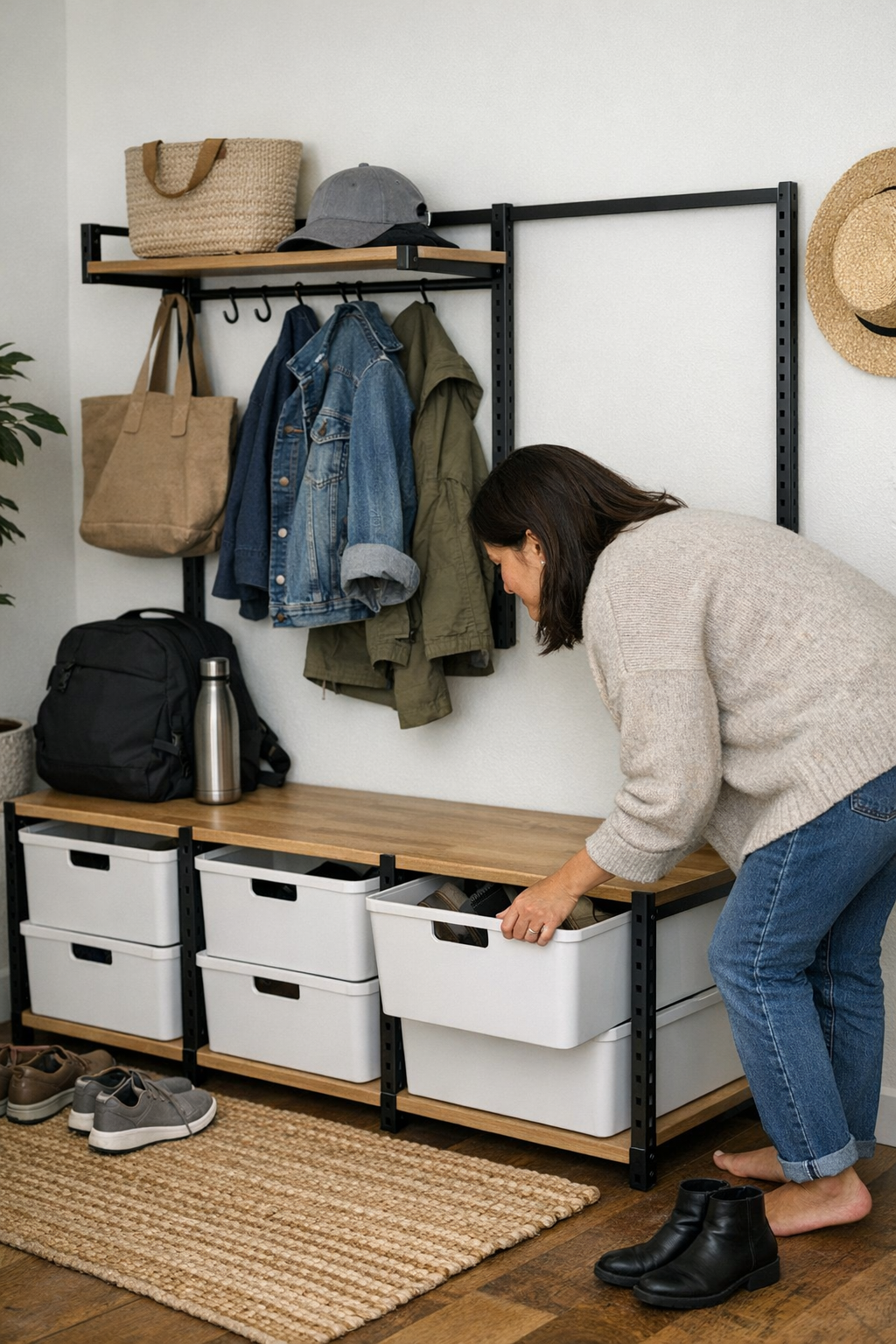
One morning, almost on a whim, I added a line of simple wall-mounted hooks below the bag shelf. The hardware wasn’t fancy—just plain metal spaced evenly above the row of boots. But the difference was noticeable in how the space functioned. Gloves stopped disappearing into hidden depths and started drying properly. The faint lingering smell slowly faded, and no one needed to do the small ritual of flipping gloves inside out before heading out.
It’s a subtle change—but one that adds up. Being able to see what’s dry and what still needs a night lets the entryway keep pace with the unpredictability of real life, especially when arrivals and departures never quite fit neat patterns. The space looks a bit busier, but it actually contains less clutter and chaos.
It took watching how quickly the fumbling habit faded to realize how much hidden upkeep can pile up—all in the pursuit of tidiness. When the transition zone resets more easily after each use, the rest of the daily routine follows more smoothly.
For anyone looking to help their entry space recover between comings and goings, there are more quiet thoughts on storage and function here: http://www.betweenry.myshopify.com