When Dust Hides in Plain Sight at Home Workshops
Ignoring small changes in vacuum dust seal flexibility causes leaks, dust spread, and finish issues; inspect and replace seals early.
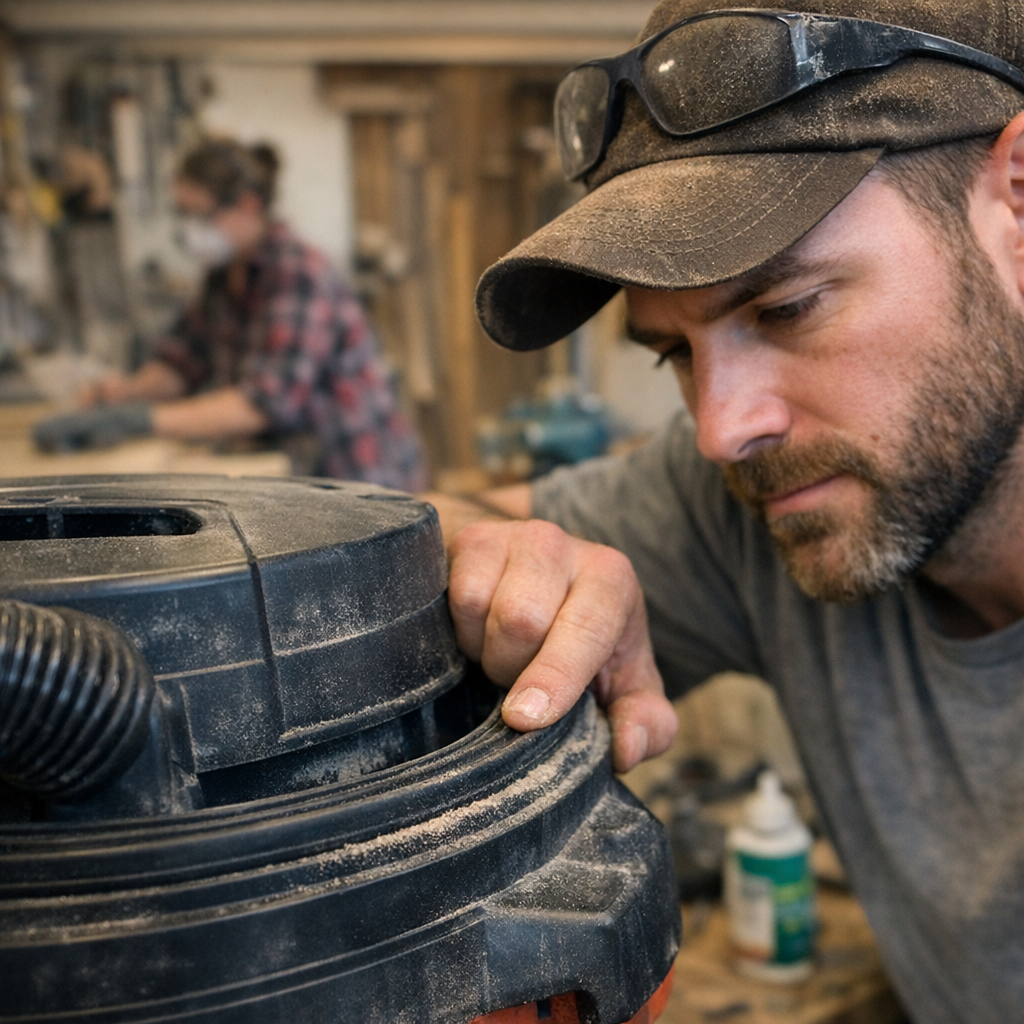
Most days, I don’t think much about the seals on my shop vacuum. They’re just there—quiet, utilitarian, never really calling attention. It’s only when a faint film begins to settle on newly sanded wood, or when the crisp edges of a finished bench pick up a silty outline, that the invisible work of a dust seal suddenly matters. Failure sneaks in quietly.
It doesn’t announce itself in dramatic breakdowns. No loud alarms; just a subtle shift in the air, and a little extra grit beneath your fingertips.
The Mess That Sneaks Up On You
A dust seal often looks fine after a couple of runs. Fresh from the box, it springs back when pressed and holds its line at the vacuum’s edge. But over time, with each cleaning cycle, something changes—a barely perceptible slackness, maybe, but nothing obvious.
You don’t notice it immediately.
But you feel it.
Instead, the first real sign is the dust you swore you’d already cleaned. At the end of the workday, new smudges appear on tool handles and along shop floor seams. A fine grey border around equipment. In those moments, you realize you’ve spent extra hours chasing dirt that simply reappears, trailing quietly from somewhere unseen.
What the Eye Doesn’t See
The trouble with vacuum seals is, their failure doesn’t put on a show. The rubber may still look unbroken—a single, tidy line all the way around. But a closer look after heavy use might reveal something different: dust collecting at the same point every time, a gritty patch that keeps coming back. Sometimes the seal is flatter, giving less resistance when seating the canister.
Sometimes, you only feel it when the housing sticks just a bit, or needs a firmer push to close.
The difference is subtle but grows with every pass. While one machine keeps its filters clean and the surrounding air almost clear, another—with a worn seal—seems to work twice as hard and achieves half as much, leaving behind a ghost of what it was supposed to catch.
The Shift You Can’t Ignore
It was only after swapping out an old seal—one that had slowly compressed to half its original thickness—that I noticed how easily dust containment returned. No more residue along the bench edges or spontaneous dusty streaks after a morning’s sanding. Dust that once escaped through nearly invisible seams started flowing straight to the barrel.
It strikes me now how easy it is to accept slow decline as normal. The seal wears, the mess grows, and little by little, extra work becomes part of the routine. Sometimes, all it takes is feeling for lost spring or pressing for that early resistance—small reminders that aging rubber tells its own story, even before cracks appear. When the dust starts settling faster than before, the seal is quietly asking for attention.
Some days, I check the seams more often. A gentle press here, a glance for faint lines there. Catching these signals keeps the invisible work exactly where it should be: unnoticed, and no longer unfinished.
These realizations first came together during a long afternoon spent restoring an old shop bench.



