When Entryway Benches Reflect Everyday Family Flow
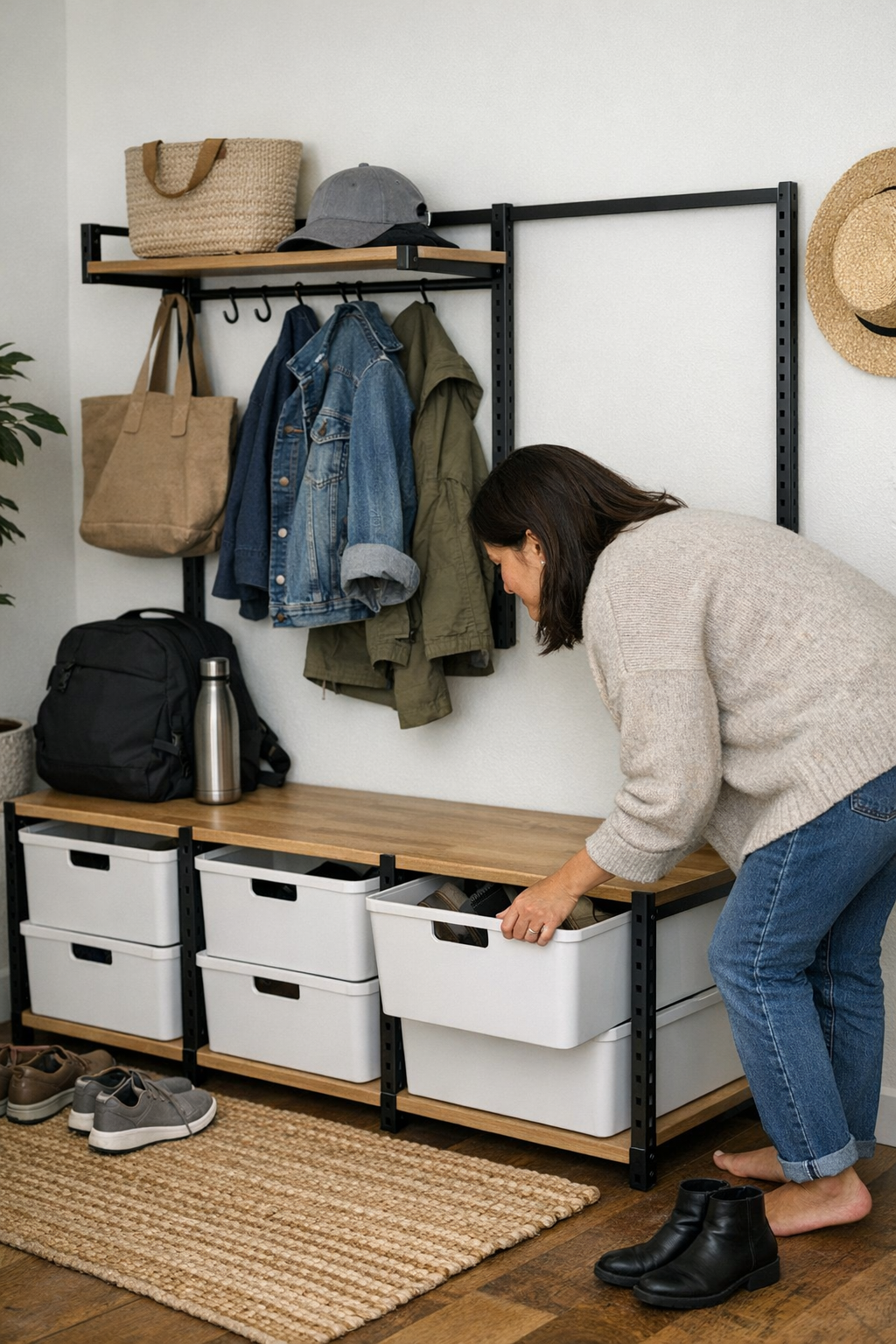
A storage bench keeps bags off the floor only when its structure fits real entryway traffic, preventing clutter and preserving floor space.
There’s a hopeful pause the first time you drop your bag inside a new entryway storage bench. For a moment, the floor is clear, everything looks settled, and the space feels orderly. But then, life’s edges start creeping back—a shoe kicked near the lid, a jacket folded on top, yesterday’s mail wedged behind. You don’t notice it at first. Slowly, you’re stepping around things again, the space filling in as if order was only a brief illusion.
I kept watching that small pile beside the bench—one that wasn’t supposed to be there anymore. It turns out, most storage benches only work if they fit the natural shuffle of how we come and go. If the lid is always blocked, or the cubbies become a catchall, then bags return to the same old spots on the floor, sometimes even faster than before. The appearance of calm rarely lasts beyond the first run of a week’s routines.
How Clutter Quietly Returns
At first, both closed benches and open cubby styles look the same—every bag hidden, the entry open. But this only lasts in stillness. As the days pass, patterns emerge: a closed-lid bench, no matter how solid, starts to attract piles on top. It feels ordered, but the next morning you’re shifting a shoe or a stack of paper just to reach one bag. So bags end up beside it instead.
This undoing happens slowly. An open cubby looks untidy faster if things go astray—shoes shift sideways, or someone shoves a loose item in the nearest gap. But with cubbies, at least there’s less temptation to stack things out of sight. Everything is exposed, giving a gentle visual cue to keep categories separate. That was the part I kept coming back to.
The Difference a Defined Slot Makes
When a bench has clear, individual cubbies—one slot for each bag—the cycle resets more cleanly. Dropping your bag matches the way you’d leave it on the floor, only this time with a quiet boundary. Over several busy mornings, the habit settles in: bags go back, nothing piles on top, and the floor stays clear, even during peak comings and goings.
You feel it, not just see it. Retrieval is a single, easy motion, and the next person can reach their own bag without a shuffle. The process resists the slow drift toward chaos. Each item sits where it belongs, not just out of sight.
Placement, Not Perfection
It surprised me how much placement mattered. If the bench ended up behind a door or tucked into a crowded corner, bags would skip the slot and land back on the floor. A small adjustment—aligning the bench with natural traffic paths and making sure cubbies weren't blocked—changed the pattern more than any storage hack or mental resolve ever did.
You start to notice which routines actually reset the space, and which ones demand too much discipline on busy days. The storage bench—unassuming as it is—only makes a difference if it catches the genuine movement of your life, not just what you want the space to look like.
There’s a small relief when it finally works, when you can pass through each morning without a pause or an apology for the mess. Not perfect, just easy enough to stay clear another week.
I first realized how much inside storage can bend—or break—around real living after a stretch of crowded weeks; if you want to see what that world looks like, you can step through it quietly here: http://www.gridry.myshopify.com