When Entryway Clutter Hides More Than You Realize
A maintained inventory list at entry points prevents duplicate purchases and hidden clutter by tracking seasonal gear as it rotates.
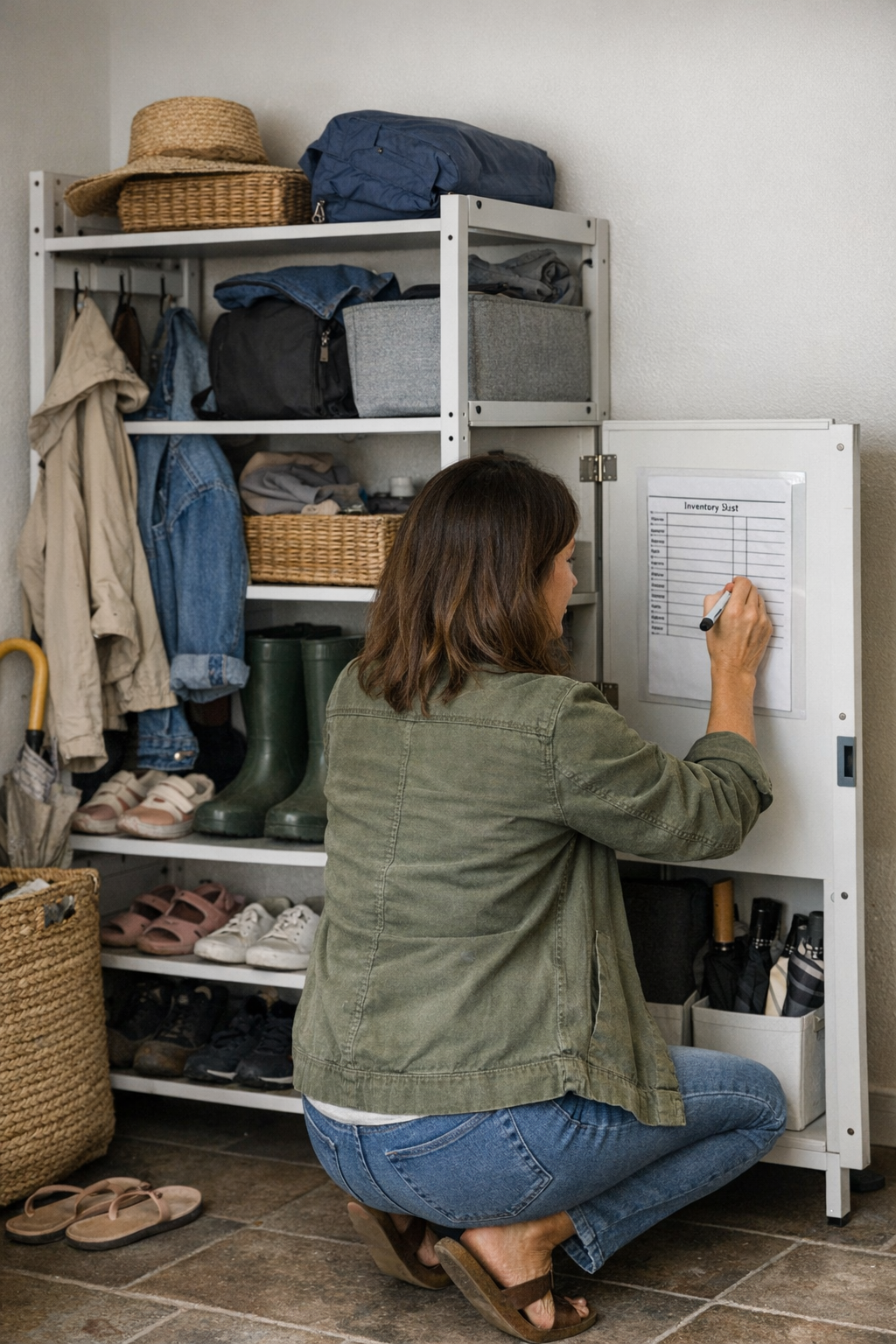
There’s a certain comfort in thinking the entryway holds itself together, even when it doesn’t. I notice it most in late afternoon: shoes nudging farther from the bench, bags resting half-zipped, and gloves perched in pairs that don’t quite match. The clutter creeps in quietly—the slow accumulation of stuff with every return trip. Before long, you’re searching for something you know should be there—an old pair of rain boots or the right hat—and starting to wonder if you accidentally bought duplicates. This subtle buildup can be hard to spot at first, until there’s a real cost—not just in money, but in the time lost searching and sorting each season.
The Quiet Trouble That Grows Unseen
Most days, the entryway is just background noise. But over time, the difference between tidy surfaces and true order becomes obvious. I remember thinking our utility cabinet was “organized enough” until the second spring swap, when we uncovered three forgotten umbrellas and mittens still tagged from last year.
You don’t notice the clutter immediately.
But you feel it. The slight hesitation while crossing the threshold, that nagging sense something isn’t where it should be. It’s a small thing, but it adds up until you’re standing there, shoes half-on, wondering which pile swallowed what.
How a Simple List Changed the Pattern
What surprised me wasn’t the mess itself—I expected some level of chaos. It was how a simple written inventory, taped just inside the cabinet door, changed the daily routine. Every return and arrival got marked down, erased, or added. At first, the list felt a bit rigid, but over time, it made gaps and excess almost impossible to miss.
Instead of another slow reset, everything got noticed in real time. This process naturally limited what lingered in the shoe row: one item in, one item out. That was the part I kept coming back to. With the list, the bench didn’t devolve into a hidden cache for repeat buys or outgrown gear. It became a living checkpoint, always pulsing with the rhythm of daily life.
A Perspective That Quietly Settles In
Eventually, the invisible weight of duplicate gear and hidden pairs faded. The visible reminder of what belonged in the space—written, visible, updated often—was grounding, not clutter. It shifted the purpose of storage from hiding things to actually keeping track, which eased the edge-of-doorway pressure more than I would have guessed.
It’s the simplest routines, tagged right where you cross over, that shape how the space feels and works long after the initial setup is done.
For more on transition-space setups and how these patterns keep evolving, I sometimes find ideas here.



