When Entryway Hooks Start to Sag and What It Feels Like
Entryway storage anchored only to drywall weakens under real use, causing tilt and clutter; stud anchoring and grounded storage maintain order and ease resets.
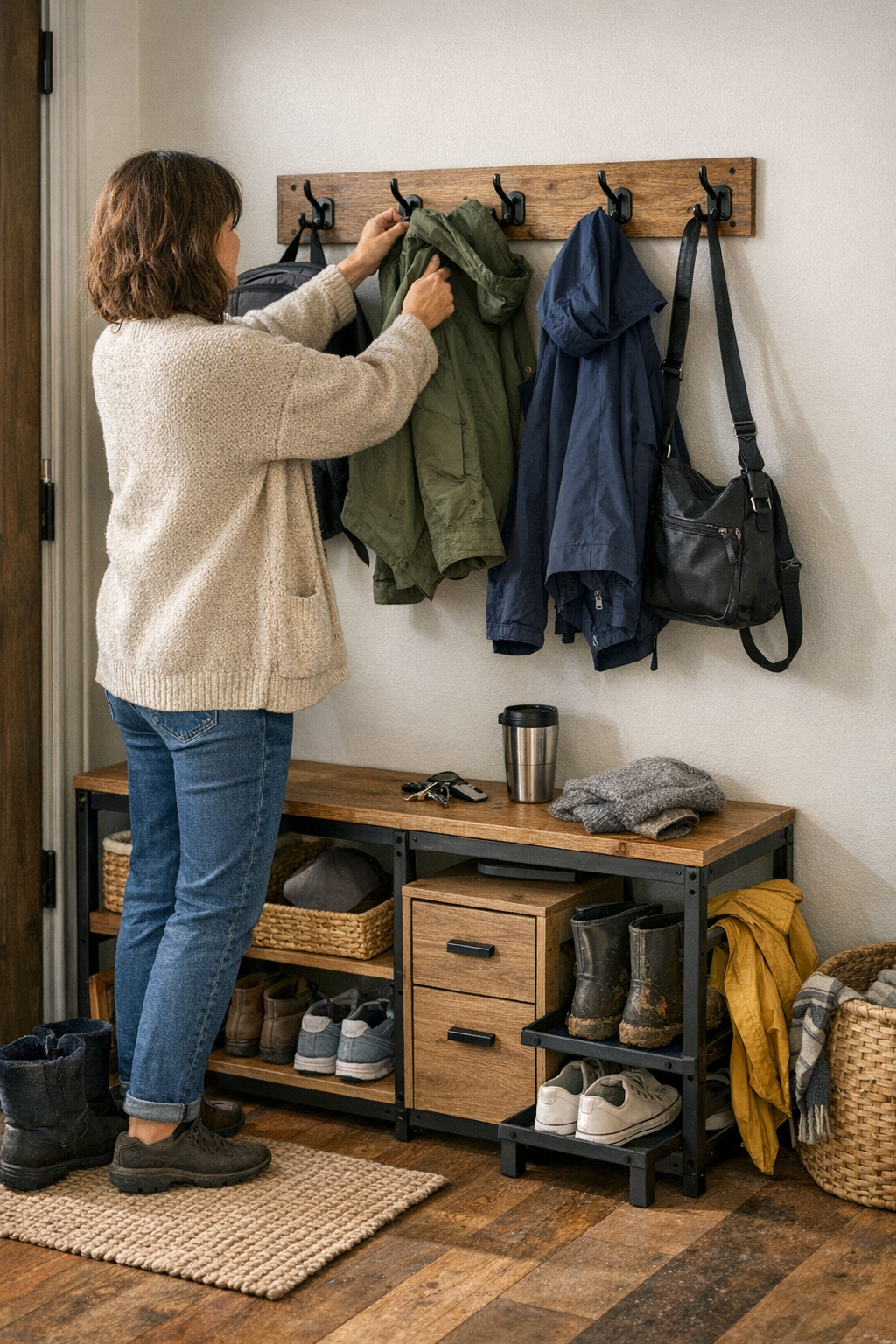
It doesn’t announce itself at first. After installing neat wall hooks and slim shelves, everything feels newly under control—the sense that there’s finally a practical buffer between outside and inside. But after days of real use, the transition space develops its own quiet choreography. Shoes multiply in rows, bags slide from hooks to bench, wet jackets migrate, and the supposed order starts to tilt with each drop. Suddenly, the tidy promise is tested—not by chaos, but by the slow accumulation of daily life pressing on drywall-mounted storage’s limits.
Routine Pressure Builds in Ways You Don’t Expect
You don’t notice it immediately. The hooks hold at first, reliable enough to hang a coat or two, maybe a backpack. But as days fill with errands, school bags, grocery drops, and rain gear, those small anchors begin to protest—subtly at first. The tilt arrives slowly, one or two hooks leaning downward, screws loosening just enough for a wobble. One morning, a heavier bag tips the balance, and everything shifts slightly off-plumb. That slow shift was what I kept noticing—the way transition zones build pressure not in a single moment, but over dozens of arrivals and departures.
Design That Lasts Has Its Own Quiet Logic
It became clear the entry didn’t fail from lack of effort, but from a mismatch between vision and volume. Wall-only hooks, especially those installed directly in drywall, give a neat first impression. But each season brought changes—a snowfall’s worth of boots, backpacks heavier than they seemed, wet parkas doubling the weight. Suddenly, maintaining order wasn’t about neat lines, but about each anchor absorbing real demands. Adding a bench that bore the shoe and bag weight, and anchoring heavy-duty hooks into studs instead of drywall, the space began to hold up—no more nervous resets, just a routine you could trust.
The Difference Is Subtle, But You Feel It
There’s an odd relief walking through an entry where nothing sags, where bench and hook share load evenly instead of retreating. Small things stand out now: shoe rows stay put through the week, backpacks land softly in their spots without clatter. Surprisingly, just letting storage touch the ground made the routine smoother. Occasionally, the desire for a perfect, minimal line lingers, but I find more comfort in a system that absorbs use without unpredictable collapse. The transition space is never static, but these grounded choices make daily flow less of a test.
For more on these small changes and the everyday rhythm of transition spaces, I sometimes find myself here: http://www.betweenry.myshopify.com



