When Entryway Light Shapes the Feel of Home
Entryway lighting and cable support must work together to provide reliable, calm visibility without shadows, glare, or exposed wires.
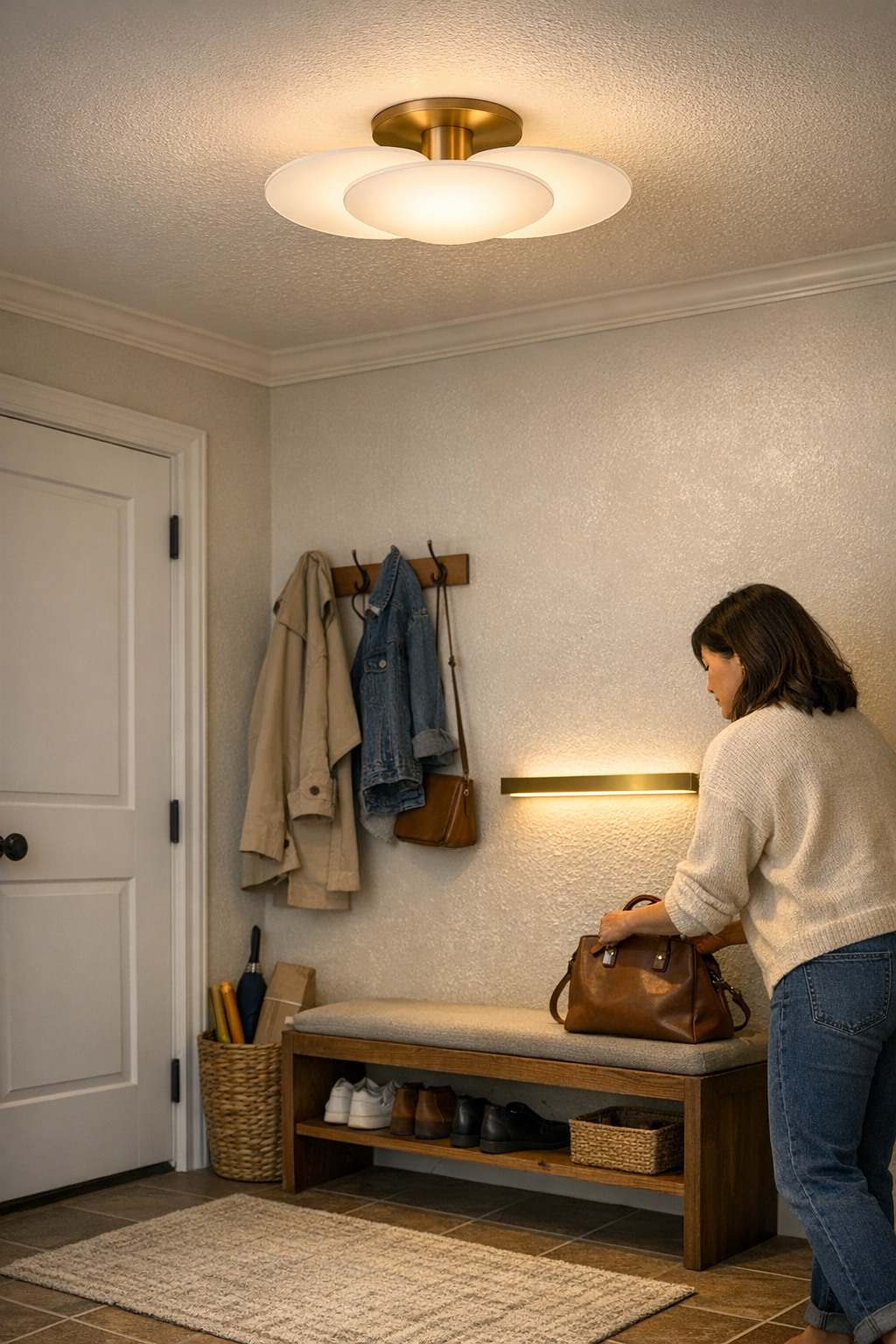
When the Lights Look Right but Life Says Otherwise
It took me longer than I’d admit to realize how a small thing—like the wrong lighting—could trip up a daily rhythm. The entryway seemed handled: a ceiling fixture centered, wires tucked away, no visible mess. But the feeling of coming home never quite settled. Every evening, a cold patch hovered by the shoe bench, and mornings brought a jittery search for a bag hidden in half-shadow. The light looked “done,” but moving through the space felt off—as if something unspoken waited at the edges.
You don’t notice it immediately.
But you feel it.
That was the part I kept coming back to.
Too Clean to Be Convenient
There’s an easy satisfaction in seeing a single bright dome overhead—until you live with it long enough. For a while, I ignored the reach for the light switch wedged behind a hanging jacket, or how dust lines sharpened near the door while corners stayed lost. I started noticing patterns: cables creeping where I didn’t want them, a plug-in strip light’s cord drifting into a walking path, glaring reflections at eye level by the time I bent to pull on a boot.
Sometimes, these little disruptions add up faster than a loose shoe. An entryway can look complete, but every pass reveals minor snags—a cable that never sits flush, a bracket mount catching bags, a bench you can’t quite see unless daylight pours in just right.
Where the Edges Stay in Shadow
I think I accepted for too long that some parts would always stay dim. Task lights and wall sconces seemed like overkill until I saw a guest sidestep a barely visible mat on a wet afternoon. The “coverage” was there in theory. In practice, usable light thinned out exactly where routine tangled: by the hooks, the corner with the package, the spot a pet leash likes to live.
A desk lamp in another room reminded me what helped—wide, low-glare illumination that let cables blend in rather than trip you up. Exposed cable runs in the entryway, even tidy ones, caught the eye and foot alike. You don’t want to design for inconvenience, but if the mount or cable hides at just the right height and stays out of the way, everything quietly aligns. Neatness isn’t the same as ease, and I had to live with both to know the difference.
Finding What Actually Feels Ready
It was only after trying a couple more setups—a flush-mount LED panel, a slim wall light installed along a paintable cable channel—that the space started to match how I wanted it to feel. Shadows near the bench disappeared. Shoes left out didn’t vanish into darkness. Cable lines hugged edges, disappearing into the trim. There was a sense of preparedness, even when mornings ran late or the door opened onto a mess of umbrellas.
I keep circling back to this: the right lighting setup stabilizes quietly, in the background. Not every edge needs to glow, but movement becomes easier when no light, bracket, or cable demands your attention. The best changes were those I barely noticed but always felt.
Sometimes it’s these small corrections—mounting a bracket a touch higher, masking a cable—that make an ordinary entrance feel ready, not just presentable.
If you want to see some quiet ways this can unfold, here’s where I spent an afternoon browsing: http://www.lightsupport.myshopify.com



