When Entryway Storage Interrupts the Flow of Home Life
A shallow depth entryway cabinet must match the door’s swing arc to prevent blocked swings, clutter, and slow routines.
There’s a moment, just before leaving the house, when the small interruptions in storage reveal themselves. You might not notice when a swinging door bumps a cabinet or slightly drags over its edge the first few times. But soon, the little delays at the entry begin to affect your movements—keys shifting in hand, shoes nudged aside, the pause as one person waits for space to pass. At first, choosing the right storage for this spot feels like a simple measurement exercise. After living with it, though, it becomes more about rhythm, and how a few centimeters’ difference can mean the difference between smooth flow and accidental obstacle.
The Subtle Creep of Crowding
Crowding doesn’t announce itself; it arrives quietly. Shoes accumulate near the cabinet’s front, mail drifts across shelves or cracks—places never designed to hold them.
You don’t notice right away. Only later, when someone tries to leave and the cabinet edge catches the door, does the tension become hard to ignore. Each time, it demands a small, awkward adjustment: a twist of the body, a sideways step, a shuffle of items. At a glance, the cabinet looks organized, but friction builds beneath the surface.
This was what I kept returning to—how just a few extra centimeters of cabinet depth can change the feel of everyday routines. Floor systems, slim storage cabinets, and modular units all behave differently when their depth inches past the clear path. They shift from efficient storage to a blocked movement point in a shared-use space.
When Less Is, in a Way, More
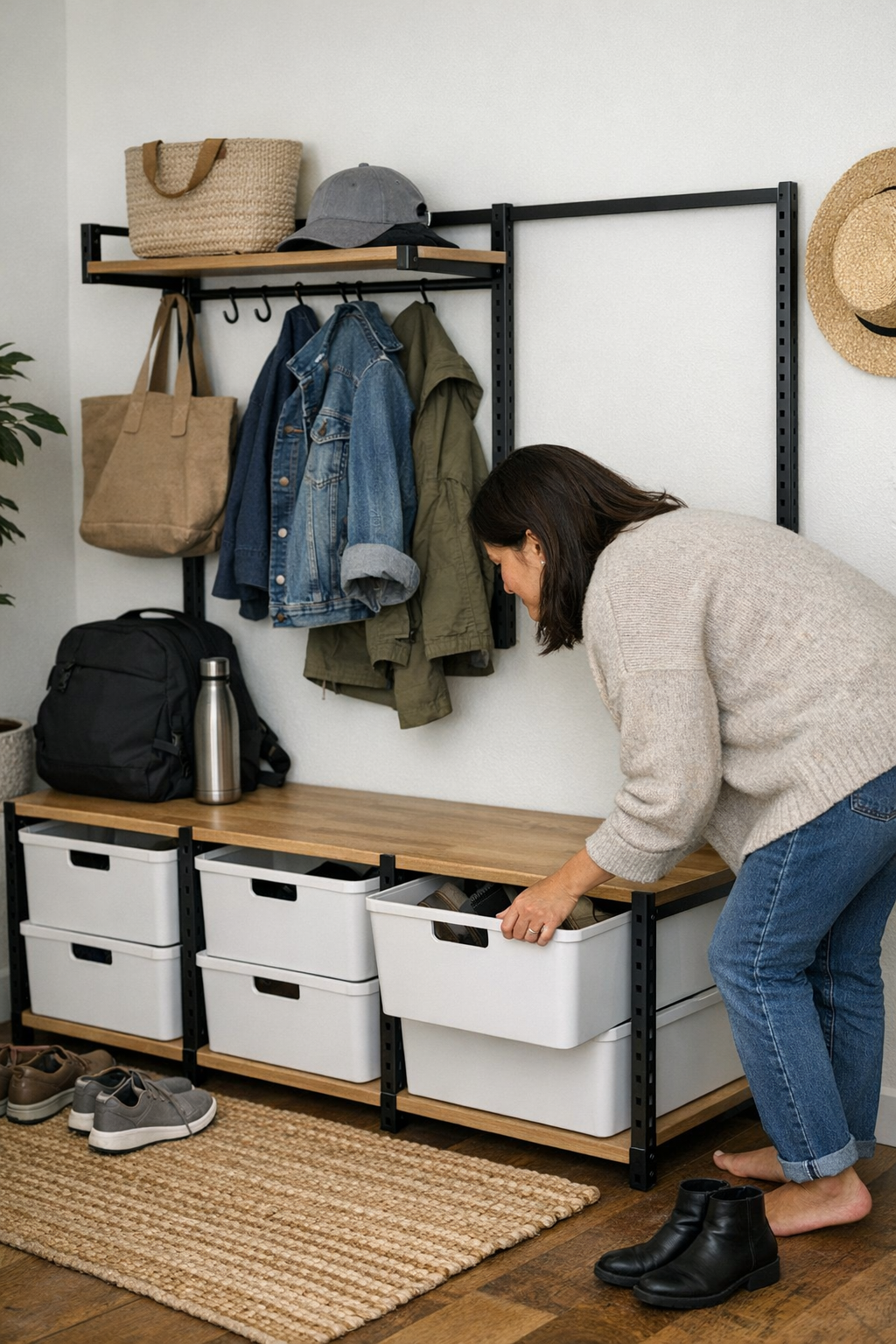
The day I replaced the too-deep cabinet with a slightly shallower modular unit, I felt the difference immediately. Yes, there was less storage—a couple of shoe pairs lost their dedicated spots—but the entryway opened up.
No more scraping sounds, no forced sidesteps, and no rushed apologies when two people passed by. The new cabinet fit cleanly within the movement path, so smoothly that I stopped noticing it. Easy access isn’t always about adding more space; sometimes it’s about freeing up movement so routines reset naturally.
You notice this in how a door swings freely again or how storing items doesn’t require an extra step back. It’s subtle, but over time, resets become automatic and clutter finds less room to spill over. Hidden-storage tension eases, and repeat retrievals feel smoother because the cabinet works with the flow rather than against it.
The Worth of an Exact Fit
It’s almost remarkable how small details—the width of a paperback, for example—can shift a space from frustrating to quietly functional. The right size cabinet doesn’t try to maximize every centimeter but matches real-life patterns: bags set down after work, shoes tucked away before the next arrival.
When there’s less temptation to crowd, category drift lessens. Shoes stay in their place longer; mail and keys don’t spill into shared walkways. The cabinet shapes the entryway calmly, softly supporting routines instead of sharpening their edges.
There’s no one-size-fits-all solution, but living with shallow cabinets and modular units has shown me how the best storage respects repeated use. It softens the edges of daily habits rather than adding new friction.
If you want to explore how these shifts look in practice within wall systems, floor systems, slim cabinets, and other modular storage, you’ll find a few carefully considered examples quietly collected here.