When Entryway Storage Starts to Show Its True Colors
Shoe racks and open shelving appear organized at first, but setting strict storage limits prevents overflow and keeps entryway storage functional.
There’s a particular moment, late in the week, when you pause by your entryway and realize things no longer look how you remembered them. Shoes you once arranged carefully have found new places—sometimes stacked, sometimes sprawled just beyond wherever you intended. Entryway storage, whether built on racks or open shelves, becomes an ongoing negotiation—one you rarely think about until it slows you down.
It’s easy to believe a system will work—until it quietly doesn’t.
We Notice the Problem Only Once It Interrupts Us
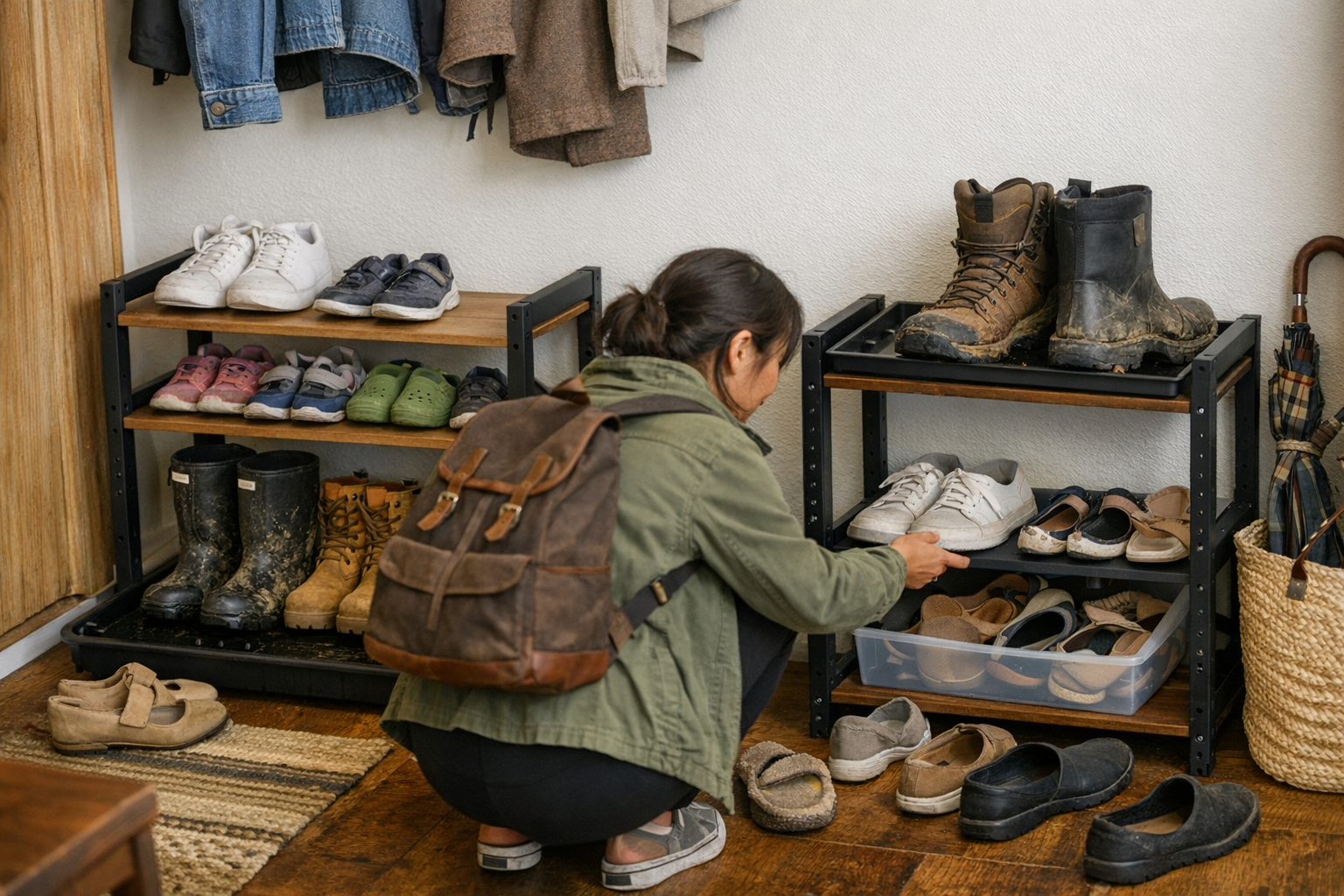
At first, shoe racks promise order. Rows look even, everything sitting in its assigned slot. You don’t notice the shift immediately, but over time, the lineup blurs. Kids’ shoes creep into adult territory, boots hang off the edges, last-minute arrivals jam themselves wherever they fit. The whole thing feels structured—until you’re running late and realize you’re hunting for a missing pair stuck under the pile.
Open shelving tells another story. There aren’t rules, just possibilities. Shoes can land anywhere, so mornings move a little faster. But ease becomes its own kind of mess. In the rush, shoes split from their pairs, or the whole shelf blurs into one imprecise heap. By Thursday, you find yourself moving piles just to clear a path to the shoes you actually want. There’s no disaster—just small, accumulating obstacles.
The Subtle Shift When Systems Meet Real Life
Sometimes you catch yourself pausing. You don’t notice it at first. Maybe you’re bending down to move three pairs just to reach the boots you need, or hesitating because a drop of rain means another scramble in the crowded space. You realize routines don’t unfold as smoothly as you’d hoped.
I once noticed, after three busy days, that the best intentions—careful organizing, resetting the system at night—had quietly come undone. A shoe rack lost its clean lines; the shelving drifted from tidy to cluttered. The difference between order and chaos is just a few out-of-place mornings.
It’s almost never the first day that reveals the problem. It’s on the fourth or the fifth when things start feeling heavier. You sense the beginning of a slide—order slipping away, but not all at once.
The Gentle Logic of Boundaries
Eventually, what shifted everything wasn’t a new rack or another shelf. It was drawing a single, clear boundary. A shelf for daily shoes, another for boots, enough space for what gets used—not more. When overflow started, it became obvious that pairs needed to relocate. No decisions, just a space that quietly explained itself.
There’s a relief in boundaries. They don’t keep new shoes from appearing, or suddenly make mornings serene. But they gently force clarity—enough space, just for what’s needed. The rest finds its place elsewhere, often out of sight. Entryways become easier to reset, easier to walk through without pause or shuffling extra shoes aside.
There’s something refreshing about realizing that limits are not about restriction, but about allowing the necessary to surface.
Over time, routines reshape even the tidiest storage. Maybe the real skill is noticing when it’s time to start fresh, letting each week reveal what the space really needs. For now, it’s enough to keep an eye on what stays, and what quietly drifts.
These reflections came to me while adjusting the storage at home, in the middle of an ordinary Thursday evening.