When Evening Noise Keeps Your Dog From Truly Settling
Small habits like typical TV volume can hurt your dog’s rest by causing subtle interruptions, but adjusting sound and bed placement helps ease it.
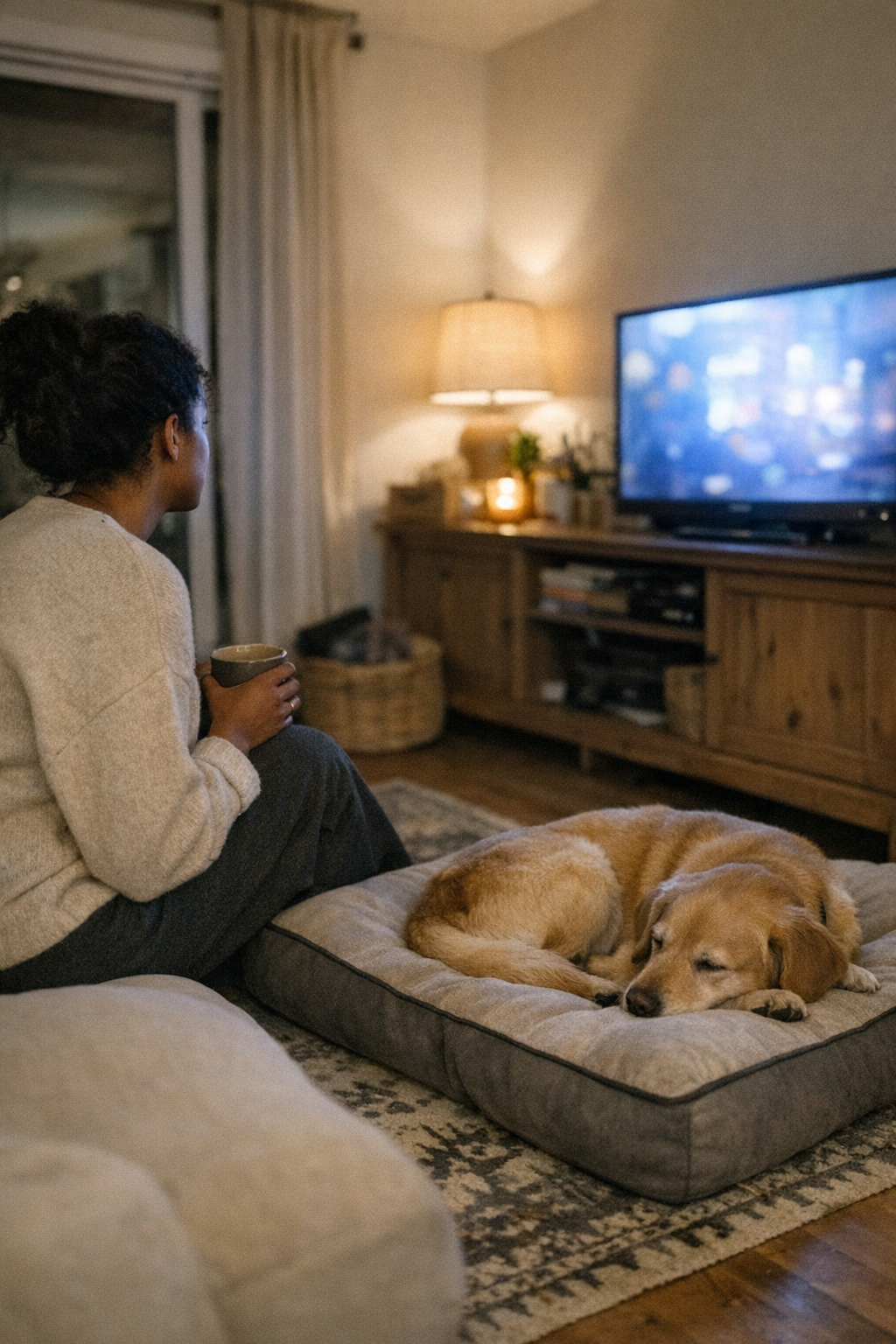
The first time I moved the dog bed, it was because I’d tripped over it twice in one week. You start thinking the layout is fine—bed by the window, toys in a basket, bowls tucked out of the kitchen traffic—but after running through the routine a few dozen times, something always feels slightly off. Mornings are the worst: bare feet, half-awake, nudging a corner of the cushion, bending down for the leash, then realizing you’ve knocked the water bowl against the wall again. It’s small, but those little moments add up.
What you picture: a calm, sleepy dog stretched out in a cozy corner. What happens: shifting, elbows poking a baseboard, toys spilling into the hallway. It’s never dramatic—just a quiet friction that repeats, the kind of inconvenience that grows in the seconds after coming back from the morning walk, towel draped over your shoulder and your hands full.
The Gap Between What Looks Settled and What Actually Helps
You notice it after a few mornings. Everything fits in theory, but something about the space slows you down. I kept reaching awkwardly around the dog, twisting to grab the leash or bumping the water bowl when trying to settle him. At first, I blamed a messy morning or needing more sleep. But the same small interruptions kept coming back. The routine didn’t flow.
He’d circle his bed before lying down, sometimes hanging his paws off the edge to avoid the cold tiles. My own movement mirrored his—stepping around a water bowl, nudging a toy with my foot. The setup looked nice during the day, but during these quick resets—after walks, at the start of the evening, whenever the bed needed a shake and bowls a refill—the arrangement tripped us both up.
This is the kind of thing you don’t realize you’re putting up with. When the setup "almost" fits your routine, the friction just feels like part of life. That low-level irritation was what kept returning.
What Quietly Gets in the Way
Toys look neater in a basket, but when it’s halfway across the room you end up stepping on a trail of squeaks all evening. Sometimes I’d pause and notice overlaps: a food mat catching the crate door, a towel stored too far from the back entrance turning cleanup into a reach across a soggy hallway. Simple systems—leash by the door, towel within arm’s reach—never lasted because I’d placed them based on what seemed logical, not on what made the daily routine smoother.
For a while, I thought these were just small things I’d get used to. But the difference showed up in subtle ways. My steps slowed when coming inside with muddy paws, my hand went up automatically to move things aside. The "quick" resets—the ones meant to make the next round easier—always took longer than they should. Even the dog began avoiding the busiest corners like he’d memorized the awkward spots before I did.
Over time, you start reshaping the routine—not to make the room look perfect, but to stop feeling one step behind your own habits. A bowl just a few inches off, a towel hook a foot too far, a soft bed creeping into walking space—none of these are big problems, but over days they become a persistent rhythm of pauses, nudges, and small sighs.
When the Routine Starts Feeling Easy—And What That Means
The realization didn’t come all at once. It arrived between a missed spot in the drying-off process and a night when the bed finally stayed put past midnight. The practical part is simple: when you move things until they’re almost too convenient—a bowl just within reach, a towel within a lazy stretch, the bed angled away from the chilly doorway—the friction dissolves. The dog curls up fully. I find myself pacing less, resetting less, not stepping over the same toy four times before bed.
It looked fine at first. But after seeing the routine flow when the setup quietly matches where the day actually drops you, I notice sooner when things slip—a bowl knocked twice in a row, a toy pile angled wrong means the week will snag. Usually, the fix is just a pause and a small shift, not a full rearrangement.
What I ended up appreciating wasn’t a prettier space, but that I hardly have to think about it anymore. The routine runs smoothly until it doesn’t, and you notice how comfort depends on more than just how things look on the floor.
It’s a small realization that isn’t urgent until it is. Most of the time, I remember it when I walk back in, towel in hand, and everything’s where it needs to be—just easy enough that I don’t trip.
Some of these patterns only show up after living through them for a while. You’ll find more quietly useful details here: http://www.dogpile.myshopify.com



