When Everyday Clutter Hides Beneath the Surface
Flat carts hide small items under bulky ones over time, causing delays; vertical storage keeps essentials visible and routines smoother.
There’s a particular relief that settles in after days—sometimes weeks—of coming and going through the same crowded entry space. At first, the stress was almost invisible: just a half-second of searching here, a lost glove there, until those pauses at the threshold became an almost daily ritual. In the middle of a busy morning, those seconds stretched longer than you expect. It’s strange how a transition area, designed with the best intentions, gradually slips off course as real routines start to build around it.
The Quiet Failure of the “Organized” Flat Cart
A flat cart always seemed like a simpler solution—just a broad shelf to hold the day’s comings and goings: mail, bags, a tangle of shoes, sometimes an umbrella. The sense of order held for a while, but only until everything started landing in the same spot, over and over.
At first, you don’t quite notice. The basics remain visible—until they don’t. By midweek, the whole surface was crowded with things not quite in their places. I’d put a foot up on the edge to tie a shoe and feel a slow sigh rising, knowing I’d have to search for keys hidden under yesterday’s mail or inside someone else’s gym bag. It wasn’t outright chaos, just a gradual buildup of use. What looked efficient from the outside ended up creating hesitation at the threshold.
How Vertical Storage Changed the Flow
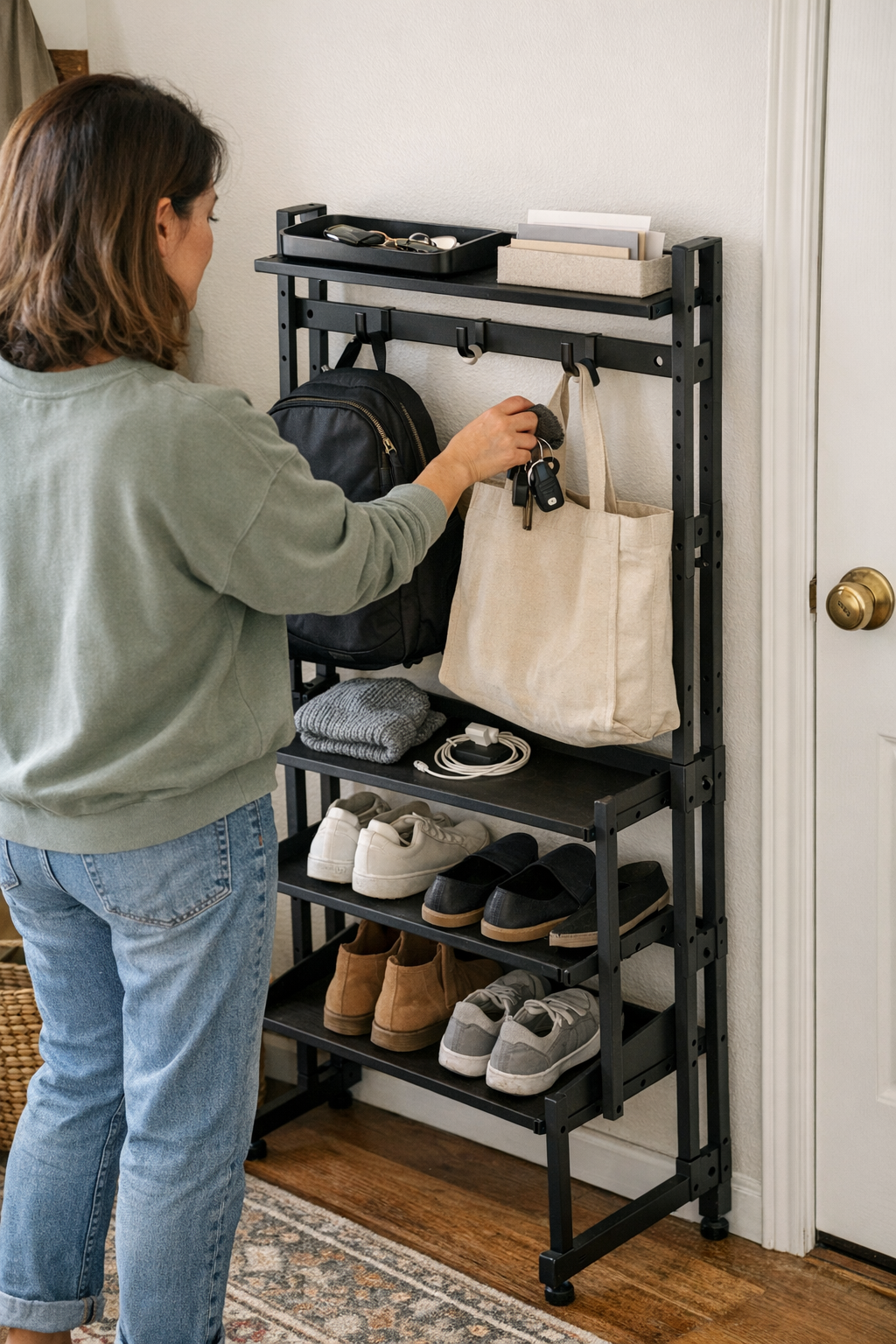
After yet another winter coat ended up crumpled across the cart, I switched to a vertical rack and a wall-mounted hook. Suddenly, everything had a destination—not a polished look for guests, but a predictable spot for the daily essentials. The change wasn’t dramatic; it was subtle. But the shapes and layers of my routines shifted.
Keys were always visible, shoes lined up neatly in one row, bags hung rather than pressed flat on everything else. Retrieving essentials became automatic—I stopped checking under piles, stopped pausing to reset the whole area each week. Even as bags and shoes multiplied, the pile-up barely spread. The part I kept coming back to was this: less interruption, less retracing steps, less drift across the walkway. Lost seconds quietly returned.
Living with Less Hidden Clutter
This experience makes you realize how small frictions add up—hesitation at the doorway, the quick shuffle to spot a charger or find last week’s mail—the kind of clutter that’s temporary but never completely gone. With everything upright and visually sorted, the feeling of passage changed. There was less clutter to move, more to actually use.
Even a week after a birthday party crowded the rack, there was still a clear edge between overflow and function. Resetting didn’t feel like a chore. The whole threshold felt lighter—almost unfinished, in a good way.
These thoughts kept circling as I walked past the wall rack again. You can find more practical pieces like this at Betweenry.



