When Everyday Clutter Tests Your Pegboard’s Limits
Pegboard entryway storage stays practical only when each hook serves a single category; blurring categories causes blockages and resets.
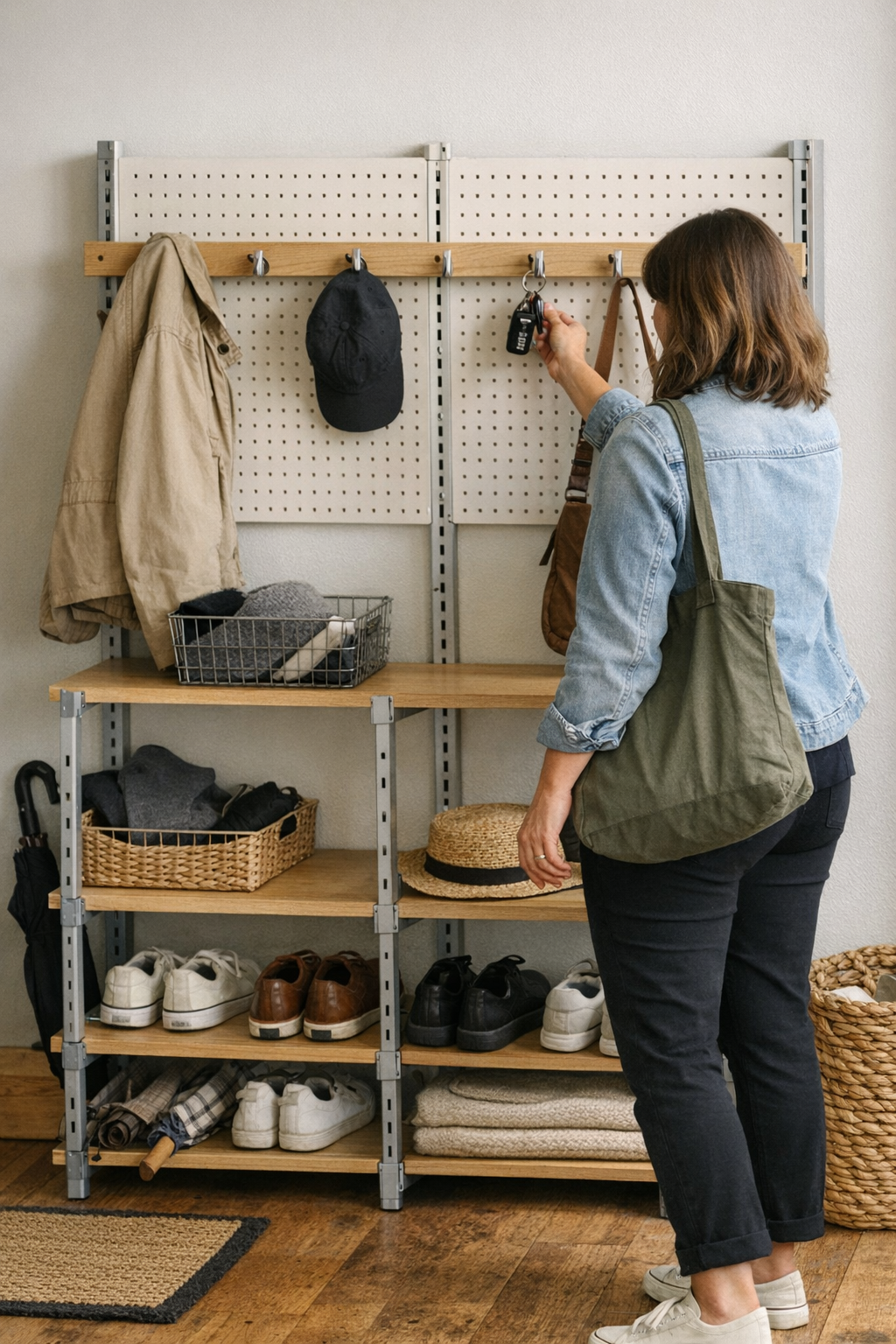
There’s something quietly hopeful about seeing a pegboard on the wall—every hook and shelf arranged just so, promising cleaner arrivals and smoother mornings. But in real life, a transition space collects more than plans: shoes pile up in rows, bags drift from hooks to benches, and keys find new neighbors each day. I thought a pegboard would bring order, but over time the routines passing through it told a different story. The system seemed tidy—until it wasn’t.
Noticing Where Friction Lingers
You don’t notice it right away—how quickly an entry setup unravels as daily life compounds. At first, each peg has its purpose: work bag here, jacket there, shoes lined up below. Then cold mornings and rainy afternoons stack coats. One hook holds a scarf and two hats. The bench collects a backpack dropped in a rush. I kept stepping over the same growing pile, ignoring the subtle tension it brought. Looking back, it wasn’t one dramatic moment—just a slow, persistent congestion creeping in.
Where Order Meets Drift
The outer calm of a pegboard can mask a jumble underneath. On busy days, shoes wedge under bags, and an umbrella slides behind it all. You retrieve what’s needed, dislodging something else in the process. Often the system looks controlled even as it passes more unseen sorting onto whoever comes next. I’ve seen someone rummage for their keys, inevitably knocking down a stray glove. That small pause—a look, maybe a sigh—marks the difference between a system that fits life and one that quietly resists it.
Reset, Then Reset Again
What I kept coming back to was flow. When volume increases—people returning during a downpour, bags heavier from errands—every overlap multiplies. Soon a “spot for everything” turns into a chain reaction: one new item forces a minor reshuffle, which triggers another. I realized fewer pegs, each strictly assigned, actually helped more. It’s counterintuitive, but cutting options—fewer overlapping uses, one row for shoes, overflow tightly controlled—shifts the pressure point. The bench edge stays clear. Grabbing what’s needed in a hurry becomes simple again. The space feels lighter, less demanding; the invisible work of tidying shrinks to just a moment.
There are new patterns taking shape, and I’m still watching how they hold up. For anyone curious, Betweenry collects these kinds of lived-in solutions here.



