When Everyday Flow Depends on Clear Floors
Wall-mounted storage outperforms modular floor units by keeping paths clear, enabling quick resets and steady routines over time.
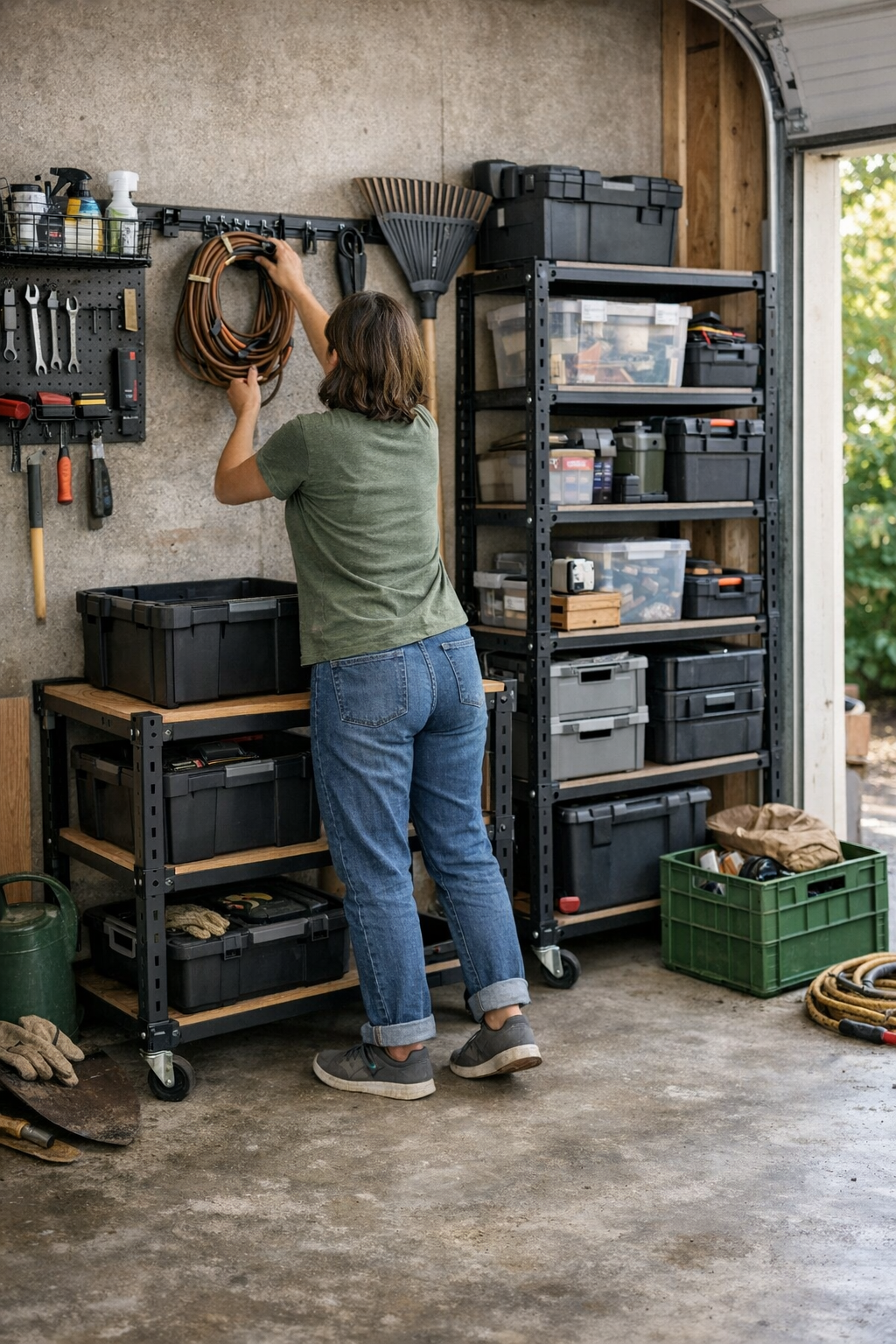
There’s something quietly satisfying about resetting a space—putting things back in their place after the rush of a busy project. But that sense of calm order can slip away, almost unnoticed, when the flow of movement starts to tangle. In a workshop or garage setup, you might not realize how much the layout shapes your rhythm until you’re halfway through tidying, feeling resistance with every step.
Lately, I’ve been thinking about the difference between storage that looks organized at first glance and storage that actually makes returning to order feel effortless. It’s such a small detail—almost invisible—but over time, it changes how a space feels to live and work in, whether it’s a backyard utility area, a small workspace, or a garage with modular floor and wall-mounted storage.
When Order Disguises Friction
Maybe you know the feeling. You step back, admiring the neat rows of floor-based bins or mobile carts arranged around the garage. Every tool and piece of gear has its place. For a moment, it feels enough.
But routines have a way of unraveling. Shoes pile up by the door, a rake leans across the entryway, bins nudge forward after a rushed put-away. You don’t notice it right away, but you feel it.
Resetting the space takes a little longer each time. The return path—once clear—fills with obstacles you didn’t plan for. Suddenly, keeping things orderly means shifting, reshuffling, nudging gear back into place. This creeping friction resists your routines in small but persistent ways.
How Movement Reveals the Truth
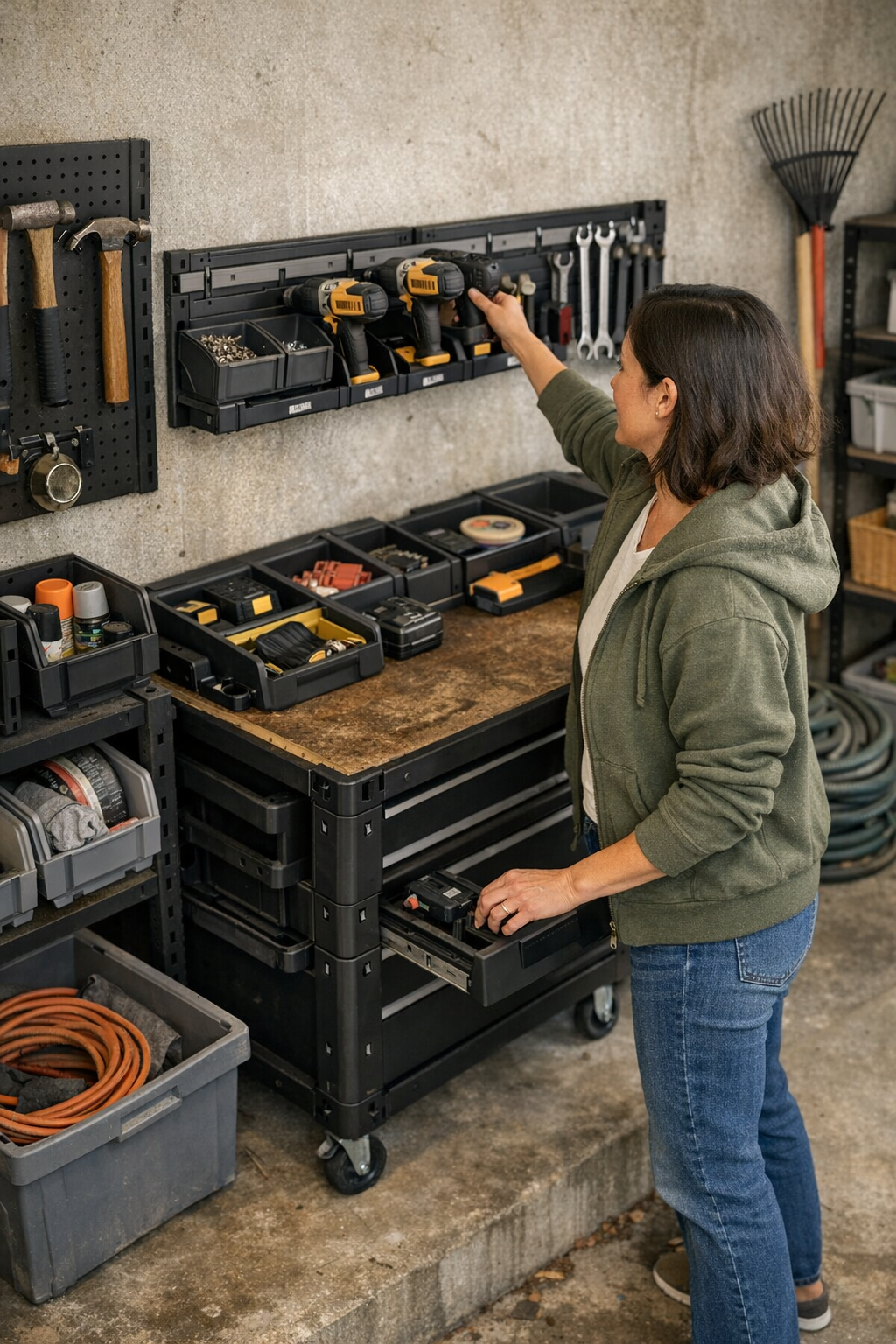
After a full day in the workshop, I’ve noticed a key difference between how “organized” looks and how it lives. Wall-mounted rail systems, for example, tend to fade into the background until you’re moving fast—stepping in with muddy boots, dragging out crates, juggling tools.
Usually, there’s one natural flow: a sweep, a reach, a quick return. The floor stays open, with nothing blocking your path.
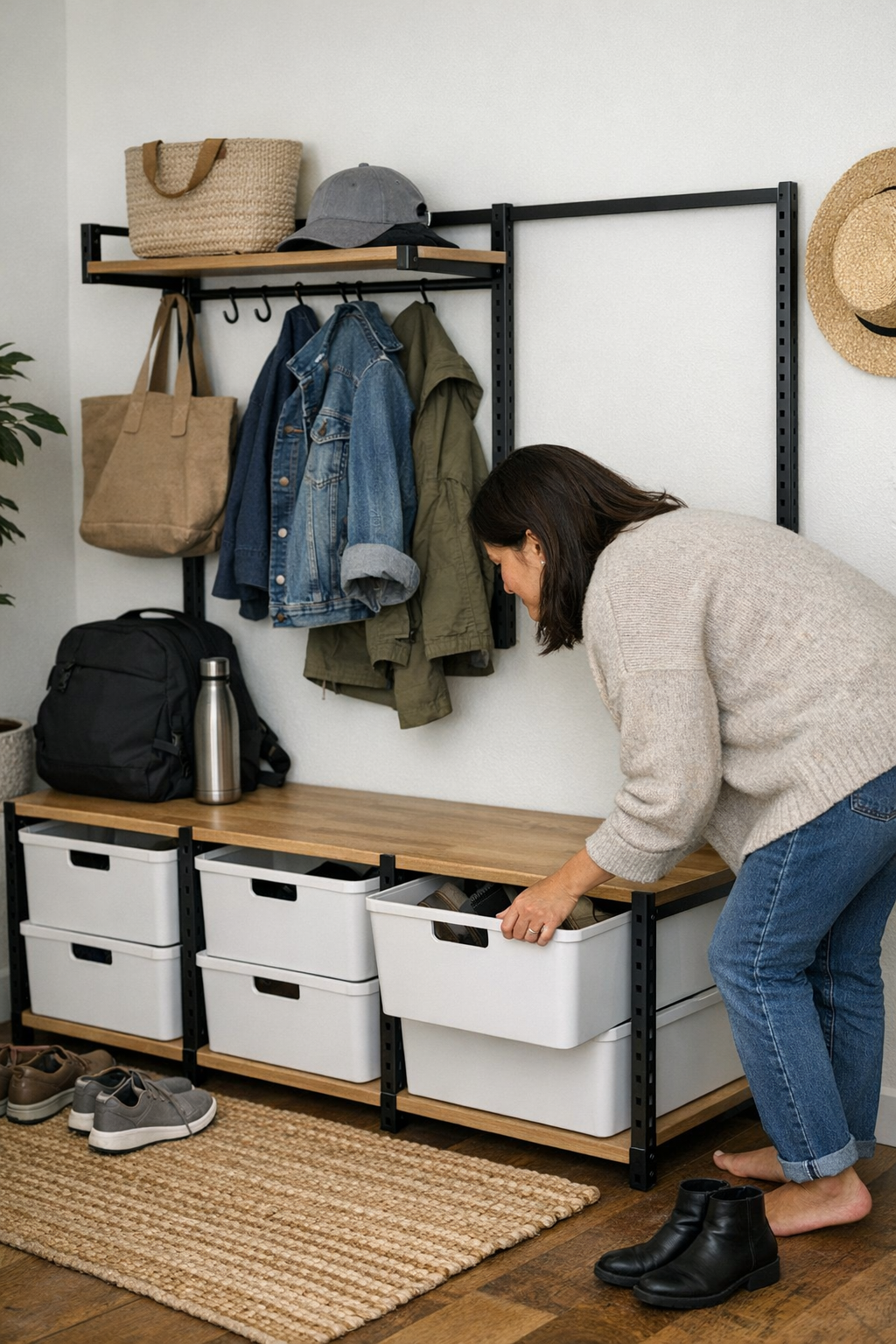
But with modular floor bins or racks, small obstacles multiply. Shoes or bags gather in front of bins. One trip to put away a tool becomes three trips as you shift a bin, clear the floor, then finally return the item. Over time, the clean surface turns into a holding area for overflow, and resets drag on. It’s subtle, but you feel the difference between an easy return and a stubborn pause.
Sometimes, just removing a single bin can open a lane that had quietly narrowed, restoring the simple pleasure of movement—one less obstacle and a few moments saved.
Routines That Stick
Most of us want a workspace that stays organized without constant maintenance or rescue. The shape of that order depends less on how neatly things line up and more on how little gets in the way of putting them back.
Wall rails aren’t magic. They still depend on habits and giving every item a place. But they tend to keep the reset path clear—especially after real use tests those boundaries.
It’s a practical clarity: when routines slot naturally into your day, your space doesn’t fight you, even when life gets busy. Over time, that ease matters more than the first impression of tidiness.
I realized this after moving a few bins out of my garage and suddenly seeing the return flow as clear as it was the day I started. That quiet shift made me see the space differently, leaving a question that lingers: how many of our routines depend on paths we rarely notice—until they’re blocked?
These reflections came together during an evening of reorganizing my own workshop setup.