When Everyday Habits Shape Backyard Order and Calm
Outdoor setups succeed or fail based on how well loose items are returned. Visible, accessible return points reduce clutter and reset burden.
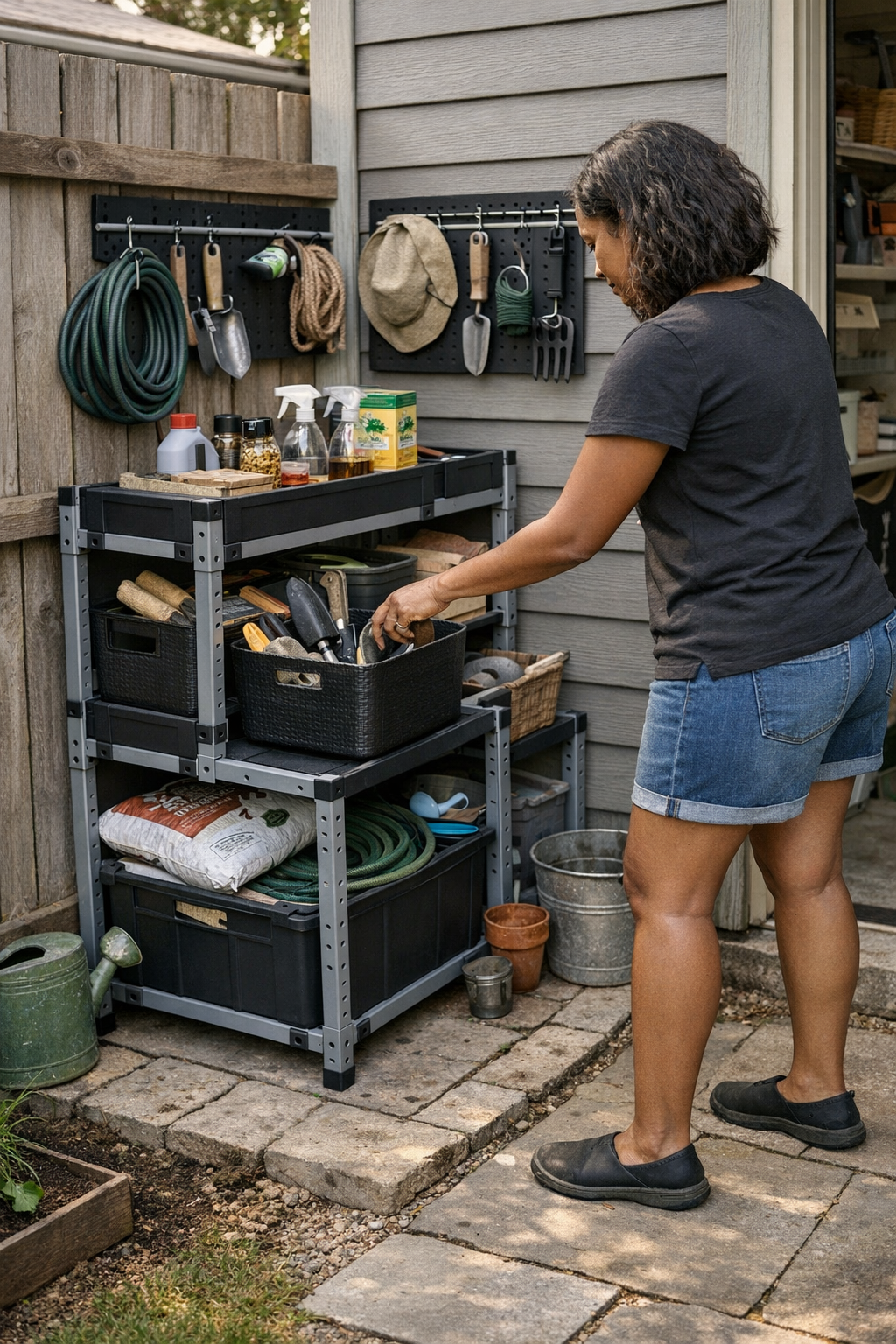
It always starts out tidy. After a big clean-up, you look at the backyard and feel a quiet satisfaction—tools lined up, surfaces empty, the gentle reset of order. It’s tempting to believe things will stay that way, that this time, the organization will last. But then, as days pass, small things begin to drift: garden gloves left by the door, a trowel balanced on the bench, toys edging toward the walkway. You don’t notice it immediately.
But you feel it.
What’s hardest isn’t finding room for everything. It’s making sure things come back—making return easy, not just possible. In those first few days after the cleanup, the shape of your system quietly reveals itself.
Clutter Travels the Path of Least Resistance
I used to believe storage was all about having enough bins. Enough shelves, cubbies, hooks—anything that promised a place for each thing. For a while, this almost worked.
But slowly, a pattern repeated. Gear and small tools collected in the same spots: at the threshold, near the side gate, beside the trash cans—right at the end of whatever task had just been finished. The bins, meanwhile, sat mostly empty a few steps away.
You don’t really notice which habits form until trouble starts stacking up in these overlooked places. That was the part I kept coming back to. Not a lack of space, but the ease—or friction—of return.
Systems at War With Routine
It’s easy to design a storage setup that looks impressive right after a big reorganization—closed bins, neat rows, strict divisions. But the real test comes during any week with unpredictable weather or overlapping projects—when the yard’s routines get scrambled.
One evening I left a handful of shears and gloves on the bench by the side yard. The next morning, hauling out the trash, I tripped over the same loose pile. What started as a “just for now” moment turned overnight into an everyday obstacle. Clutter doesn’t spread all at once; it moves little by little, following the most convenient route—usually wherever the last step lands.
You start to feel the reset pressure building. Sometimes, avoiding the big bins feels easier than beating back the clutter.
A Small Change, and the Return Path Opens
I tried something subtle: placing an open catch-basket near the main yard exit, just an arm’s reach from the shed door. No lid, no sorting, just an invitation to drop in whatever came back from the day’s work.
That simple shift changed more than I expected. Suddenly, gloves and tools stopped accumulating by doors and found their way to this “in-between” spot. There was less end-of-day scrambling and less time spent clearing paths for tomorrow’s plans.
Turns out, spaces that nudge quick returns don’t have to be complicated. Something visible and open by the main route keeps things moving better than a row of closed storage ever did. It’s not about perfect order, just giving small messes a softer place to land.
These thoughts came together while refitting my own backyard—taking into account limited outdoor space, mixed-use storage pressure, and the realities of repeated daily use—with a little extra inspiration from here.



