When Everyday Light Turns Unpredictable and Uneven
Small cracks in plastic lighting cause uneven light and glare in humid spaces; replacing them with glass or damp-rated fixtures ensures steady, safe illumination.
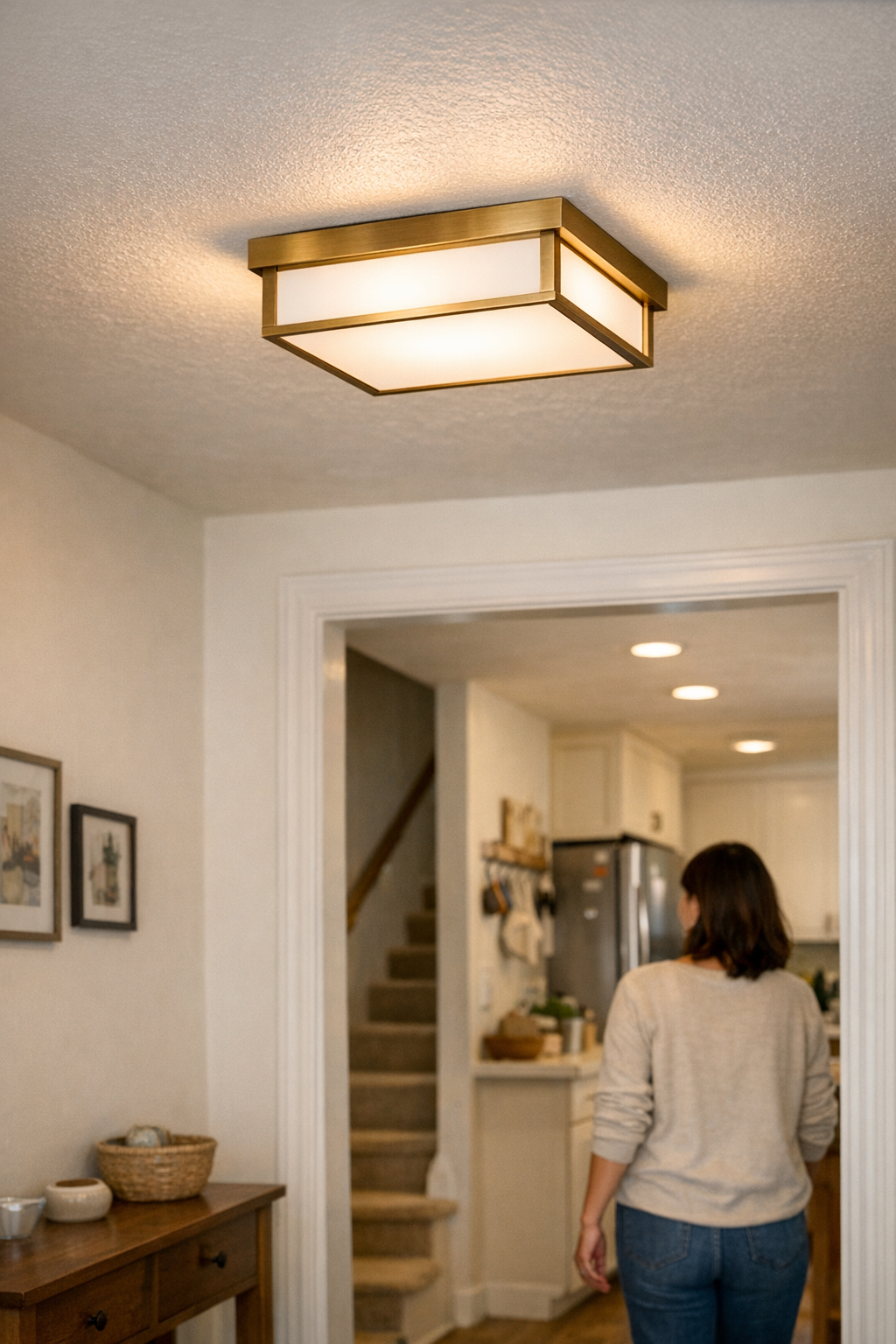
What I Noticed After Living With a Plastic Ceiling Light
The first time I installed a plastic ceiling fixture in my hallway, it seemed to solve everything at once: bright enough, quick to wipe down, and affordable. For the first week or two, the light felt generous—steady, even, just there when I needed it. Maybe that’s why I barely registered how the corners of the room looked or how sharply the stairs were visible at night. There’s a subtle comfort in a space that lets you move without thinking.
But the edges of that comfort can slip away when the fixture’s promise starts to fray.
Where Light Quietly Fails
You don’t notice it immediately.
Usually after months, a haze appears above the stairs or your shadow catches at strange angles along the corridor wall. Tiny cracks start to form on the plastic lens—not dramatic breaks, just faint lines that scatter light unevenly. Across dozens of small moments, you notice that instead of a smooth, even wash of light, there are bright spots where there should be soft illumination and unexpected strips of shadow near work surfaces or stairs.
It feels less like a problem and more like an interruption. Doors open, temperature and humidity shift, laundry gets moved, mirrors fog up. Plastic fixtures just don’t hold up well to repeated exposure in damp indoor areas like bathrooms, laundry rooms, or narrow hallway corners.
Still, you look past it, at least for a while. But you feel the difference.
The Shift to Something Else
This quiet frustration—adjusting how I stepped down the stairs at night or squinting in the humid laundry room—kept pulling me back. The old plastic fixture scattered light unevenly, never giving consistent coverage. Cleaning it made the fine fractures worse and the lens grew dull and cloudy over time. Eventually, it was less trouble to replace the fixture than to keep wiping away the problem.
When I installed a glass, damp-rated ceiling light instead, the change was immediate but subtle. The light diffused evenly without glare spilling across hallway floors or missed spots near mirrors and sinks. For months, even through humidity, daily routines, and late-night comings and goings, the light remained consistently balanced. The need to consciously notice the lighting disappeared. I realized that when lighting works well in entryways, stairways, hallways, and other high-traffic spaces, everything else takes center stage instead.
The Everyday Difference
Most rooms aren’t for show; they’re for use. What surprised me after the switch was mostly what I stopped noticing: the awkward shadows, bright pinpoints, and hesitation moments when climbing stairs at night. The glass fixture required less cleaning, with no webs of fine cracks to trap dust or moisture.
There’s a relief in knowing that ceiling lights designed for repeated use—whether flush mount, semi-flush, or wall sconces, including damp-rated fixtures for bathrooms and laundry areas—can simply do their job quietly and reliably. In spaces where you move often—hallways, stair turns, bathroom mirrors, utility corners—it’s less about how bright the lighting looks and more about how it lets you navigate safely and effortlessly.
It’s a small thing, but over time and repeated use, it really matters.
If you want a sense of that difference, you might find it here: www.lighthelper.myshopify.com



