When Everyday Storage Turns Into Hidden Frustration
Entryway clutter grows when storage access is awkward; open, direct setups prevent piles, keep paths clear, and ease daily resets.
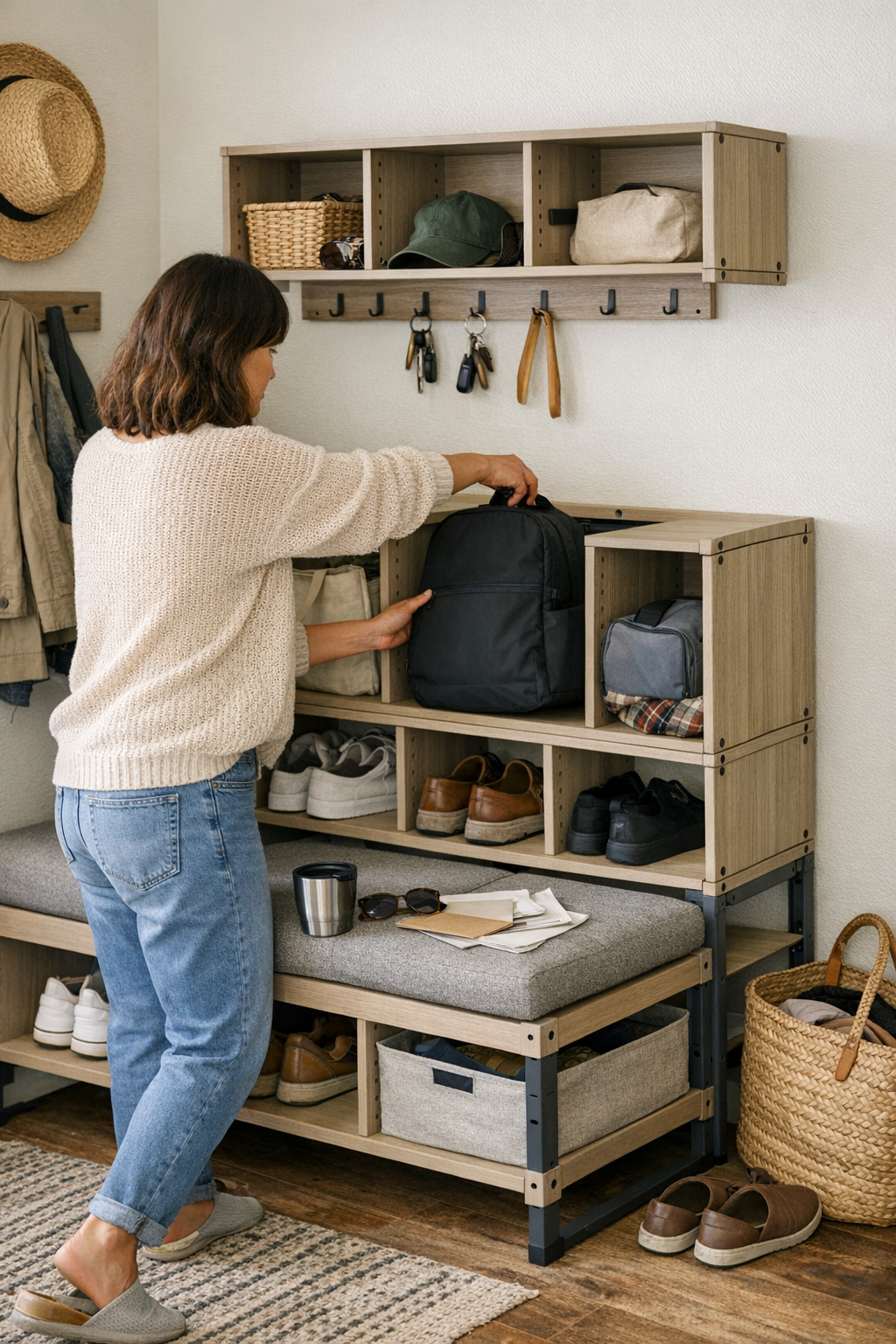
Most days, the entryway starts out clear—benches empty, countertops free. But by Thursday, you’re stepping around bags or pushing mail into new piles, and the neatness from Sunday’s reset already feels distant. It took a while to realize this wasn’t just about mess or not trying hard enough. The real challenge was how certain storage pieces resisted the usual rhythms of coming and going.
You don’t notice it immediately. But you feel it—the slow buildup, the small frictions shaping every return home, the way things land and linger right by the door. Living with a transition-space setup throws the spotlight on routines you never paid attention to until they start to stick.
The Subtle Weight of Routine
There’s a kind of pressure that lingers in busy entryways—a rhythm that’s never quite at rest. Shoes start out in rows, then drift and accumulate in pairs along the walkway. Bags are meant to hook onto racks, but more often end up hunched on benches or stacked against the wall. The logic is clear in hindsight: wherever it’s easiest to leave things, things will collect.
It’s not about a lack of storage. Sometimes, the bins are right there, but if opening a lid or pulling open a cabinet slows the process down, the surface gets used instead. Week after week, benches with concealed compartments stayed mostly closed, while wall-mounted open cubbies filled and emptied with the flow of arrivals and departures.
Sometimes, I catch myself looking for one missing shoe at the threshold, pressed by the quiet pressure of blocked passage.
Not All Storage Is the Same, No Matter How It Looks
At first, I wanted everything hidden—clean lines, no clutter in sight. Cabinets, boxes, even extra seats for tucking things away. It looked tidy for a day or so, then bags started drifting to the closest horizontal surface and shoes gathered outside their assigned spaces again.
There’s an honesty to open storage I didn’t appreciate before. Cubbyholes, racks, easy-access trays—they invite motion instead of resisting it. Even if they expose every jacket and pair of boots, the flow feels lighter, with less chance of pileups in awkward places. A wall-mounted shelf above the bench caught keys and small gear so naturally that forgotten piles shrank. You lose the illusion of perfect order but gain ease every time someone rushes through.
That was the part I kept coming back to—a reset routine that almost did itself.
Shifting Patterns, Less Tension
One ordinary adjustment—switching deep bins for a line of open cubbies—made the difference less about constant tidying and more about the space working with us. Shoes landed right where they needed to, without half-step stalls or extra shuffling of bags. The midpoint clutter, that edge-of-the-bench buildup, simply didn’t happen.
It’s a quiet relief. There’s more floor uncovered by the end of each evening, and less resistance in the main path. Over time, I stopped thinking of clutter as something to attack or fix, and started noticing how even small changes in access shape what accumulates and what quietly flows away.
Living with a space like this, you see it’s not order versus mess but a daily negotiation at the threshold, paced by whatever your storage makes easy.
Some of these observations took shape as I revisited solutions at Betweenry.



