When Everyday Use Reveals Hidden Weaknesses in Wall Storage
Stud-friendly mounting prevents hooks and shelves from sagging or failing under daily use by anchoring directly to structural studs.
The Quiet Confidence of a Hook That Doesn’t Shift
There’s a simple relief in knowing the wall won’t give when you drop your bag—a kind of comfort often unnoticed amid the daily churn of arrivals and departures. It’s only after living with wall-mounted storage that’s just a little loose, or strong only until the fourth wet jacket hangs on it, that this steady reliability becomes important. This is where everyday routine meets real life: entryway and drop zone spaces invite a constant rhythm of use, and small failures slowly chip away at the calm these spaces are meant to hold.
How Weight Finds Every Weakness
The pressure always starts with a crowd—jackets, boots, and rows of shoes that multiply as rain and routines stack up. The wall-mounted storage holds on, almost without complaint, until it quietly loses its grip.
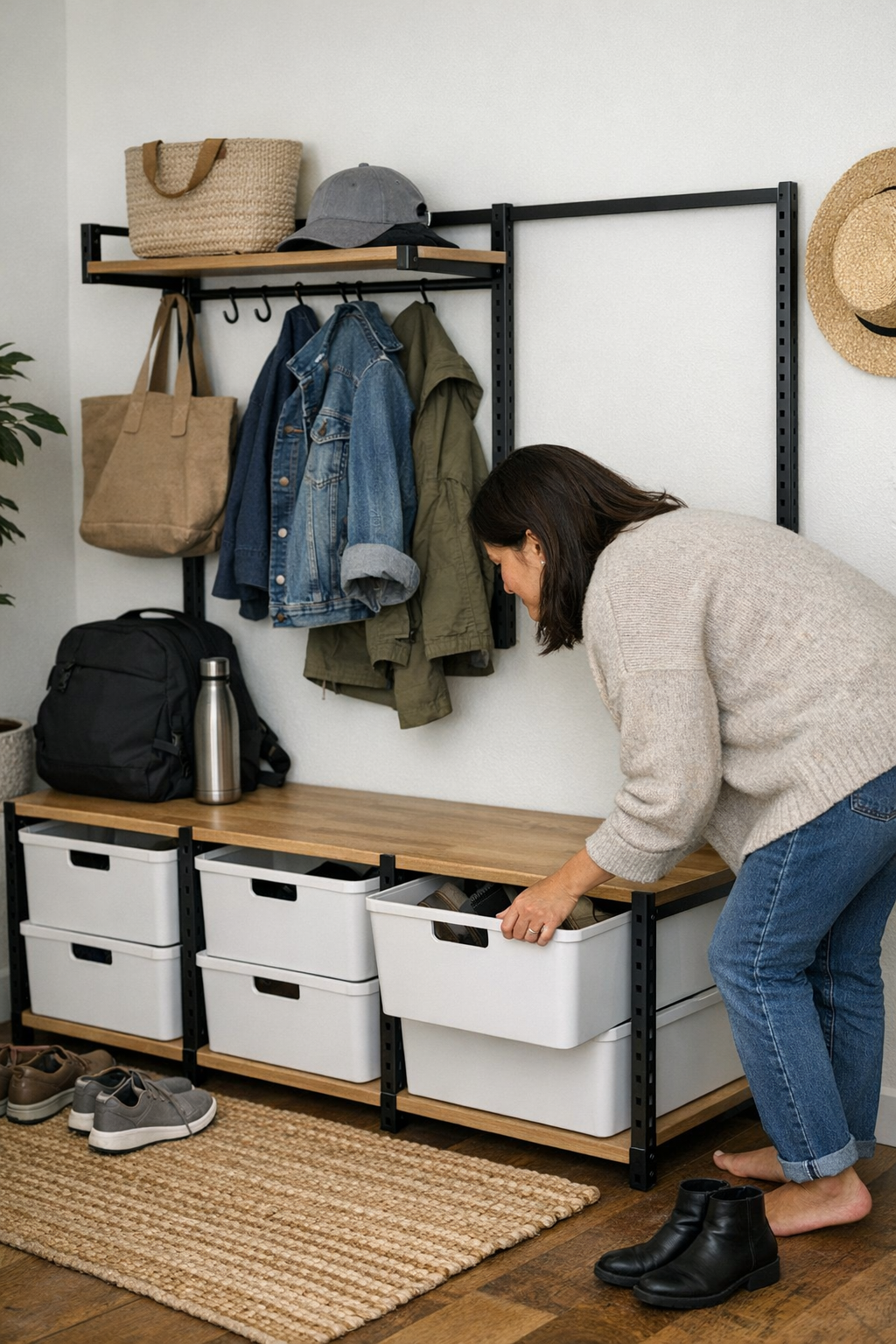
A hook missing the stud, or a shelf relying solely on drywall anchors, feels fine at first. But when traffic increases—during a busy family week, visits, or a spell of bad weather—the less-than-solid mounting reveals itself. Hooks pull slightly out of alignment, shelves begin to lean—small shifts you don’t notice right away but feel each time you reach for a coat or sit on the bench edge to untie muddy laces. You don’t see it immediately. But you feel it.
It’s visible in how clutter begins to overflow or how resetting the space takes longer because things no longer land where you intended.
What Shifts When Anchoring Holds True
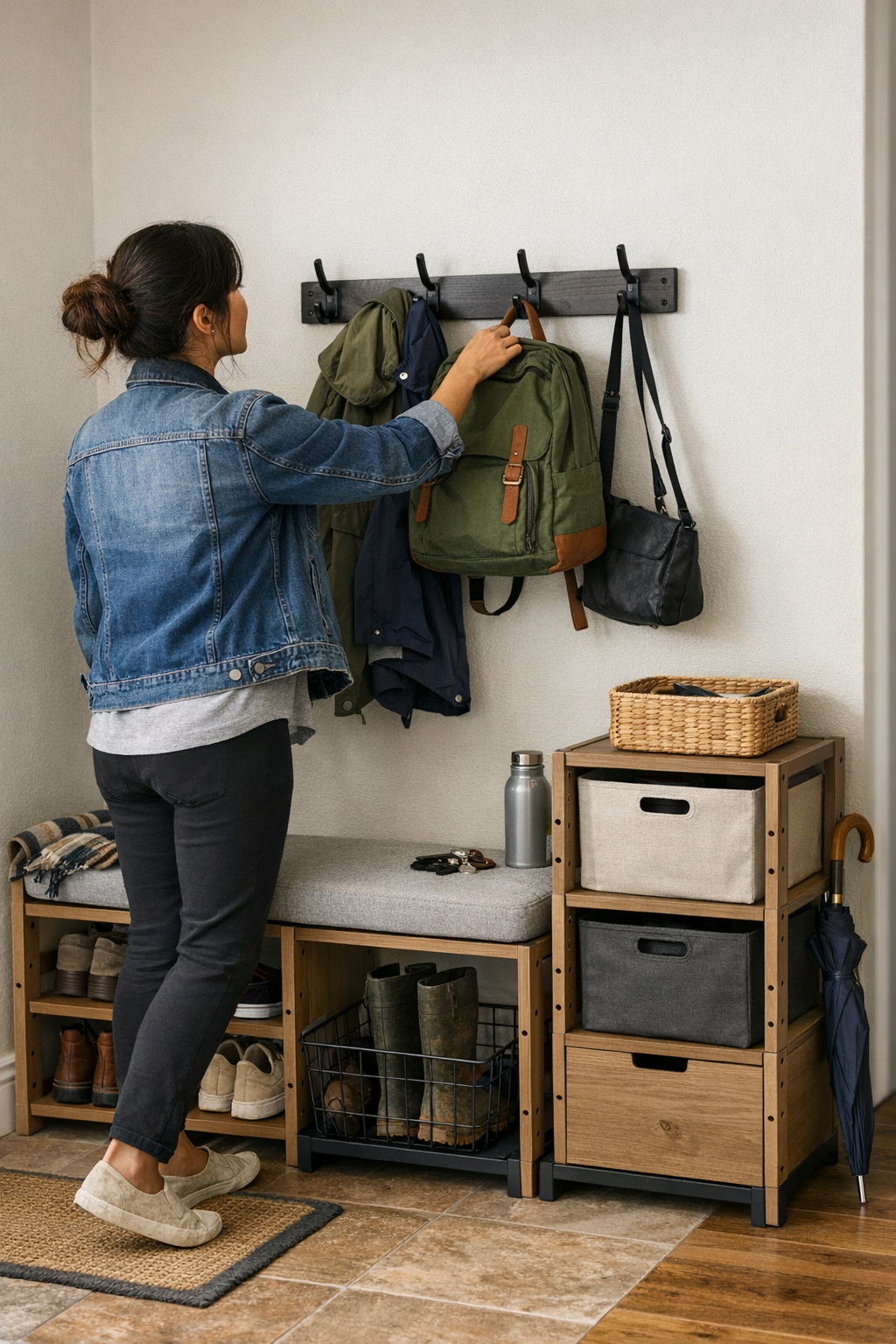
I didn’t expect that moving three hooks just a few inches to meet the studs would make such a difference. Suddenly, bags could hang and swing without the usual flex, and temporary piles at the threshold stayed contained instead of creeping inward.
The bench stayed square after use, wall scuffs appeared less frequently. The difference wasn’t in how the storage looked on day one but in its endurance through repeated use. That steady dependability is what I kept noticing.
When everything is anchored into the structure, habits adjust subtly. Quick arrivals became quicker. Weekend gear dumps, often thick with wet boots and soccer bags, no longer tipped the setup into disorder. It felt effortless—until I thought about what it would be like to lose that quiet assurance.
Transitions Are Built for Pressure, Not for Show
The rows of shoes may still spread too far on busy weeks, and bench corners gather their share of mail and keys. But the storage remains fixed, reliable in a way that absorbs daily mess without giving way. It fits the tension of these half-used spaces: not purely storage, never decorative, always working.
When the mounting matches how these spaces are lived in, resets feel natural, not like repairs. I hadn’t realized how much calm can live behind the scenes of routine until the mounting stopped being something I worried about.
Sometimes I look at how daily movements leave almost no visible mark, and I think about how much depends on what you can’t really see—only feel again and again.
For anyone curious about lived-in solutions designed for entryway and drop zone life, including slim wall-mounted racks, utility benches, and modular storage built to handle repeated arrivals and departures, there’s more in places like Betweenry.