When Familiar Walks Feel Unsteady and Strange
Dogs slow on unfamiliar streets, causing walk disruptions; a single planned pause there restores flow and trust in routine walks.
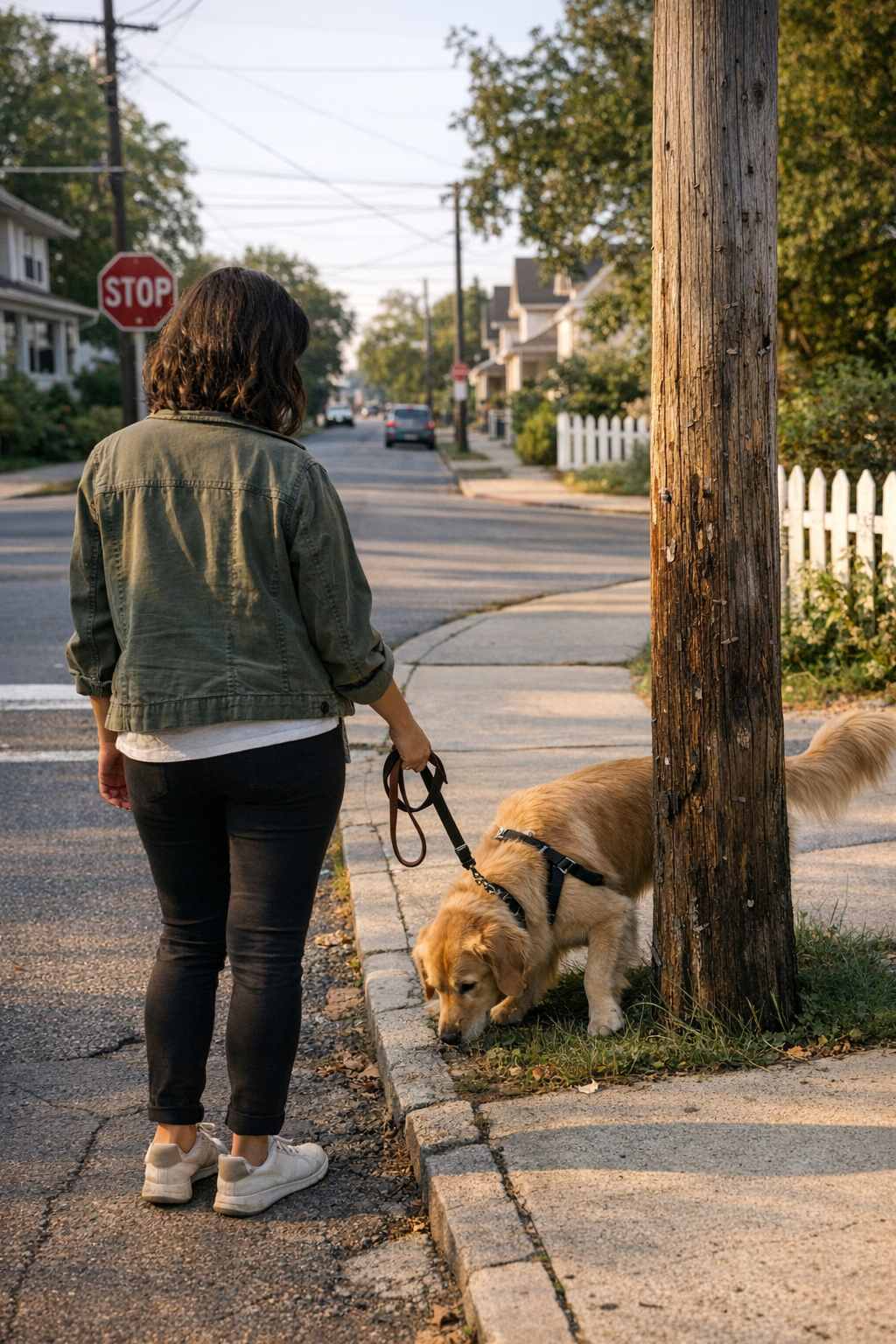
You notice it after a few mornings, that strange tug in the leash just past the last house on your street. The familiar corner stretches out, and as soon as you cross some invisible line into the “not quite known,” your dog’s smooth gait picks up a hitch. There’s the pause at the telephone pole, the deeper, needier sniff at the neighbor’s hedge. What felt like a reliable path yesterday now lurches, hesitates, reconsiders. It’s not dramatic, but it’s real—the daily walk interrupted, not by an event, but by a series of small stops you keep returning to.
Where the route maps cleanly over well-trodden ground, things move. Pacing is even. There’s a shared contract—dog and human both know where this bit of sidewalk goes. But one street further, with its slightly different rhythm (cars angled in driveways, hedges trimmed back), the old certainty dissolves. Your dog’s head swings with every unfamiliar scent, unhurried, investigative, almost stubborn in the refusal to keep up. At first, it looked like just a longer smell, but days later it’s the same—walking these new streets isn’t the same as the home loop.
That’s the part that kept returning: how normal and straightforward a routine can seem until you shift its edges. I didn’t really notice until running late one Tuesday, leash tight in hand, and found myself stuck again at someone else’s gate, waiting for a pause that stretched too long.
Seeing the Hesitation for What It Is
It’s easy to blame distraction—a stray tennis ball, a cat behind the fence, or some other momentary interruption. But after living inside the same handful of mornings, the stops always happened in new places, never at the usual mailbox. I started to see that for my dog, walking isn’t a loop of habits; it’s a landscape of differences. On these stretches, something in his walk slows, checking the unknown.
This wasn’t about obedience or training—no amount of “let’s go” pulled him forward on these unfamiliar bits. Instead, it repeated: leash short, dog anchored, nose pressed deep into overgrown grass nobody else tends.
That’s where I found the rhythm of my own impatience. Every errand before breakfast sat on pause, friction accumulating at the speed of one distracted sniff.
I realized the stops came because that’s how my dog made order from disorder. The newness needed to be scanned, smelled, registered. Nothing pushed him onward without first letting the uncertainty wear down.
The Small Adjustments That Matter
Eventually, I stopped trying to outpace the pause. Instead, I gave it a place—literally the first corner outside our block became the “okay, go ahead” corner. If he wanted to slow there, that would be the moment. Oddly enough, giving structure to that initial stop made other detours stop stacking up further down the street.
It surprised me how small the difference was. One block—just a handful of houses—could change the entire tone of the walk.
I let go of the idea that speed would transfer cleanly from one geography to another. What worked on familiar ground fell apart as soon as the pattern changed.
When there’s room for curiosity at the start, the rest of the routine often falls in line. Not always—dogs follow their own logic—but enough to notice. I started planning a little extra margin into the morning walk, so that first slow drag at the corner didn’t spill tension into the rest.
It became less about keeping pace and more about preventing the day from feeling off-kilter before it even began.
What the Routine Teaches You in Return
You see how fragile a routine really is, even one built on months of repetition. The tidy loop in your head—wake, leash, walk, bowl, done—holds more invisible judgments than you realize. Most routines work, right up until you edge past what’s familiar.
The mundane waits become their own kind of pause: not about efficiency but about letting the dog (and maybe you) sort out what’s changed. Some mornings, giving in to one good sniff meant less resistance everywhere else.
On days I tried to rush through anyway, the resistance just reappeared a little farther down the road.
The practical takeaway—one you only get by stumbling through enough mornings like this—is that there’s no substitute for letting newness have its proper place. That single, predictable pause upfront was often enough to keep minor frictions from multiplying elsewhere.
It’s a different kind of routine, shaped quietly by uncertainty. Not so much a lesson as a recognition: standing still at the side of a new street while the day waits, very briefly, to begin again.
If this kind of daily friction sounds familiar, there’s more to see here: http://www.dogpile.myshopify.com



