When Feeding Spots Stay Put, Cleanup Feels Less Like a Chore
Anchoring feeding and water zones so bowls and mats never drift controls mess spread and reduces repeated cleanup.
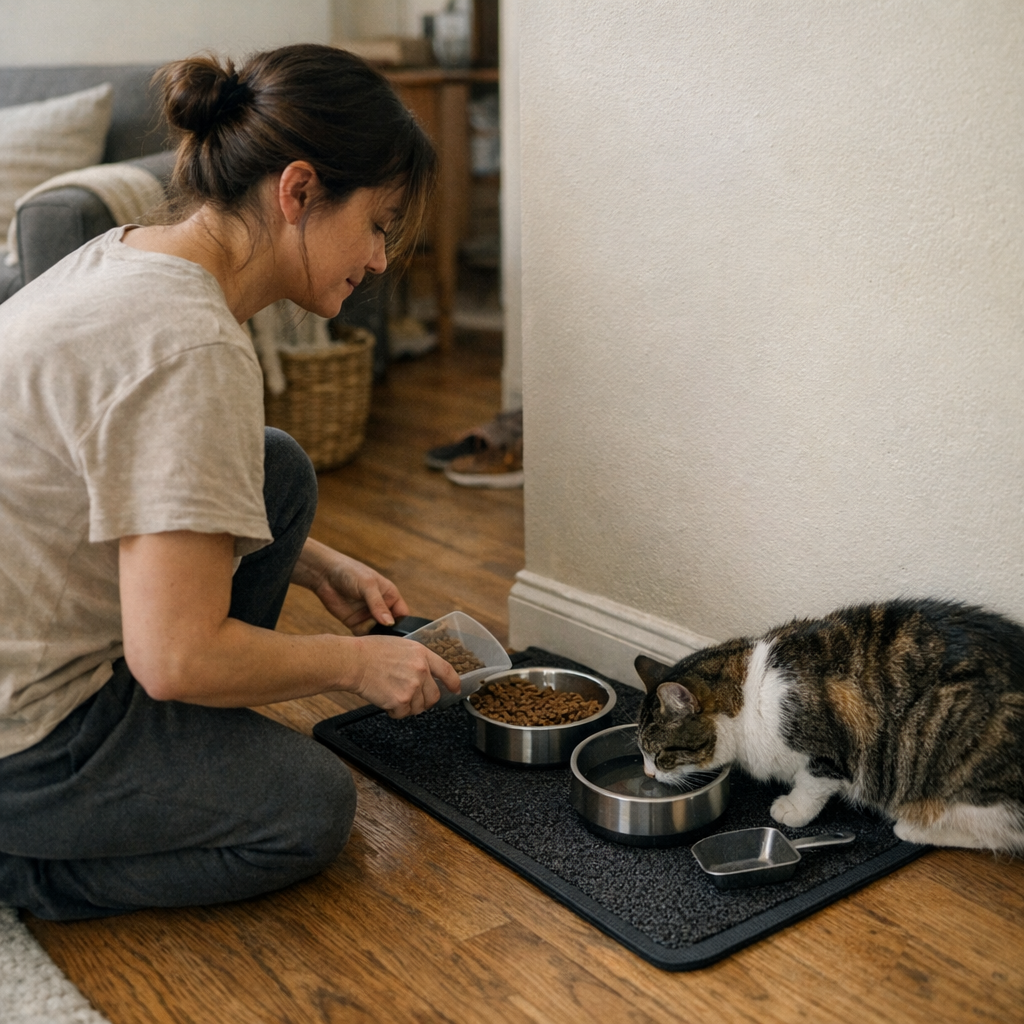
There’s a quiet frustration in seeing a corner you thought was “under control” slowly unravel after a few days of regular use. The feeding spot for my indoor cat always started out contained enough—a mat, two bowls, tucked neatly against the wall. But then the slow, minor mess began: a stray kernel under the radiator, the mat nudged askew by evening, and a faint arc of water marks left behind after each refill.
No one tells you how often you’ll find yourself nudging bowls back without really noticing. But after a while, you do. The difference between a feeding zone that functions and one that doesn’t isn’t always obvious at first—it’s mostly about how much you need to reset each week versus how much quietly stays in place.
A Setup That Looks Settled… Until It Doesn’t
For a couple of days, everything seems fine. Less crunchy crumbs underfoot, fewer glances checking if water’s spread across the tiles. It looks settled at first. Then, without much drama, the daily reset routine reminds you of the slow drift: mats curling, bowls edging outward slightly with each refill, and the tidy border softening until you’re picking up bits in wider and wider areas—hallways, under chairs, near the rug edge.
You realize the original line you wanted to keep isn’t there anymore. Those little shifts mean the cleanup zone quietly grows, expanding into shared living spaces where you didn’t plan for ongoing maintenance.
The Practical Weight of Staying Put
What kept coming back was how much cleanup turned into a repetitive chase. Crumbs appear under the couch even when I’m sure I swept. Moisture rings creep little by little further from the bowl each week. These aren’t big spills—just the slow migration of small messes that settle in if nobody interrupts them.
The real change came from anchoring everything down: a rubber-backed mat, bowls with grips that won’t skate around, no loose pieces left to drift across the floor. It wasn’t about how the setup looked; it was about how much less cleanup I had to do. One detail stood out—two inches beyond the mat, the floor stayed clean day after day. That was the first time I noticed I was thinking less about this spot, not more.
These thoughts stayed with me after noticing how one small part of the room kept asking for the same correction: http://www.stillwhisker.myshopify.com