When Feeding Time Becomes a Quiet Battle for Space
Grouping cat bowls leads to stealing and stress; placing slow eaters' bowls behind visual barriers stops this and eases cleanup.
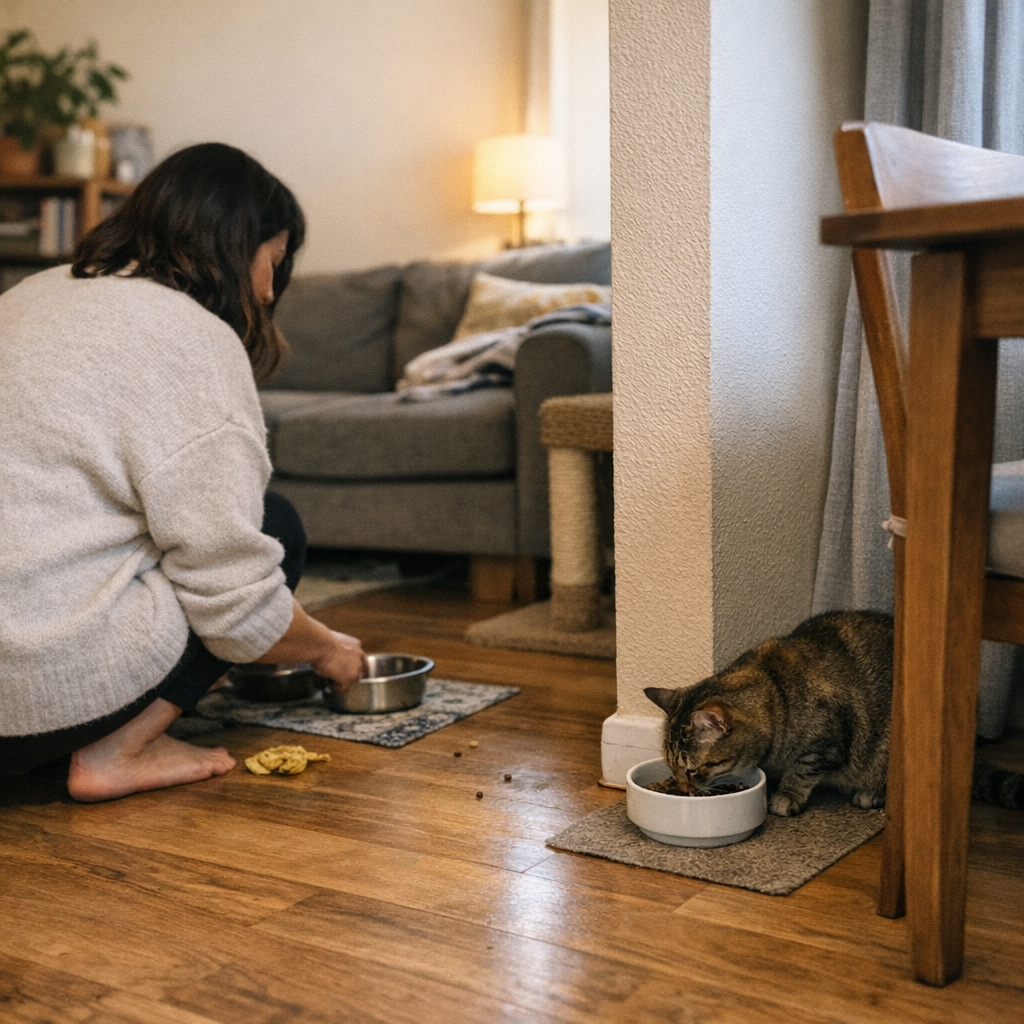
There’s a moment that happens with indoor cats—somewhere between setting their bowls down and later coming back to wipe the floor a little later than planned. At first, it seemed straightforward: two bowls lined up against the kitchen wall, one mat, a tidy corner. It felt organized, especially early on when both cats ate at a similar pace. But the real trouble crept in quietly, a friction that no online guide or initial setup had warned about.
I didn’t notice it right away. After a few days, the pattern became clear: the faster eater finished first, then sidled over to the slower cat’s bowl. No matter how neatly the feeding station stayed arranged, the quiet moment when one cat moved into the other’s food happened every mealtime. What looked like an efficient setup was really just a stage for daily standoffs, followed by out-of-sight scavenging and kibble scattered well beyond the mat.
After a few resets, you start to notice the tension—the darting glances and rushed bites that settle into routine—and the mess only grows. The slower cat sometimes gave up before finishing, wandering away to perch by the window while crumbs trailed across the kitchen floor. The bowl row stayed aligned, but the cleanup never felt complete. That recurring residue, the trace of hurried meals, kept tipping me off that the setup wasn’t working as well as it seemed.
One afternoon, tired of scooping scattered kibble for the umpteenth time, I moved the slow cat’s bowl just behind the nearest chair leg—not far, but out of the bolder cat’s direct sightline. The difference was immediate and repeated. The faster cat hung back, the slower one ate in peace, and most of the food stayed near its intended place. Resetting the feeding station grew easier. The mat stayed cleaner longer, and the crumb trail near the fridge almost vanished. It wasn’t about making the setup look perfect. It was about fewer daily chases, less correcting, and fewer constant reminders that the feeding area wasn’t quite right.
That’s the reality after a few months of living with indoor cats. The arrangement that once seemed settled turns into a repeated process of scooping, wiping, rearranging, and trialing again. The small, repeated act of moving a single bowl quietly shifts the daily rhythm—not to perfection, but toward something easier. It’s a detail I keep noticing, even now, as part of managing feeding areas, water refills, litter-adjacent cleanup, and resetting shared indoor spaces.
If you want to see how these everyday realities shape StillWhisker’s own approach to cat care, you can find them quietly reflected here: http://www.stillwhisker.myshopify.com



