When Feeding Time Becomes a Quiet Struggle at Home
A timed feeder balances feeding if well-placed and contained; loose mats or bowls spread mess, adding cleanup and stress.
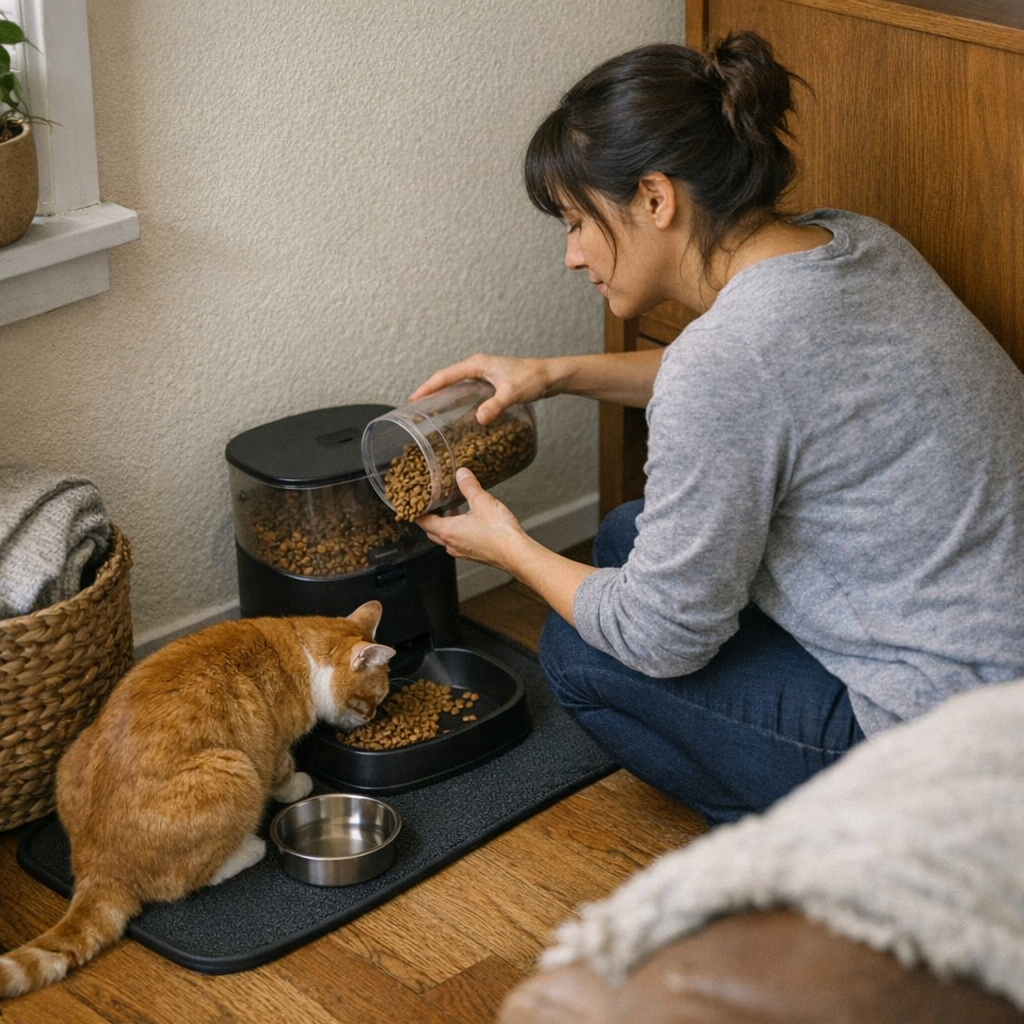
There’s a particular quiet that follows feeding time—at least, that’s the goal. But when a timed feeder joins an indoor cat setup, the calm you expect often splinters into scattered kibble, shifting mats, and a steady pattern of daily cleanups that start to feel like déjà vu. You hope for relief—less crowding, less competition—but that quiet, if it comes at all, only lasts until the next stray piece slides under the chair.
The Tension That Lingers After The First Try
At first, it looked fine. Two bowls, a mat, maybe that new timed feeder—everything arranged to handle the morning rush. For a bit, you watch who eats first, who circles, who cuts in. But soon enough, you’re wiping, sweeping, tucking the mat back under the feeder’s edge—again and again. That cycle kept repeating. Instead of easing the feeding routine, the setup became a kind of maintenance loop, where the tension shifted but never disappeared. I started noticing the crumbs that always appeared just northeast of the mat, as if to remind me how little the layout was containing the mess.
One Ridge That Changed The Pattern
The fix didn’t come from another gadget but from adjusting where and how things rested. Moving the feeder into a tucked corner, away from common traffic paths, helped keep the zone predictable. But it was the small raised lip—half an inch, just enough to catch rolling kibble—that really contained the mess. The difference kept showing. Each cleanup became quieter and quicker. Instead of kibble scattering across the room, the spilled pellets gathered in one spot, easy to sweep before they slid under furniture. The mat stayed in place far more consistently. That small change let me reclaim mealtime as a moment for the cats, not a crumb chase.
Feeding That Respects The Home, Not Just The Clock
These details come into focus slowly—the lopsided bowl, a persistent dusting of residue, the one cat who always finds those stray bits. It’s rarely a dramatic fix; more often, it’s a steady, small correction. Relief didn’t come from splitting bowls or stricter timing, but from shaping a feeding space that handles daily use without breaking down. What stands out most is how a contained feeding zone demands less from you—systems settle, routines smooth out, and resetting stops feeling like a second job.
Some setups claim to control mealtime, but few actually manage the slow, shared disruption of a lived-in cat space.
If you want to explore what else has worked in a feeding zone like this, there’s a quiet page here: http://www.stillwhisker.myshopify.com