When Feeding Time Feels Like a Quiet Revolution
Separating indoor cats' feeding spots reduces crowding and tension, easing mealtime and cleanup while minimizing conflicts and maintenance.
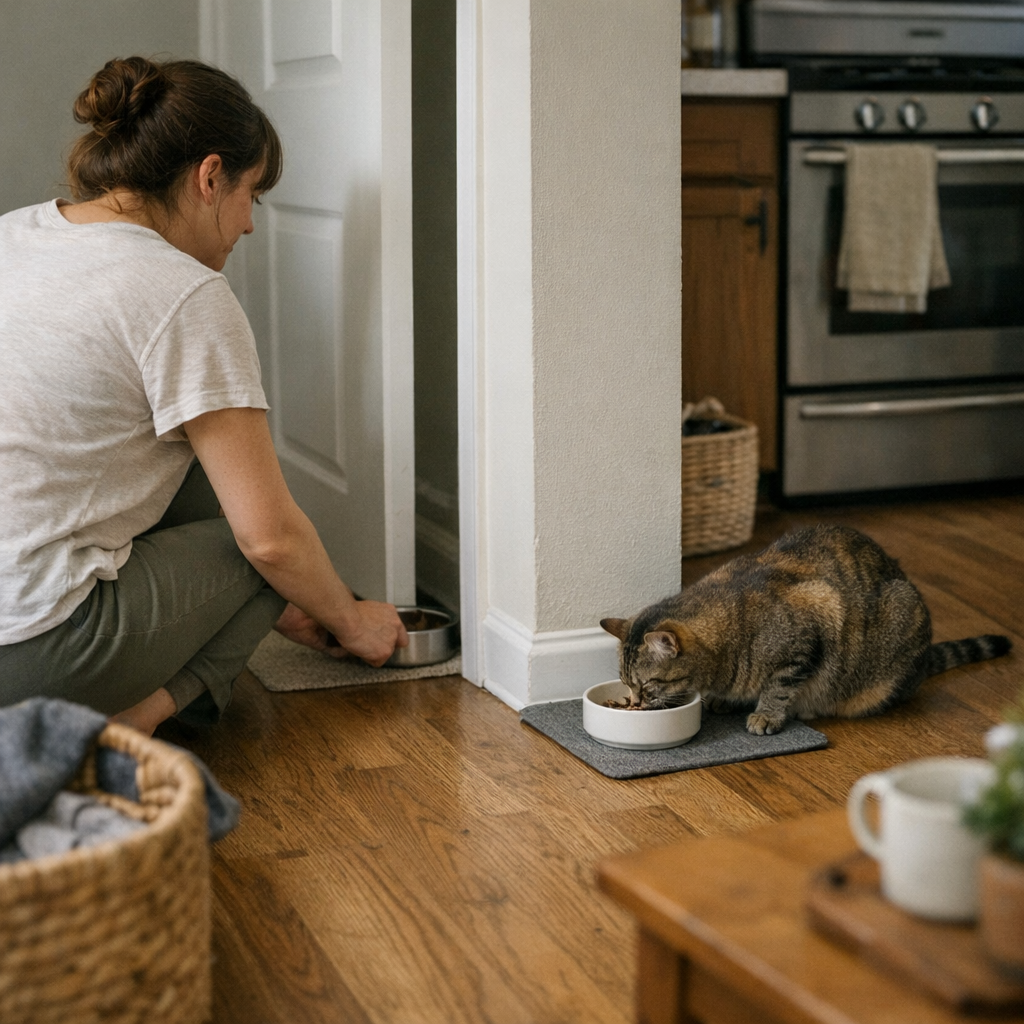
You only notice it after a few weeks—how the feeding setup, tidy and grouped, quietly takes over corners of the day. Arranging bowls for a pair of indoor cats promises quick cleanup and togetherness, but the plan sags in small, familiar ways. You bend down again to fish food from behind an appliance. A bowl ends up sideways near the wall. One cat lingers on the mat while the other waits or walks away. It seems manageable, right up until you see the routine thinning at the edges—resetting for the cats, but just as much for yourself.
At first, it looked fine. One corner for all their needs, everything within reach—a clean mat with just enough room for two bowls and a water dish. But the difference kept showing up, quietly. Crowding makes the cats restless. Mealtime spills drift past the mat’s edges. Sometimes one cat circles, distracted, while the other finishes, and the whole area hums with a low-effort, minor mess. You notice these habits after a few resets, the space quietly asking for small corrections, over and over. That’s the part that kept returning.
What Looks Tidy, What Really Lasts
The single feeding zone always seemed efficient. It reduced visible clutter, gave a clear line under the daily scramble. But by late morning, order is less clear: kibble drifts toward baseboards, the water dish inches away from its spot, crumbs gather along edges where no one sweeps twice.
A quieter realization follows—effort saved up front often multiplies later. Smooth starts pull out into little repairs: another cloth swipe, a bowl nudged back, a few more crumbs swept up just to keep the space passable. What looked settled at breakfast unravels by midday. Sometimes the gap between easy-to-see and easy-to-live-with grows sharpest after a week or two.
When the Chore Eases Up
Separating their bowls made it feel less fraught. Not dramatic—just a second spot tucked behind the hall door, out of the first corner. One cat claimed the kitchen, the other drifted quietly to her own place. With the change, less looking over shoulders, fewer food collisions, and almost by surprise, the floor stayed cleaner.
Cleanup found a new rhythm. The kitchen mat, once crumby by noon, sat mostly clear until evening. Surfaces around the new feeding spot rarely needed wiping except now and then. Resetting became lighter without really adding time—and the cats, both, finished eating instead of circling, waiting for quiet moments.
A setup that feels steady, morning through night, is the one that holds up best. Sometimes shared routines need just a little more breathing room than first assumed.
If you want to see what a real-world setup looks like: View the full collection



