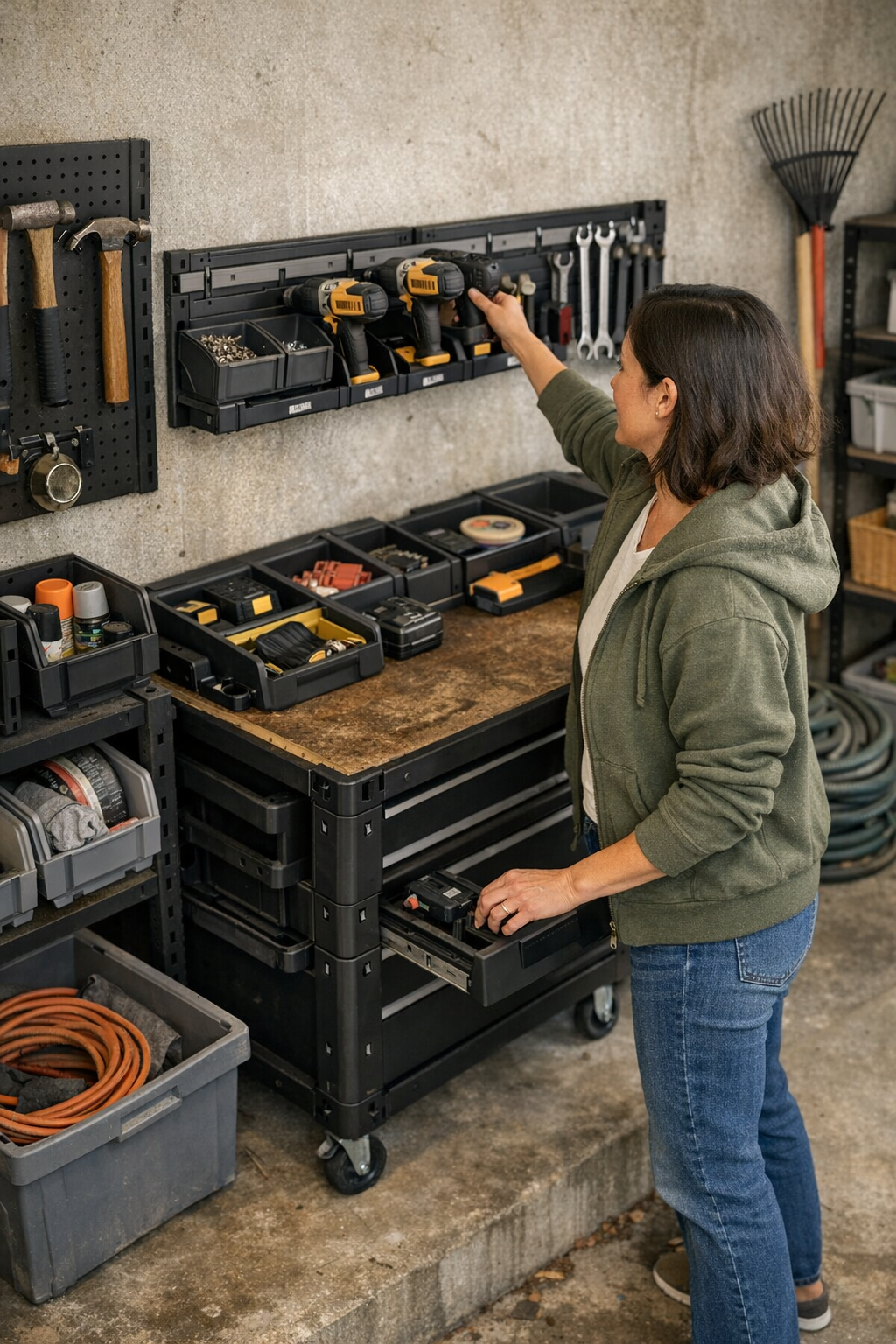
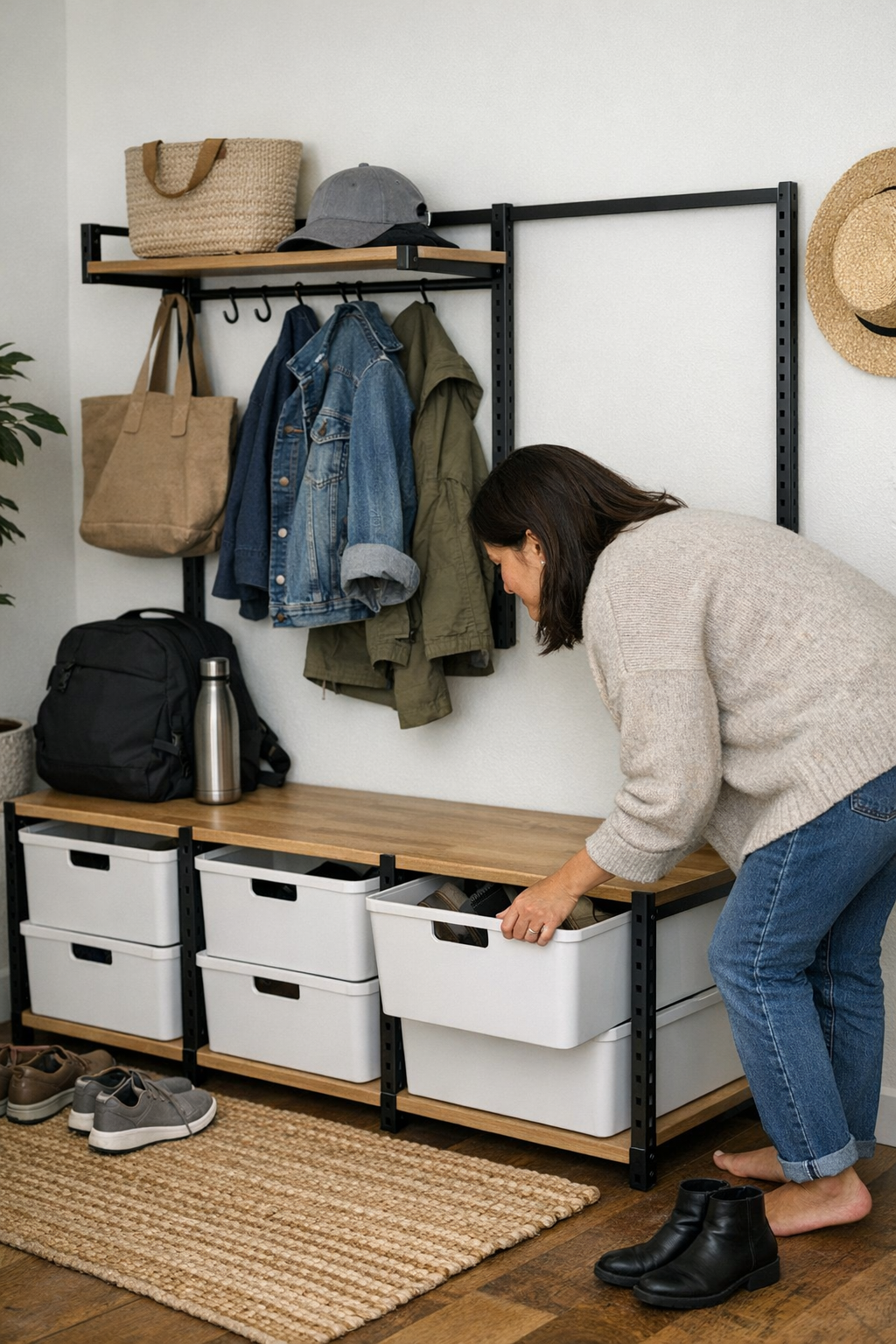
When Flexibility Becomes the Heart of Everyday Storage
Long-term usability depends more on flexibility and ease of movement than initial order, preventing blockages and clutter as needs change.
It’s easy to take pride the first time your workshop or garage looks “done.” Cabinets press tight to the wall, bins snap neatly into place, and you step back with a quiet sense of order. The space feels resolved. But that feeling rarely lasts.
The real test isn’t the initial setup. It comes later, in the rhythms of daily use. Maybe you need to reach an outlet or put away a bulky item, and suddenly the whole system resists its own rigidity. That’s when the room stops working with you and starts working against you.
The Hidden Cost of “Done”
There’s a particular satisfaction in a crisp, immovable storage grid where everything has a designated home. But after days or weeks of real use, the cracks emerge. A mower collects dust behind a tight rack. Odd items stack up in corners where bins no longer slide easily.
You don’t notice it immediately—but you feel it.
Every fixed shelf or cabinet quietly gathers stray objects—those things you mean to store properly but end up leaving nearby because moving the rest feels like too much effort. Over time, what looked like a finished storage solution adds friction to your workflow.
Mobility Changes the Equation
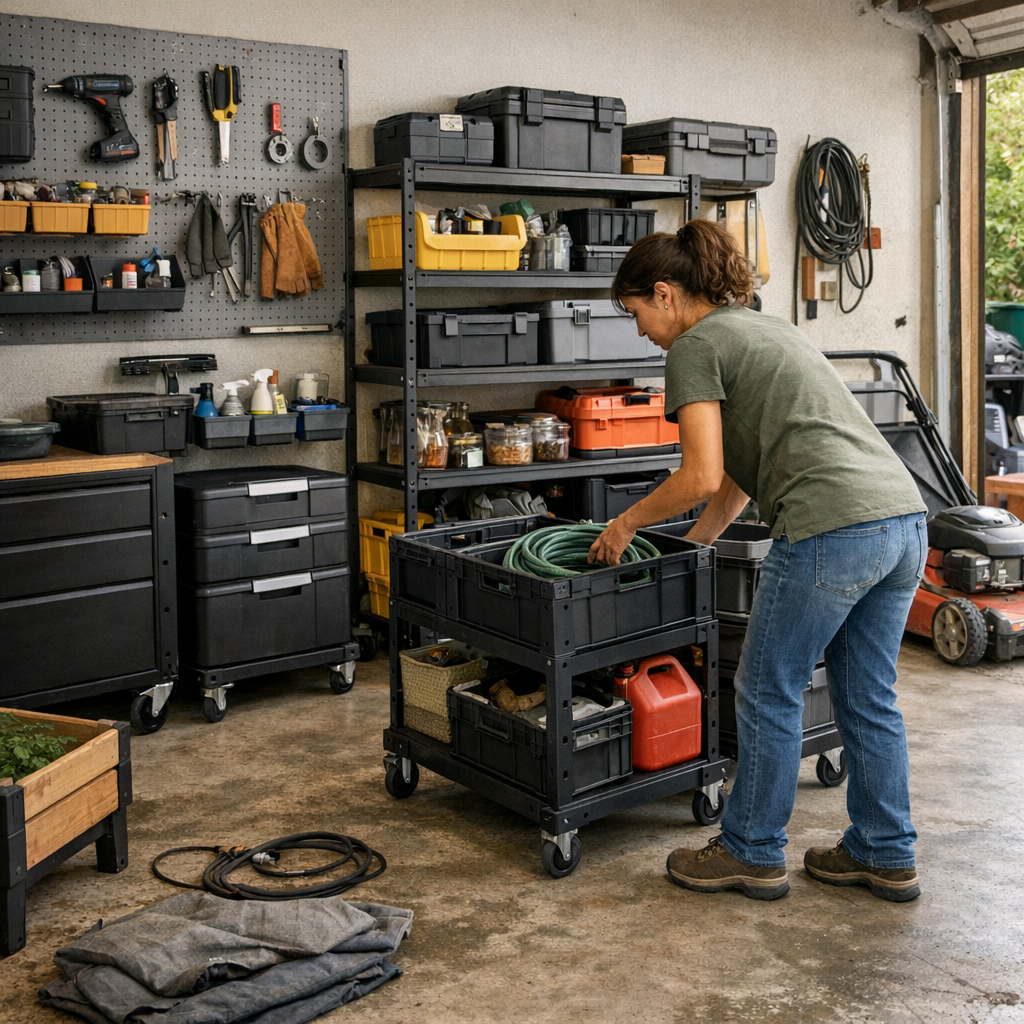
Inviting movement back into the space changes everything. I replaced two fixed cabinets with a stable shelf and a couple of sturdy wheeled carts. The total storage volume barely changed. But the difference in daily use was quietly significant.
Suddenly, I could slide a unit aside to access an outlet or roll back a section to clean the floor. When projects evolved, I could shift zones without hassle. Tidying up after work became a small adjustment instead of a full reset. Returns felt lighter.
Often, it’s the items you can move that make a space truly flexible and dependable.
Not All Corners Should Be Filled
Efficient storage isn’t about packing every inch on day one. It’s about leaving room for whatever comes next. Giving the space room to breathe by leaving one wall partially open or using rollable shelves creates slack in the setup. This extra margin allows the room to adapt to your changing needs rather than resist them.
Sometimes the best return path is the one you can clear without a second thought.
These reflections came after multiple projects in my own workshop and took on new clarity during a garage reorganization with these friends of mine. The takeaways resonate especially in modular storage, mobile and wall-mounted units, floor-based setups, garage and workshop organization, raised-bed garden systems, and small workspace layouts.
Storage isn’t about a one-time perfect finish; it’s about building in flexibility that meets real use. Movement, access, footprint, and return flow matter more than a perfectly packed shelf. The best storage systems change with you, not against you.