When Yard Cleanup Feels Less Like Chore and More Like Flow
Yard cleanup under ten minutes depends on storage guiding return flow and absorbing use, preventing pileups and blocked paths.
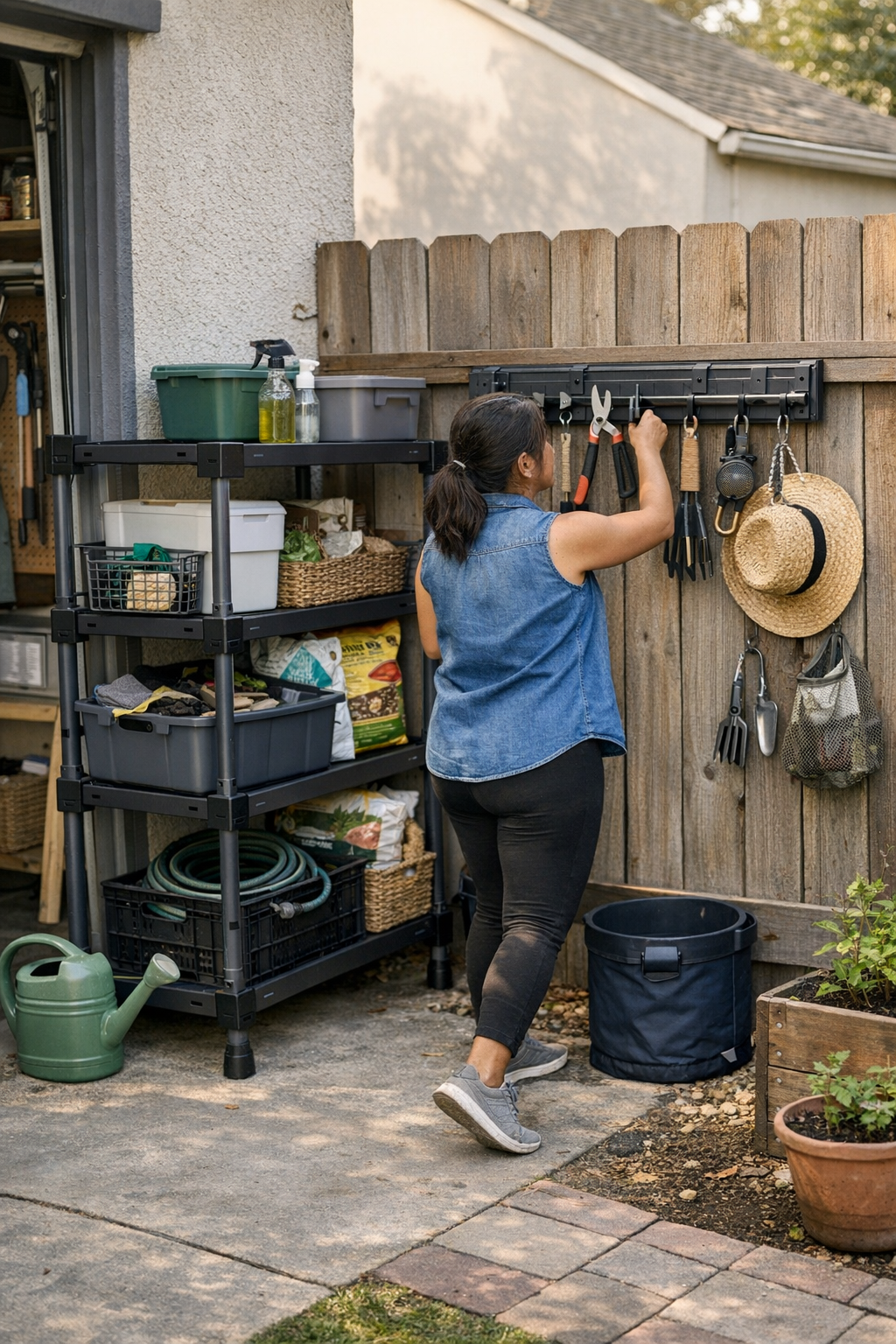
There’s a certain comfort in thinking your yard setup is working. Bins are lined up, shelves make sense, and for a day or two, everything seems to find its place. But that neatness rarely lasts as long as you hope.
First, it’s just a ball left out overnight. Then a pair of shoes wedges itself under a bench. Eventually, the edges fill with odds and ends. If more than one person uses the space, that quiet unraveling happens faster. You begin to realize that a reliable ten-minute cleanup doesn’t depend solely on storage capacity, but on how the space handles real, messy use when routines collide.
Where Clutter Actually Starts
You don’t notice it immediately.
The real friction comes when people return things in waves, out of order. A kid tosses gloves somewhere; someone stacks tools where they don’t fit. Small hints of chaos gather at the boundaries—near walkways where forgotten objects quietly narrow your path.
That’s what I kept coming back to: not a shortage of space, but the subtle resistance every time clutter blocks the way. If your setup can’t adapt—if it doesn’t absorb the randomness of real use—cleaning up becomes a chore instead of a quick habit.
The Quiet Impact of Going Vertical
I used to think adding more bins would fix it.
Maybe another crate would catch the overflow. But ground-level storage creates its own congested zones, pooling mess right where people walk. Suddenly, picking up is more about shuffling things aside than putting them back.
The shift happened with a wall system—rails, hooks, and shelves hovering just above the floor. After a couple of days I noticed clutter lifting. There was an unexpected relief in seeing the floor mostly clear, as if the air itself had more room to flow.
It was a gentle change, but it stuck.
Making Space for Life to Happen
A small detail made the biggest difference. I left a foot of clear space between the storage wall and the main path—the “fast return” zone, I started calling it.
That buffer allowed last-minute drop-offs without blocking anyone passing through. It’s striking how quickly people settle into the new habit; items find their way back to hooks and shelves mostly on their own. There’s less nudging, less double handling, and less of that quiet guilt of “I’ll get to it later.”
The yard feels more ready for whatever happens next. Not perfect, never finished, but easy to reset. Ten minutes stays ten minutes—even on the messiest days.



