When Garden Beds Breathe: Finding Space in Small Yards
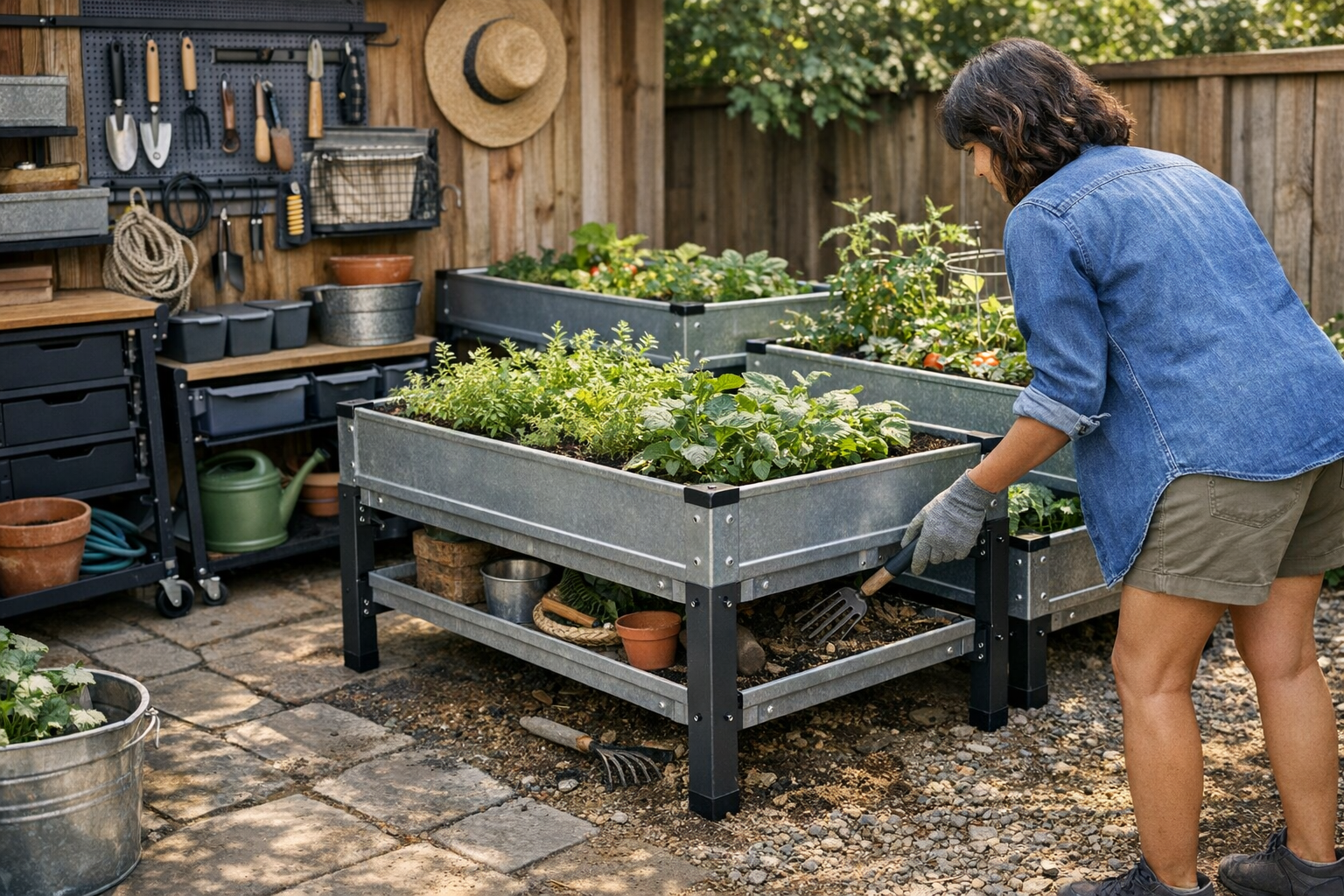
A modular raised-bed system with slight elevation eases maintenance by preventing clutter buildup, improving access, and simplifying cleaning.
When Tidiness Hides Trouble (And Why Small Gaps Matter More Than We Think)
Sometimes, the best intentions trip us up. There’s something satisfying about arranging raised beds in neat, ground-hugging rows — everything looks efficient, contained, almost perfect at first glance. But over time, what looks streamlined on day one starts to reveal tiny points of friction. It’s easy to overlook practical maintenance until you’re knee-deep in tangled roots or crusted leaves, realizing that tidiness can sometimes hide trouble.
You don’t notice it immediately.
But you feel it.
How Well-Arranged Spaces Become Harder to Maintain
Early on, closely packed raised beds feel satisfying — each corner squared off, each patch accounted for. No gaps underfoot, no room for weeds to sneak in. But the illusion doesn’t last. Within a few weeks, debris wedges itself into corners you can’t quite reach, and those tight seams start to collect what’s left behind: matted roots, soggy soil, scraps of this season’s growth. The space that once felt so orderly now works against you.
I once set up a series of beds tightly along a shed wall. It made sense to maximize every inch of floor and wall space. But every time I tried to clean or weed, I found those smallest corners were the first to be neglected — and the last to be fixed.
Why Small Spaces Make a Big Difference
A shift happens when beds are given just a little room to breathe. Even a three- or four-inch gap changes daily maintenance. Suddenly, you can sweep beneath the frames, air circulates better, and cleaning takes seconds instead of becoming a dreaded project. The space feels lighter. You find yourself keeping up, rather than letting debris and roots pile up for a future maintenance session that never quite arrives.
This feels subtle at first — barely noticeable until you realize you’re moving more freely, less hindered by what’s out of reach or hidden underfoot.
It’s a reset for the space and for the workflow.
Clarity Over Crowding, Season After Season
What seems efficient at the start often becomes a burden later on. Those tightly clustered layouts, so appealing for maximizing growing area and wall space in backyard or workshop setups, can become magnets for neglect. Each extra inch of accessibility provides an invitation to maintain, to keep things clear and functional. The clarity builds momentum: when raised beds or modular storage units are easier to reach, upkeep feels less like a chore and more like a natural part of the day’s routine.
The best design isn’t always the most crowded or the most orderly at first glance. Sometimes, the real payoff is in those small, open spaces — the ones that let you see what’s happening and keep things moving, quietly and without extra stress.
It’s surprising how something as simple as a few inches of air can make a place feel more alive.
And how the smallest spacing decisions, left unattended, can shape an entire season’s ease of use.
These thoughts came together while rearranging my own raised beds and workshop storage frames, and I found this raised bed guide helpful through the process.