When Heat Guns Fail: The Hidden Struggle of Paint Stripping
Heat guns that appear similar initially can perform very differently with extended use; good insulation prevents overheating and finish problems.
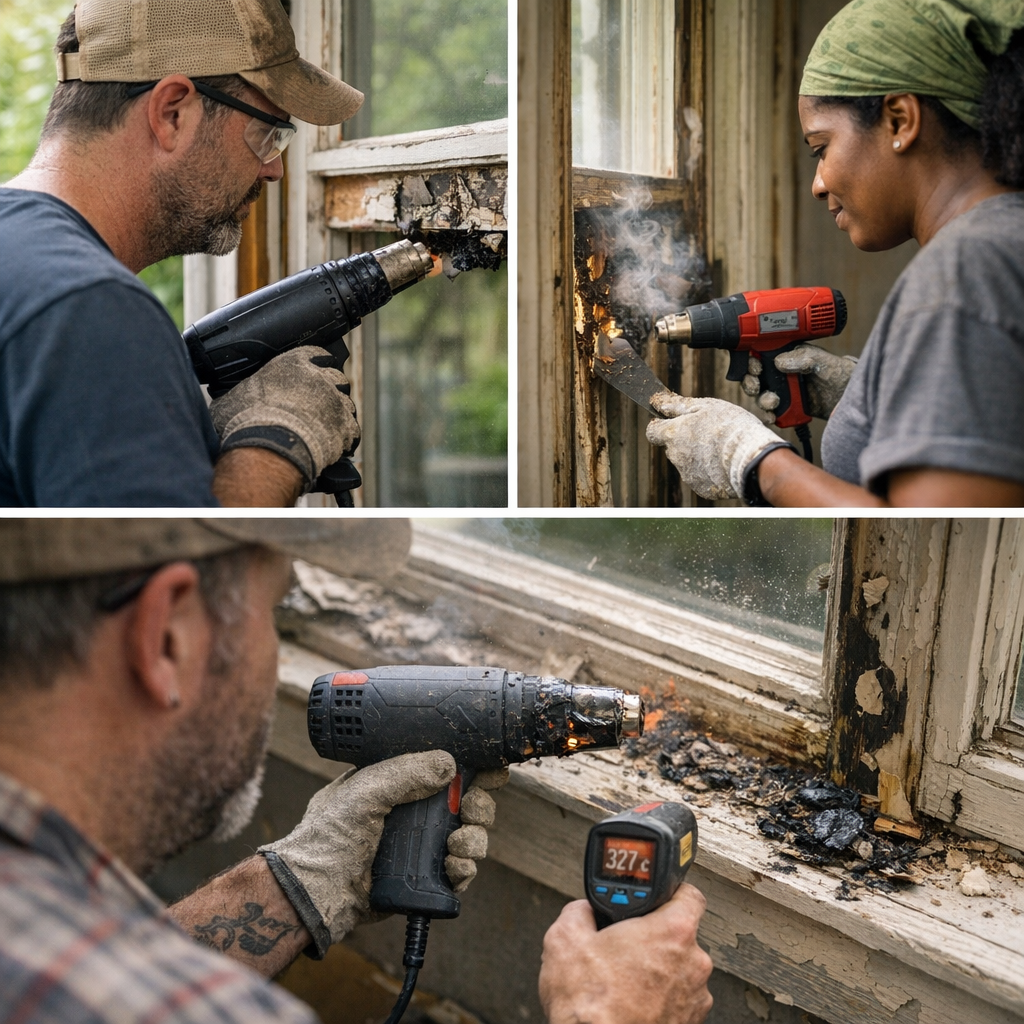
It’s easy to think all heat guns feel the same. They line up on the shelf, promising quick paint removal, each with a similar shape and wattage—nothing that stands out at a glance. You switch one on, coax old paint to release, and the job begins. Only after an hour or two into a bigger project does something uneasy make itself known.
You don’t notice it immediately.
But suddenly, your rhythm slips. A tool that once felt reliable starts to falter, revealing a surprising side to what seemed like a simple purchase. That’s when the limits of a heat gun—its real battery life, in a sense—start showing up in ways no manual ever warns you about.
Where Similarity Ends
At first, performance is predictable. A heat gun heats, the paint wrinkles, you scrape. There’s a kind of satisfaction in the repetition—smooth, methodical, nearly meditative.
Yet, run the tool for longer stretches and something shifts.
That identical-looking model from the hardware store now emits an acrid scent. Maybe the airflow grows choppy, or the paint refuses to pull away cleanly in wide sheets. The momentum of your progress slows, replaced by a growing impatience as you chase stubborn flakes.
You rarely anticipate these interruptions. They creep in quietly, until what should be a routine task grows messy—scorched edges, blisters left behind, and the gentle threat of more sanding nudging at your patience.
What You Don’t See on the Box
There’s one window, then three, then the fifth frame—pausing now and then because the tool seems sluggish. Sometimes the heat suddenly dips, sometimes the nozzle begins to soften and warp. None of these moments are catalogued in the specs.
This is where performance truly shows itself, well after you would’ve returned an unused tool to the shelf. Underneath those plastic shells, the subtle difference is almost always insulation—especially around the nozzle—and the material’s ability to hold up under repeated cycles.
During a longer stretch on an older house, it became clear: a heat gun with ceramic-insulated nozzle held a steady temperature and kept the work moving, while another model, despite the same listed wattage, began to fail in small, weary ways. The difference didn’t just alter the paint stripping. It shaped my whole experience of the job—making it either quietly satisfying or unpleasantly taxing.
The Small Choices That Matter
The real test never comes at the start of a job. It arrives halfway through, when the easy layers are long gone and the tedium sets in. Some tools demand more breaks, running too hot then too cold, or shutting off mid-strip. Others simply feel steadier, letting you work without thinking about them.
That’s where the quieter features—decent nozzle insulation, a solid duty cycle—start to prove their value. A ceramic-insulated gun, I found, gave me back more than just time saved scraping. It offered a kind of calmness to the process: less stopping, fewer surprises, a sense that each window completed was one less thing to worry about.
You don’t notice it at first.
But you feel it.
There’s something grounding about small choices made well, and how they slowly transform a long, messy task into a tolerable, even absorbing, rhythm.
Sometimes it isn’t the specs that matter—it’s the way a tool holds up, quietly, over time.
These thoughts came together while hunched over the edge of an old casement window—a project that kept me reflecting on what’s worth noticing.



