When Hidden Bins Turn Entryways Into Cluttered Corners
Entryway setups with hard-to-reach bins lead to hidden clutter and inconvenience; open, accessible storage supports use and keeps return flow steady.
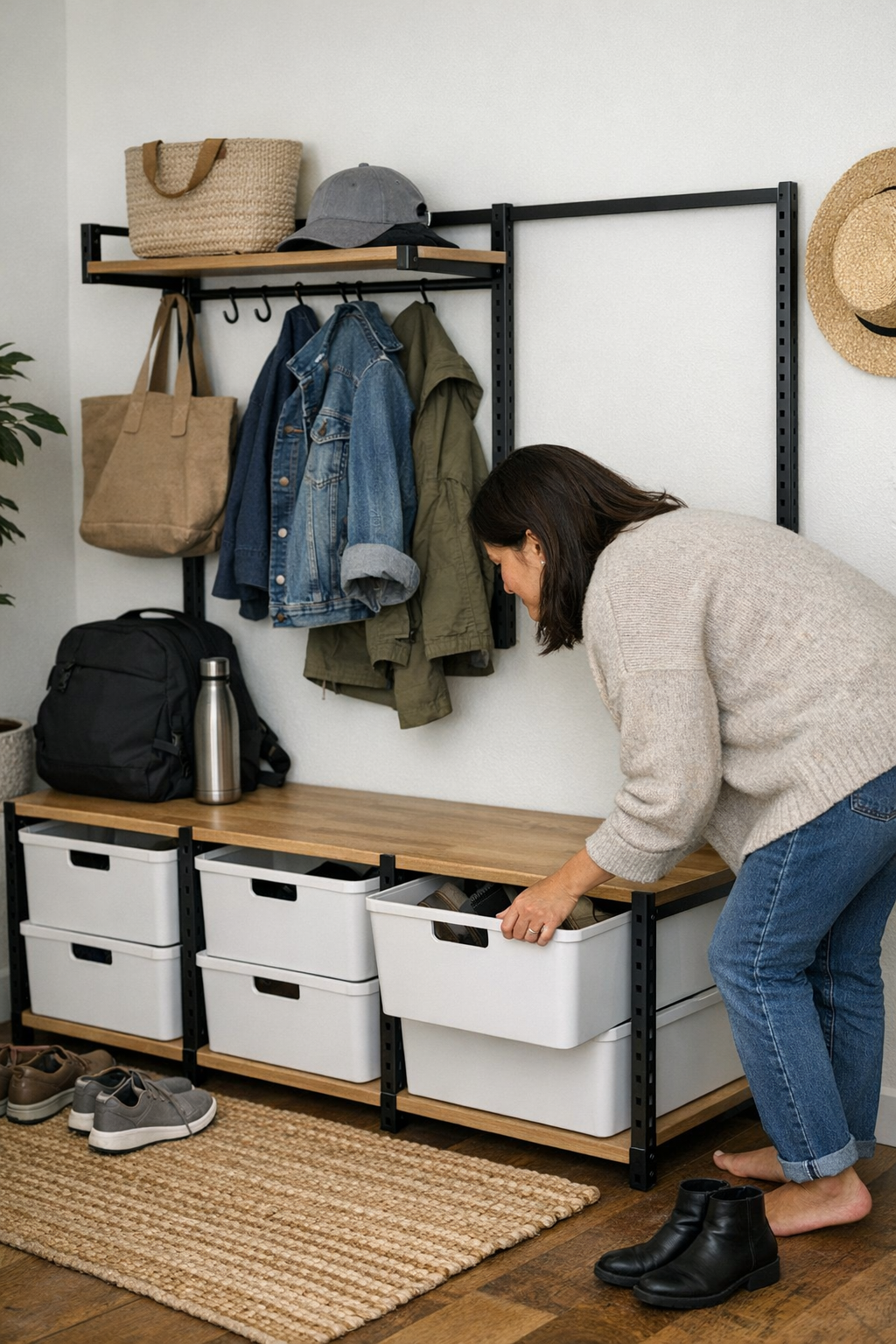
Some days I’d walk through the door, arms full, shoes squeaking with leftover rain, and catch the entryway looking tidy—bins flush against the wall, the promise of control. But it rarely felt as settled as it looked. I’d still fumble for a place to drop wet gloves or trip on shoes that didn’t quite make it into their slot. Living with transition storage that looked neat on the surface revealed something quieter underneath: how much an entry isn’t about appearances, but about how things move in daily cycles. The system only works if it can catch up with real life.
When Bins Become a Backlog
You don’t notice it immediately. The structure seems practical—bins for every category, lined up and labeled. But stacked storage brings an odd friction, almost invisible at first. I saw it in how my son would choose the nearest pile for his shoes, and how the bottom bin hosted a growing layer of mismatched gloves, always out of season. Each time more than one person came or went, you could feel the pause—someone waiting, someone dodging around a bottlenecked bench.
That was the part I kept coming back to. The bins did their job, technically. But with every crouch and shuffle, the promise of order turned into a slow accumulation. A soft backlog, half-hidden, pressing at the edge of the threshold.
How Things Really Land
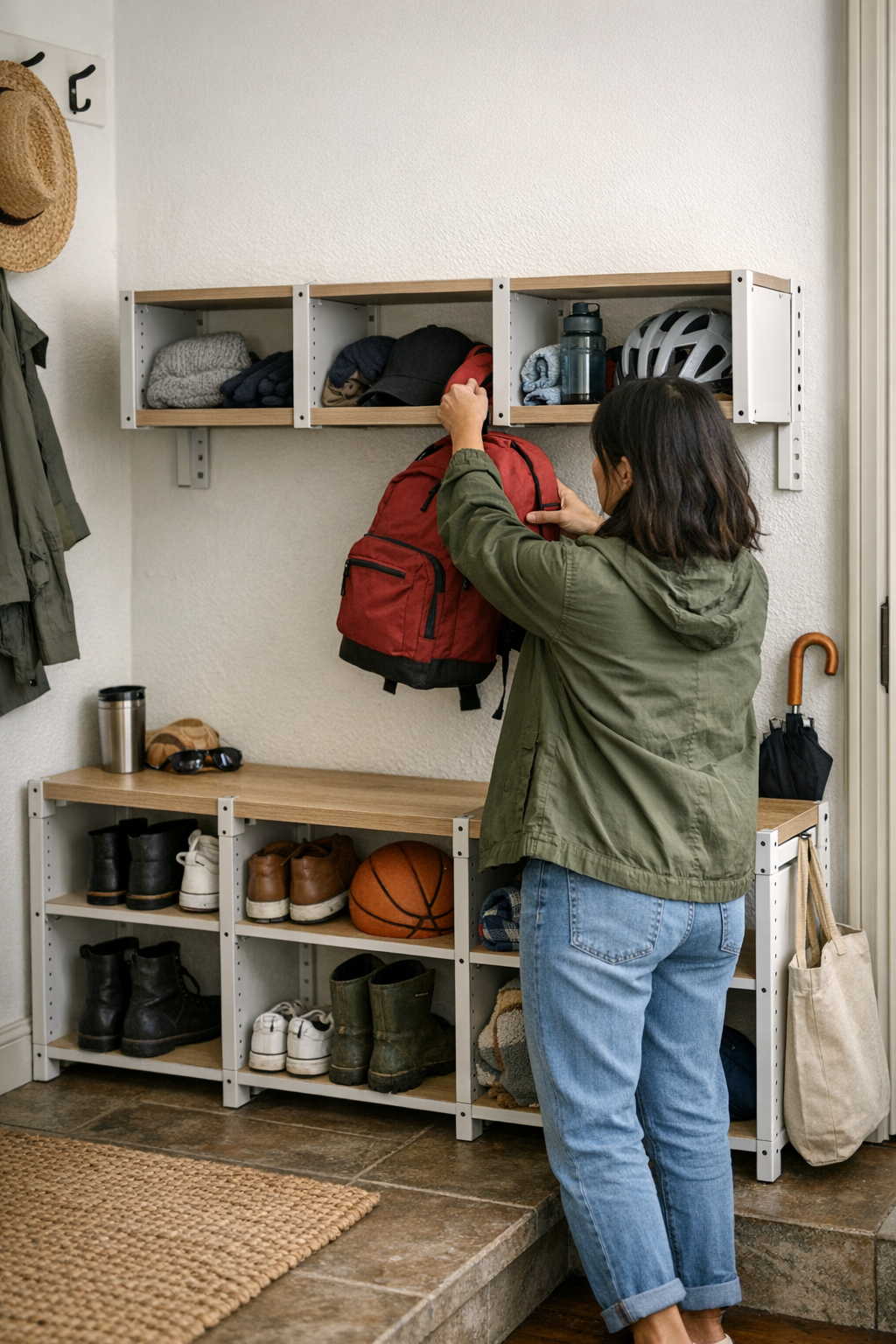
There’s a small relief that comes from watching the natural paths of shoes, bags, and coats. It happens where things are visible and easy to reach. When the open cubby moved in—wall-mounted, at the level where hands naturally hovered—shoes stopped sprawling out, gloves found their slot, and bags hung above the muddle on the floor. It didn’t feel forced. There was less negotiating for space, and fewer murmurs of, “Whose are these?”
You might look up and notice the motion of arrival smoothing out. Even at peak hours, items moved in and out without the stutter-step of shifting bins or digging below. I realized the best reset was almost silent—just one quick sweep at day’s end, rarely more than a few seconds.
Letting Use Settle the Space
There’s humility in seeing how a transition area really gets used. Organization that follows the ways people actually move—rather than how we hope things will stay placed—lets the space breathe. I found myself adjusting less, resenting the clutter less. Even on muddy days, the entry didn’t unravel; it adapted. The tension between wanting things controlled and needing them accessible settled, quietly, into mostly workable rhythms.
You don’t always get a picture-perfect entryway out of it. But letting the routine write the rules makes the mess less permanent, and the space a little more forgiving for whatever comes next.
Some of these changes unfolded while tracing the everyday churn between arrivals and departures, and a few more ideas are tucked away here: http://www.betweenry.myshopify.com