When Hidden Clutter Turns Your Entryway Against You
Closed entryway drawers trap moisture and odor despite appearing organized; open, ventilated storage prevents dampness and eases daily resets.
There’s a quiet pressure that settles in the space where everyone comes and goes. At first, I tried to keep it looking serene: closed benches, covered bins, everything tucked away. But even when surfaces looked calm, I noticed something stale trailing after each use. The idea was to bring order to the entry; instead, it hid small problems in the air. With every damp arrival, the difference between neat and livable crept in—the kind you only recognize after several cycles of real, messy life at the threshold.
Where Closed Storage Misses the Mark
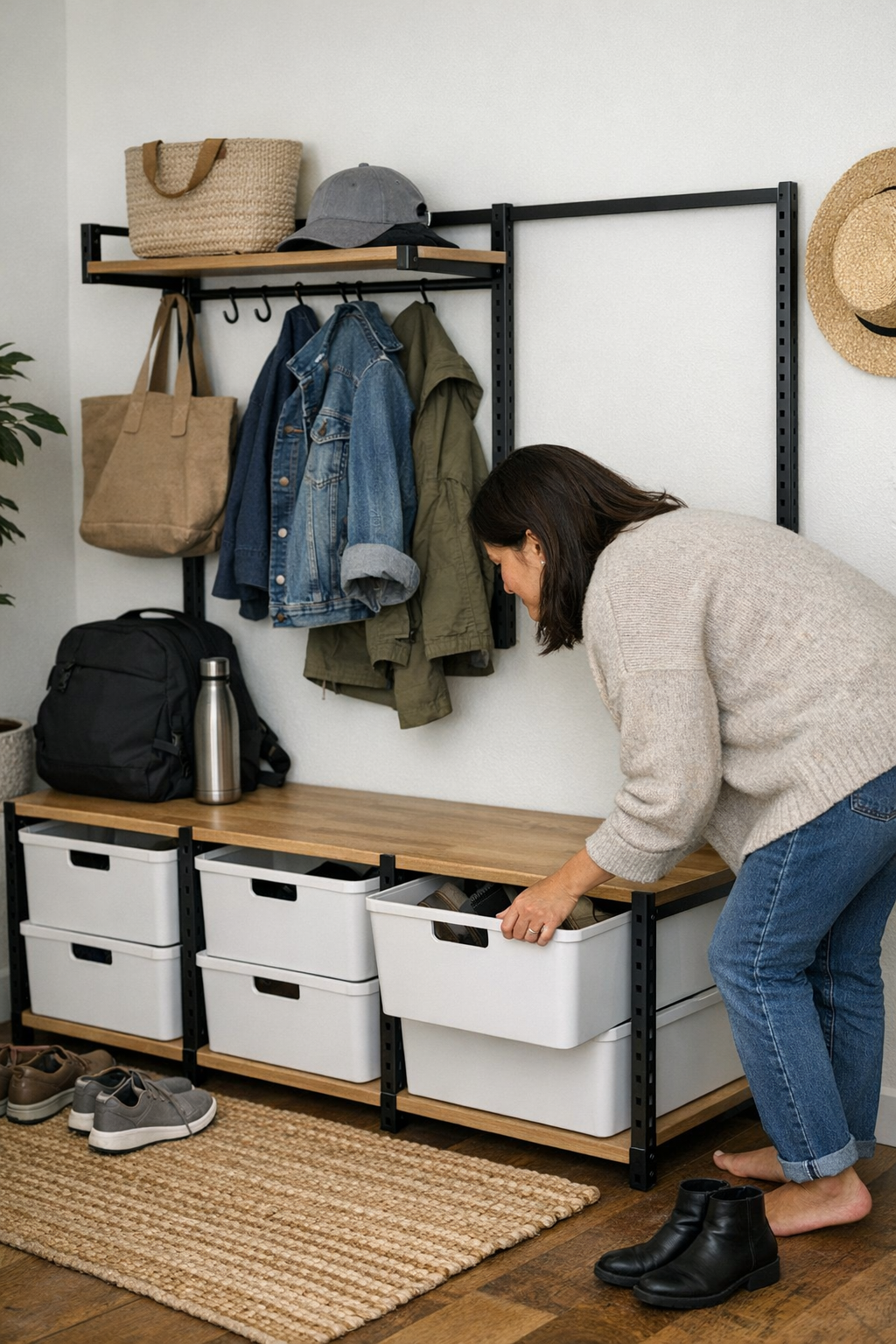
It’s easy to believe that a shut bench lid or a closed drawer means the area is working as intended. But the real test isn’t what meets the eye; it’s the moment you reach for your favorite shoes only to find them still clammy—or worse, smelling like yesterday’s rain. It’s subtle. You don’t notice it immediately.
You just feel it.
The row of shoes along the bench edge starts to spill over. Damp bags slip into corners. Every hidden compartment becomes a pocket of humidity after a stretch of busy, wet days. The order feels quiet, but so is the moisture buildup behind it.
Air, Movement, and the Subtle Reset
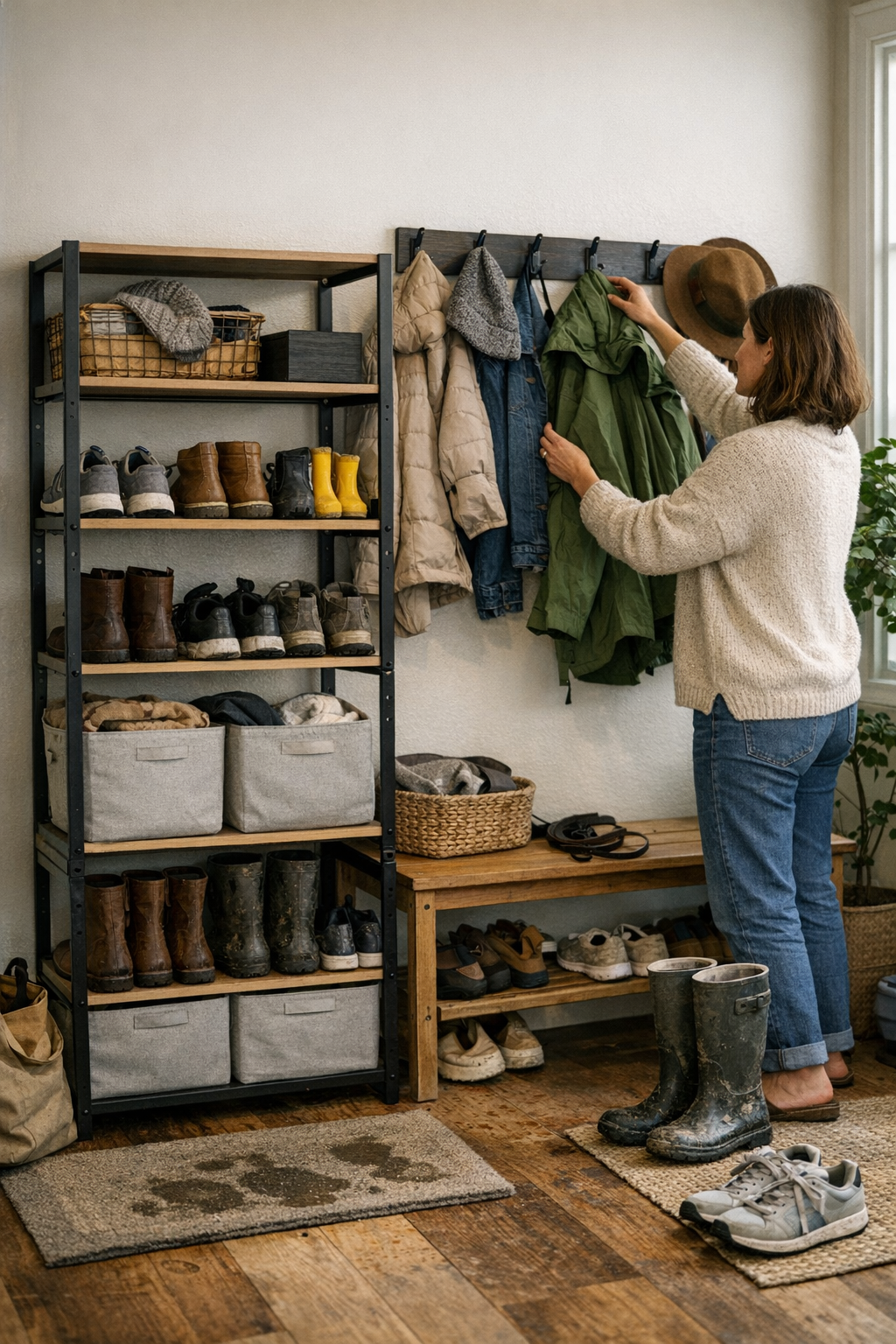
I resisted open racks at first—they felt exposed, less composed—but then I noticed something simple: overnight, shoes placed on a wall-mounted rack actually dried out.
One night made all the difference. No more slow, sticky hours waiting for shoes and gear to air out before heading out again. The open arrangement made these little daily resets easier, less like a chore and more like a natural rhythm.
What’s lined up in the open can be checked at a glance, aired with each pass, and nothing “disappears” to become tomorrow’s problem. The daily arrivals and departures leave a visible record: a spread of shoes, a sling of gear—not the dense fog of hidden moisture.
Where Structure Shapes Living
Modular storage seemed like a detail at first—a sliding rack, a cubby with a gap in the back—but the structure itself turned out to carry the routine.
Benches remain useful, but now they invite people to pause, not pile up. The zone feels neither strictly controlled nor purely decorative. Living in-between, the space flexes with whoever walks through: shoes come and go, the row widens or contracts.
The right structure made it easier to breathe. Literally—and in the sense of being able to reset after chaos without a second thought.
Some of these observations found their way here while reorganizing real transition spaces—if you’re curious, the full range quietly sits at betweenry.myshopify.com. You will receive a blog body draft.