When Hidden Power Bricks Disrupt the Flow of Work
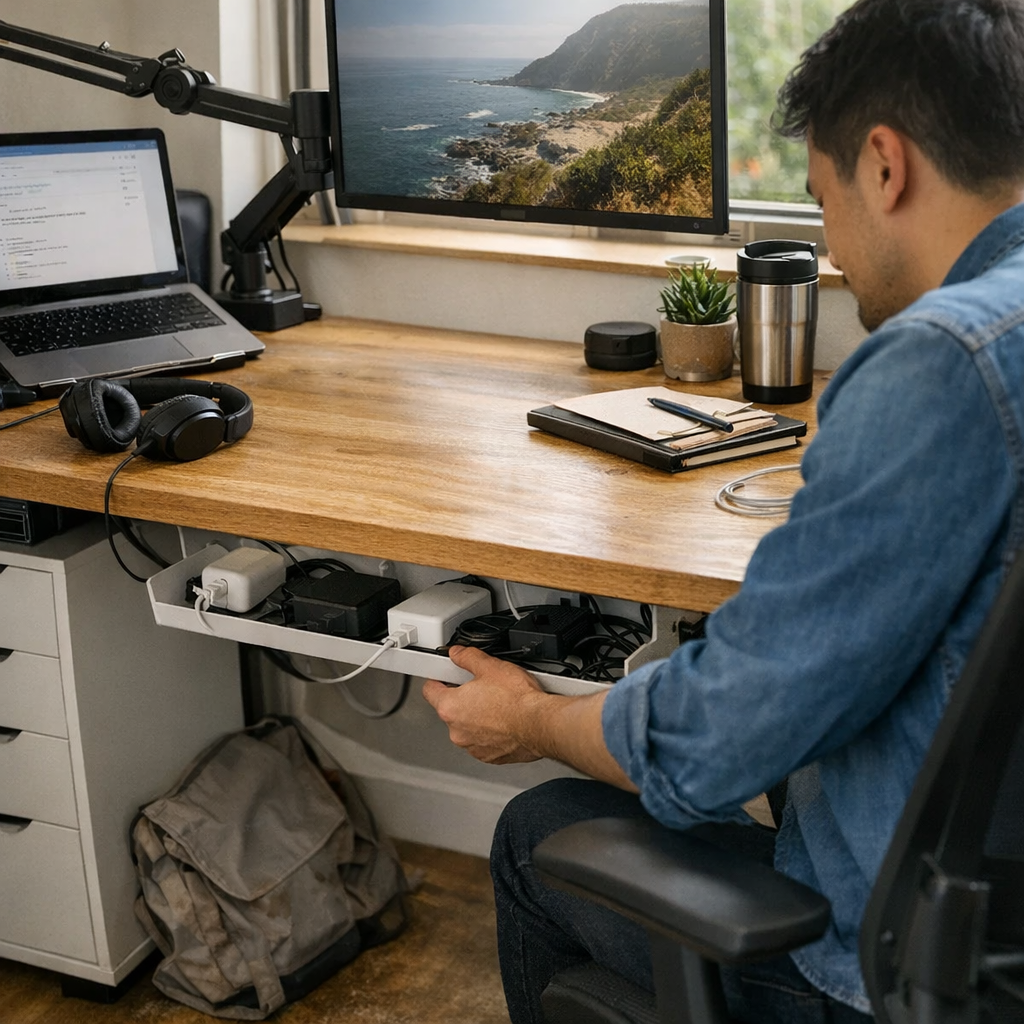
Hiding power bricks in a sealed box looks clean but slows device swaps; an open under-desk tray reduces clutter while allowing quick access.
The Hidden Cost of Hiding Everything Under Your Desk
It doesn’t take long for a desk to go from arranged to entangled. Maybe things look smooth enough when you first sit down in the morning—just a clean surface, a monitor positioned at the right height, and a neat cable snaking out of sight. But the illusion slips with every plug or unplug, especially when power bricks start creeping into view or knocking against your feet. What begins as a minor distraction—a stray cable or a knot under the desk—quickly accumulates. Strange how order so quickly gives way to tension, especially once real work begins.
I always thought hiding everything under the desk would solve the problem for good. That urge leads you toward cable boxes and sealed compartments—a promise that distractions can be boxed up and banished. For a while, it works. There’s a simple calm in a desk cleared of clutter and a little rush when cables are tucked away—nothing to catch the eye or trip the leg. After a few days, the surface feels easier. But here’s where it sticks: when device changes become daily, a sealed box stops feeling clever and starts feeling like a gate. I'd find myself fumbling for a spare charger or tracing a cable tucked one layer too deep, breaking focus every time.
Open cable trays changed that experience. I tried one—low-profile, fixed just beneath the rear edge of the desk. The power bricks lined up, mostly out of sight but always within reach. Under-desk clutter remained hidden at a glance, but I could swap chargers or add devices without ceremony. The desk wasn’t untouched—cables hovered near the tray, adapters poking out slightly—but this pattern gave me more ease than any “clean” box. Small friction vanished: less time reaching under the desk, fewer interrupted thoughts, and one less reason to pause. You only realize how costly those tiny resets are when they stop happening.
Most change comes quietly. One afternoon, I reached for a backup battery before a conference call—the tray allowed a quick swap, no unplugging, no reorganizing the whole setup. The actual difference? About the stretch of a hand. But the effect is tangible. Over weeks, any act done without hesitation feels like relief. Especially in shared spaces or days packed with devices, not having to crouch or decode a tangled box helps the rhythm of work hold together a little better.
It’s an ordinary insight, but these small patches of efficiency build up over time. The desk feels lighter—less about holding everything in and more about letting work flow as it needs to. For anyone curious, you can see what I mean here.



