When Hidden Storage Becomes Everyday Frustration
Narrow storage lockers deliver lasting order only if their interior stops mixed clutter, making retrieval and reset faster and less frustrating.
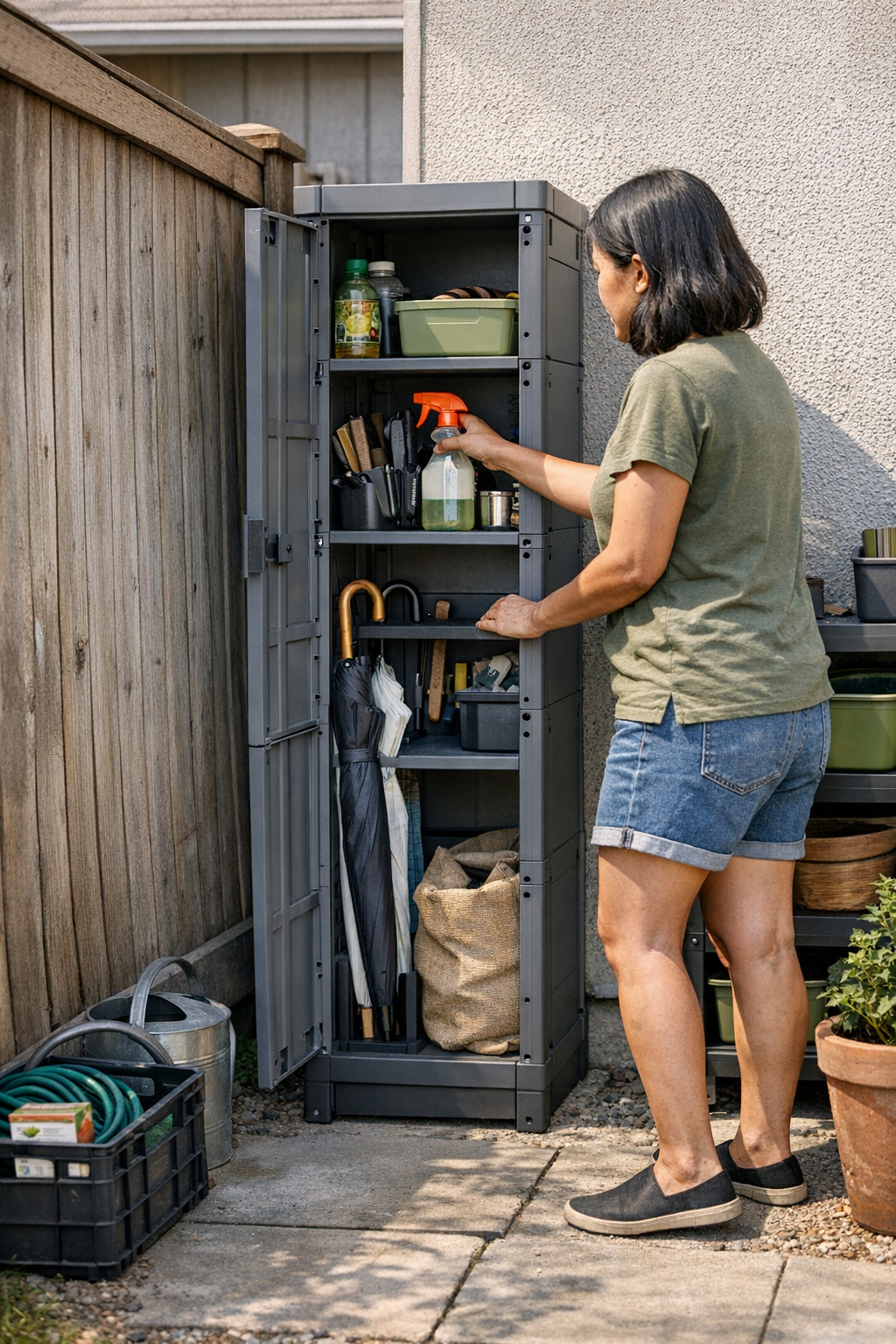
You notice it the moment rain slips off your coat and you reach for what’s supposed to be an easy-to-grab umbrella. The front of the storage locker still looks tidy—no overflowing hooks, no odds and ends underfoot. But that feeling of having things together doesn’t always hold up once the door swings open. Inside, it can be a different story.
It didn’t take long to realize that a slim, single-compartment locker wasn’t the right answer for my clutter. At first, everything fit: umbrellas, grocery totes, those little hand tools that never seem to have a permanent home. Then, after only a week or so, the bottom became a muddle—handles catching, bags slumping, the flashlight sliding around unpredictably. Quiet frustration crept in each time I reached inside. That was the part I kept coming back to.
Where Things Start to Drift
With repeated use, the organization (or lack of it) inside became its own kind of signal. Day after day, putting something back meant nudging a pile, shuffling the lineup, or just giving up and leaving the umbrella outside. The locker’s promise—to keep clutter hidden—was only being kept on the surface.
You don’t notice the disarray immediately.
But you feel it, in those small hesitations. The ones that make you pause, calculating where things have drifted or how tangled the inside has gotten since the last reset.
When Separation Quietly Matters
After enough mornings spent fishing out crushed umbrellas from beneath an avalanche of stray tools, the pattern became clear. The absence of inside structure—the lack of real division between categories—was the invisible culprit. A solution came almost by accident: a half-height shelf and a narrow vertical channel at the locker base, just thrown together in a moment of annoyance.
It was a calm kind of shift. Umbrellas had a standing place; tools stayed above; bags found their own zone and stopped fighting for space. The whole thing worked not by looking neat from the outside, but by quietly protecting the return path for each item. Retrieval didn’t require an arm’s reach and a sigh.
Hidden Order, Not Hidden Mess
Sometimes, the real difference isn’t the shelving you see—it's how much category drift happens out of sight. I found things stopped wandering once they had a regular boundary inside; umbrellas didn’t topple because there was space set aside for their shape, not just their size. It became simpler to keep the system in check, even on rushed days.
It’s a small, unnoticed detail, but routines rely on these anchors. Once there’s a proper separation inside—a shelf, a divider, or just a channel where things can reliably land—you don’t dread resetting, or even notice it happening. The tension drops, not just for the locker, but for all the tiny retrievals, returns, and in-between moments that add up.
Returning to that storage locker now, the pause has mostly gone. Visual calm on the outside only works if inside, the logic holds up just as quietly.
For anyone curious about what this looks like in practice, there’s more here: http://www.gridry.myshopify.com



