When Kitchen Lighting Feels Clean but Still Falls Short
Linear and panel ceiling lights tidy kitchen looks, but proper placement and cable management are key for functional, shadow-free task lighting.
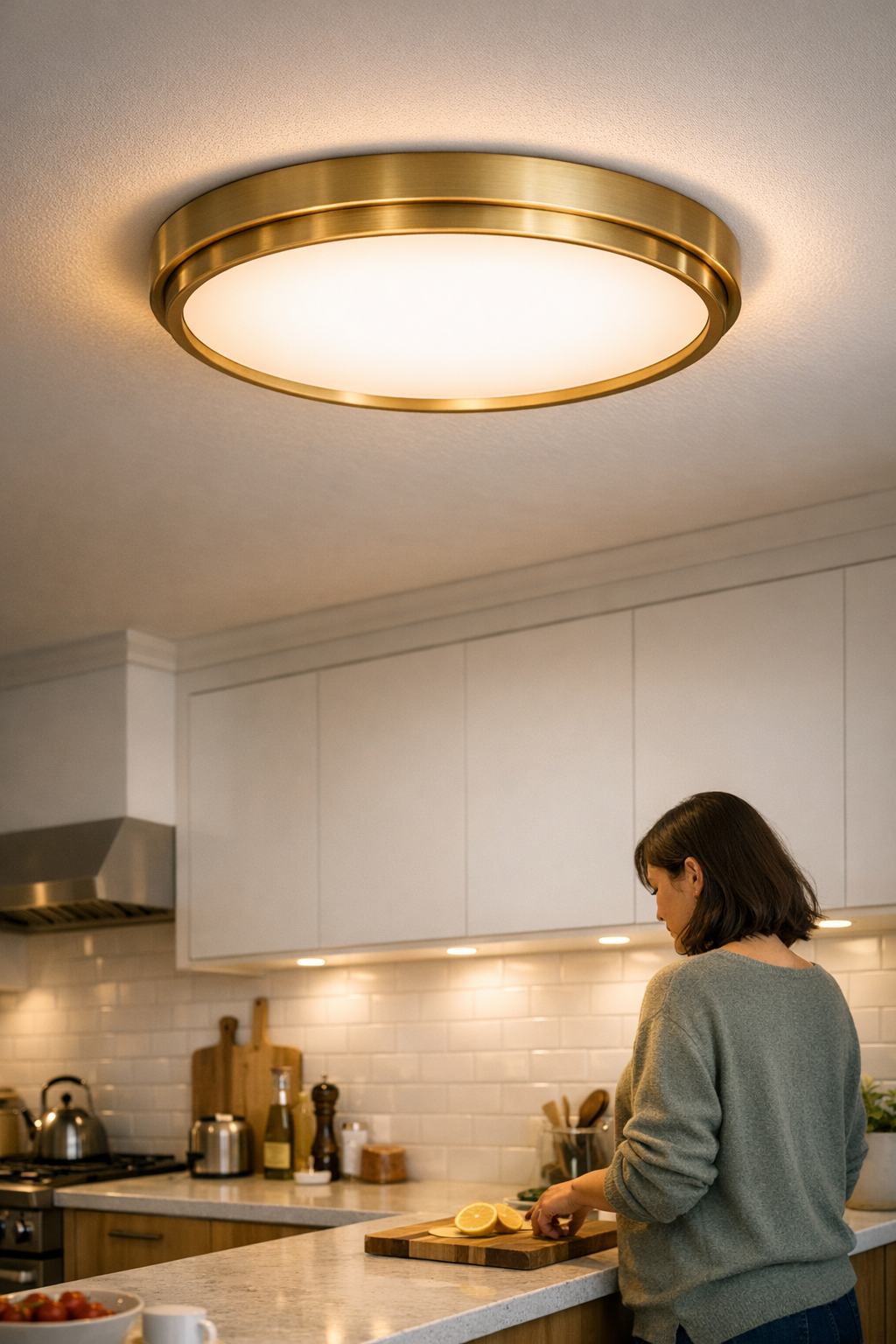
There’s a particular kind of comfort when a kitchen finally looks crisp and organized—the cables tucked away, the ceiling neat and clear, all the lines running clean above the counter. For a day or two, everything feels a bit easier under those new lights. Maybe that's why, at first, I thought the nagging sense of unfinished business would simply drift away.
You don’t notice it immediately.
But you feel it.
It has something to do with what the light doesn’t catch. No matter how many times I wiped down the counter or reached for a knife under that sleek new ceiling panel, there was always a patch by the backsplash that stayed just a little too dull—a kind of shadow that never entirely left, even as the rest of the surface glowed.
The Difference Persists in Routine
Most mornings, the place felt resolved. Later in the week, small things started to catch up—a kettle left in the one dim spot along the wall, coffee dribbling along an edge the light missed, a row of crumbs gathering out of sight until noon rolled by.
Those shadows aren’t obvious from across the room.
You only see them when you’re in the middle of making something, or trying to clear the mess away.
And if the support brackets weren’t planned with enough care, or if a cable takes the easy route across a ceiling, the tidy impression doesn’t last long. Dust finds the gaps. Your eye keeps circling the clutter. There’s a difference between a surface that looks clean and one that’s ready to help every task feel simple.
Where Placement Matters More Than the Fixture
There’s an odd moment of realization when a change that seemed technical—just a fixture upgrade, just a brighter panel—turns out to need something quieter. I tried moving one linear strip a little closer to the wall, just six inches closer to where the real work kept happening.
Suddenly, the light fell right to the far edge, easing its way over the whole prep area rather than stalling in the middle. The old, thin strip of shadow was gone. Wiping up after breakfast wasn’t about chasing missed spots in the half-dark anymore.
What surprised me most was how much of the comfort depended on this—not a matter of more wattage or an expensive fixture, but the way it was placed. Task areas become easier, almost softer, when the light is allowed to follow routines instead of just the grid of the ceiling.
The Unseen Work of Finishing
It’s tempting to believe the upgrade is finished once the visible clutter is handled and the ceiling reads as tidy. Sometimes that’s true, for a little while. But the little frictions—the dark strip at the counter edge, the awkward cable peeking out of the bracket, the subtle strain in your routine—have their own way of hanging around.
A kitchen or workspace where the light lands in the right place just feels different. Time spent cleaning feels lighter. Chopping, pouring, leaning in over a project—those small chores become the test. That was the part I kept coming back to.
Sometimes, feeling finished relies more on where the light finally meets your daily habits than on a perfectly blank ceiling.
For anyone curious about the quieter details—brackets, runs, and solutions made for spaces that need to be lived in—I found a few ideas quietly tucked away over here: http://www.lightsupport.myshopify.com