When Less on the Wall Feels Like More Room to Breathe
Wall storage can cause blocked movement and clutter; moving frequent items to floor or mobile bins improves flow and ease.
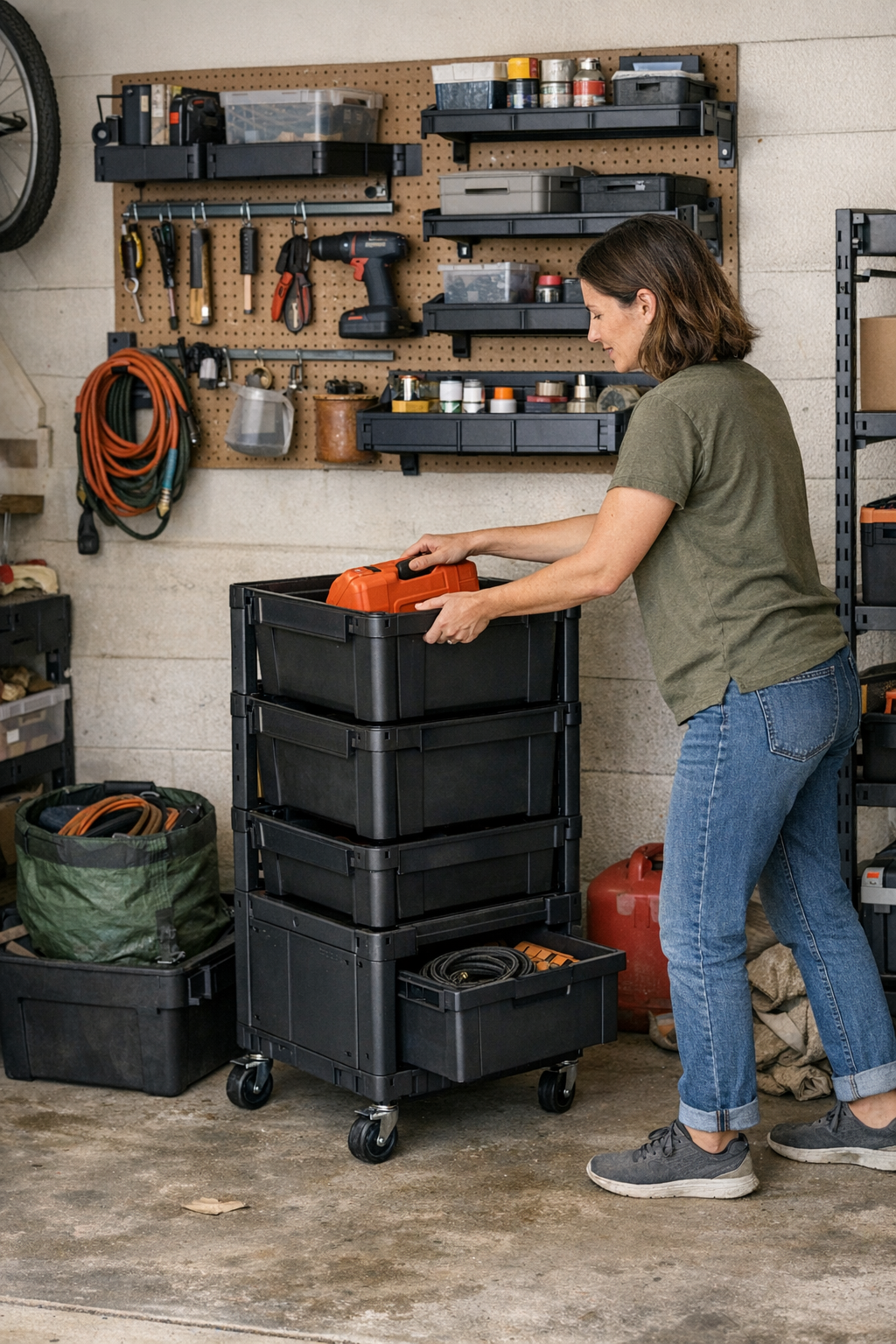
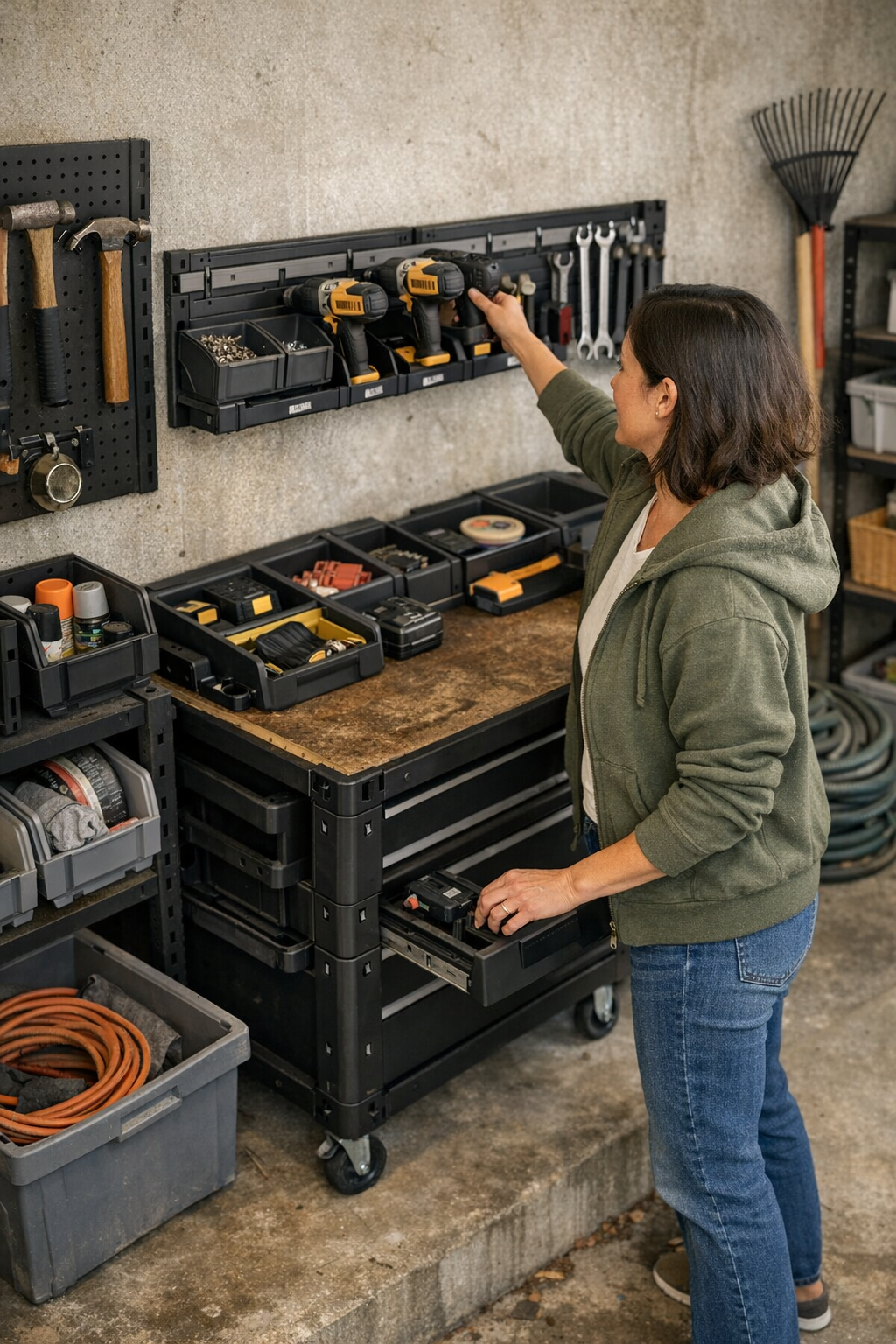
There’s a special kind of satisfaction in a tidy garage or workshop. Rows of tools on the wall, shining bins, and every last item finally pulled off the floor. Things are up, not underfoot, and even the light seems a little calmer. For a moment, you feel in control. The space is your own—at last.
But after the first clean-up, daily life quietly returns. The idea of wall storage—bins, hooks, shelves—still feels smart, but small frictions start to collect. The wall looks orderly, but how you move in the space asks for a reset.
The Illusion of Control
Hanging everything within reach is supposed to make life easier. In practice, the feeling can shift almost invisibly.
You don’t notice it immediately.
A few days go by. A bin blocks your reach for a tool you use every morning, or you sidestep to squeeze between bikes and hoses stacked near a wall. You return a hammer, only to find the path is tighter than last week. An “organized” wall sometimes becomes the problem—the thing you have to navigate around.
It's a gentle tug at the edges of your routines, asking if this really works.
When Neatness Competes With Use
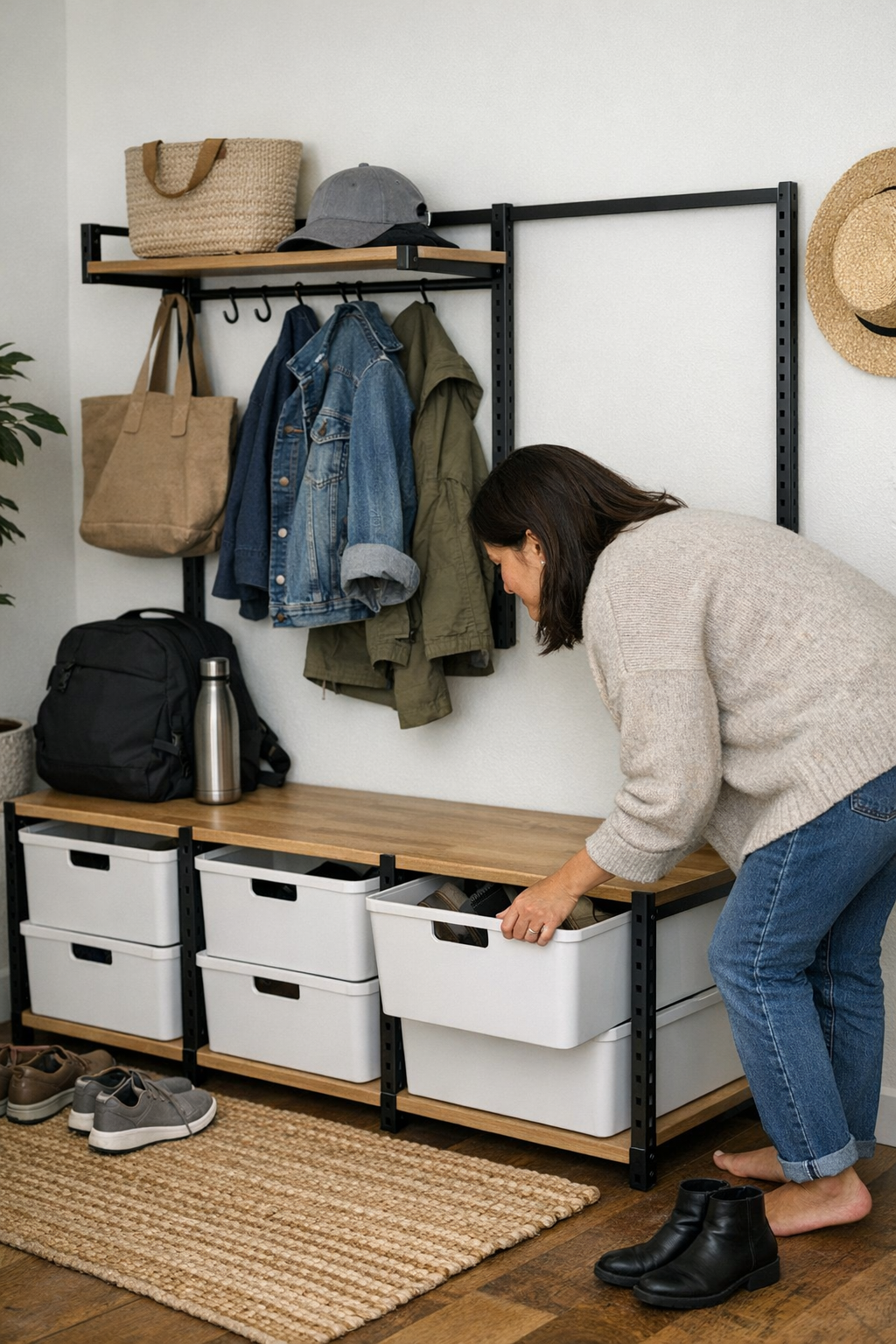
There are moments that make it clear. You’re carrying groceries inside, or returning from the garden with muddy gloves, edging past a storage rack that juts out just enough to slow you down. The corners collect what the wall couldn’t hold: shoes, watering cans, a coil of cable waiting for a better spot.
You feel it—crowding where you wanted ease.
I remember the sharp feeling of comfort melting into something less pleasant. In the beginning, a wall full of storage promised clarity. But after a few weeks, every task seemed to borrow extra motions: stretching, shifting, setting aside. The order was for the eye, not the body.
Finding Flow Again
The relief came not from buying new racks, but from letting go. I took down a third of the bins, placed the essentials on a rolling cart, and left deliberate gaps. Suddenly, the floor opened up. The air seemed to move differently.
A small change, but the difference was immediate. Everything I needed was now at my side, waist-high. No more reaching, no more squeezing between awkward piles. The space found a kind of rhythm again—one that matched the way I actually used it.
The calming thing was realizing: order isn’t about filling every line and corner. Sometimes, the simplest improvement is learning where not to store something—giving your daily path a bit of quiet.
Some lessons come slowly, but they tend to linger in the way you move through a room.
These thoughts came together in the hours after clearing out the old bins.