When Less on the Wall Means More in Your Day
Setting “weekly use only” for a modular wall stops blocked access and reshuffling, making daily gear easy to grab and resets faster.
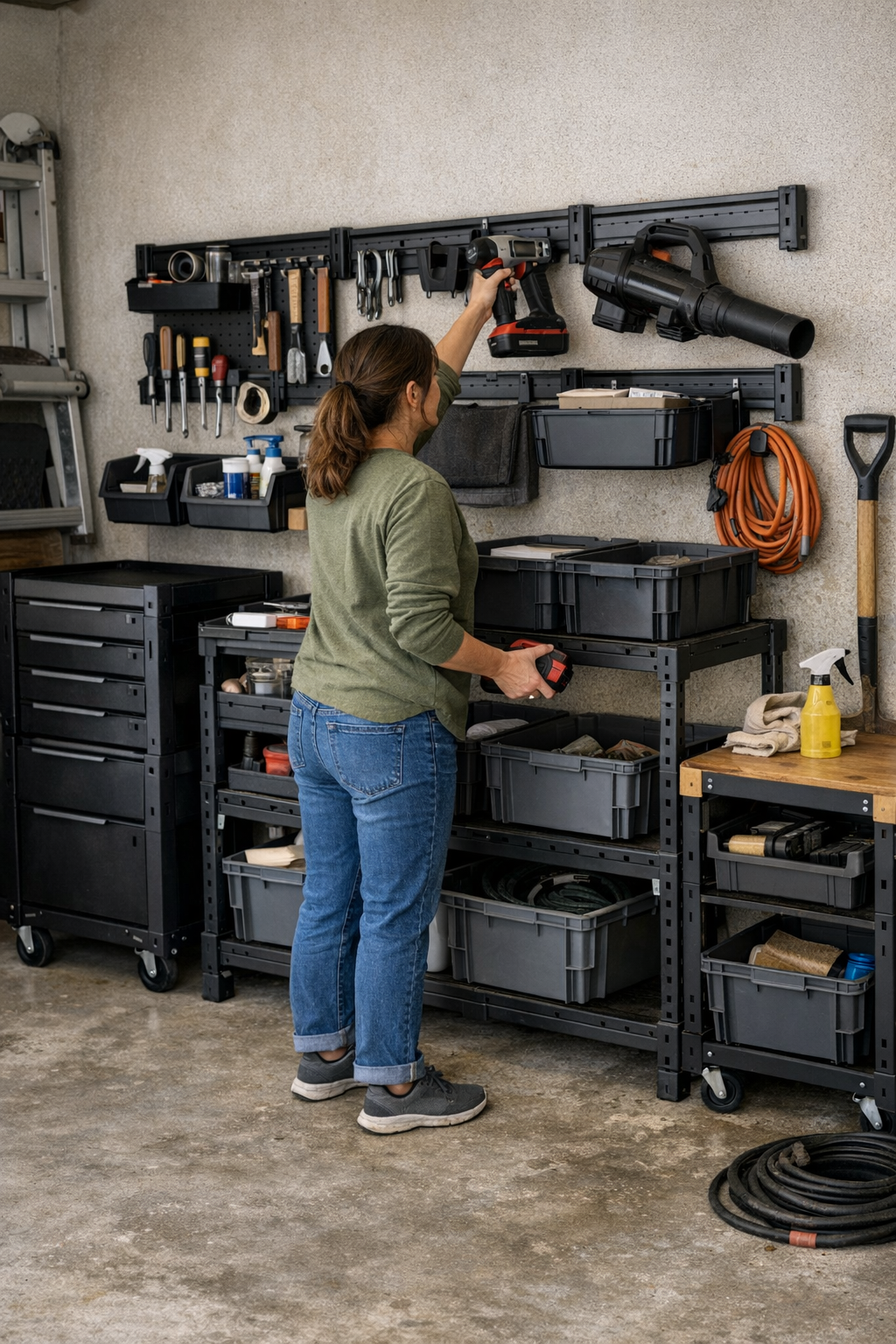
It’s easy to think of organization as a one-time achievement—hooks aligned, bins in place, storage wall a tidy grid. In the beginning, everything feels in order. But over time, something shifts. One day, the rhythm falters—not because of chaos, but due to quiet, unexpected friction within your modular storage setup.
The Subtle Cost of “Just For Now”
You don’t notice it immediately—the moment when a perfectly arranged wall begins to slow your momentum. A spare pair of gloves here, an old paintbrush there, a seasonal item tucked into an empty gap. Each piece is harmless alone, but together they build up like silt.
You realize it during a rushed morning, hands full, hunting for a specific tool. Smooth access is gone. It isn’t just inconvenience; it becomes an interruption that lingers. The wall that once promised efficiency now nudges you into small resets, wasted movement, and quiet irritation.
It’s not about how much you fit on the wall or floor, but what you reach for—and how often. Sometimes, the storage system itself adds friction to your workflow.
False Efficiency, Real Friction
What looks organized on the surface often hides hidden burdens. Rows of bins each containing “everything”—from a seldom-used garden nozzle to backup supplies you’ve forgotten. Some days, it feels like the wall quietly resists, offering small obstacles where none should be.
I found myself caught in this loop one Friday, breath fogging the garage air, needing a handheld blower. Between me and the tool: winter gloves, a leaning tire, and two bins stacked in my way. An easy grab turned into a five-minute shuffle. Objects clattered and toppled. What should have been simple became complicated.
That’s when the illusion of order reveals its hidden cost.
Rethinking What Belongs
There’s relief in accepting that not everything deserves equal space—especially in places designed for frequent use. When I started placing weekly-use tools at eye level and moving the rest to a covered shelf below, everything changed in small but important ways.
The wall began to breathe. Hooks cleared, returns felt effortless, and the scramble faded into a quiet, almost unnoticed rhythm. The difference was simple: a dedicated space for what I actually used, free from the impulse to keep “everything” always ready.
Sometimes, letting go is what makes a modular system finally work—balancing wall use, floor space, and repeat access for smoother movement and less reset.
These thoughts took shape while reorganizing my garage one slow evening.



