When Less Sorting Means More Room to Breathe
Simplifying storage by reducing categories speeds resets, clears movement, and eases maintenance, keeping organization usable during busy routines.
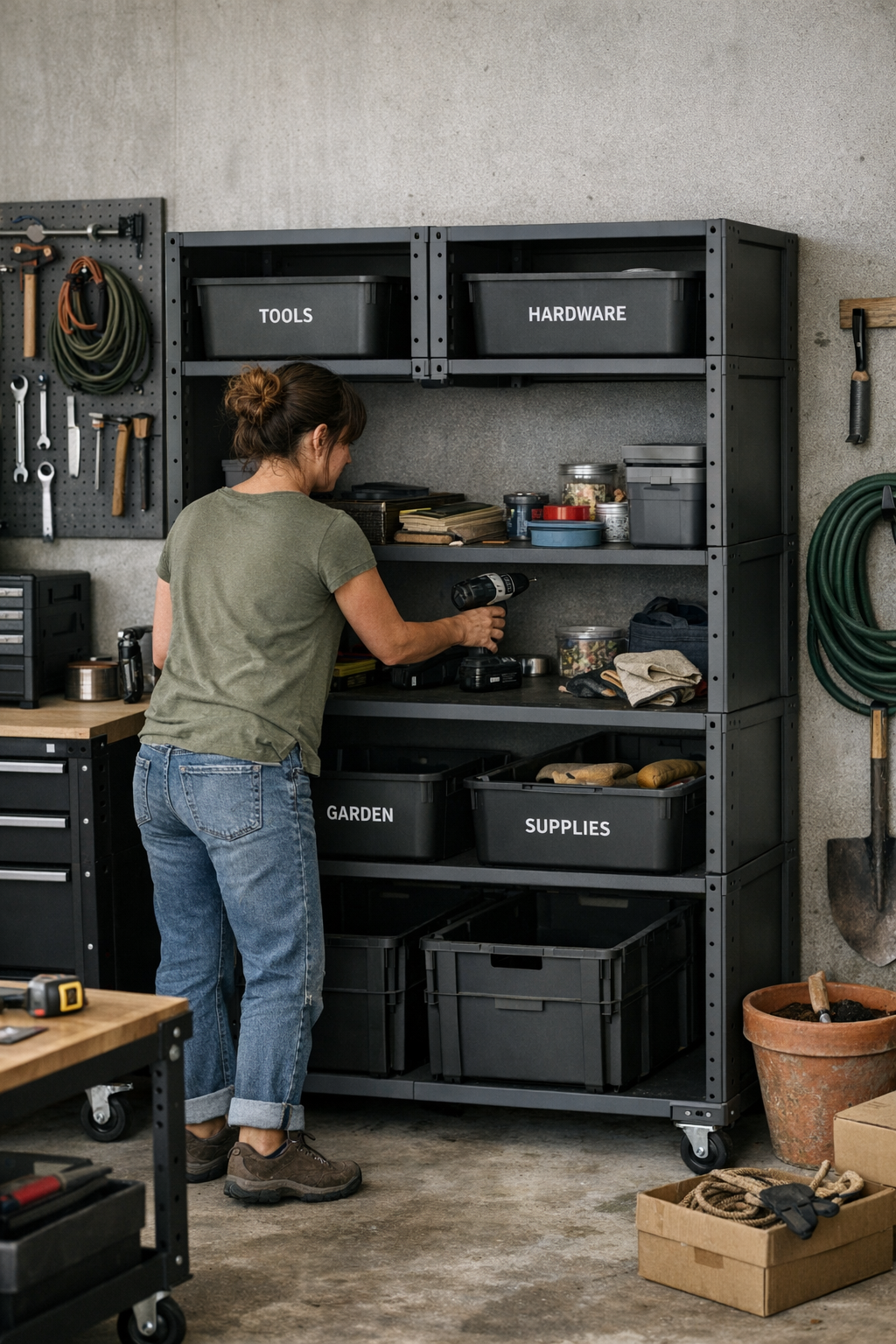
There’s a quiet promise when you organize a cabinet for the first time. All the little bins in neat rows, each tool labeled and given its place. It feels like control. But as days pass, the order starts to fade—a hammer left near the door, a box of screws stashed where it doesn’t quite belong. You don’t notice it immediately. But you feel it.
I kept coming back to this subtle tension in my own space—the tension between the desire for order and the reality of daily use in a workshop or garage setup.
When Systems Don’t Keep Up With Real Life
A storage system can look perfect at first. Every item has a slot. Labels line up; categories multiply in modular wall-mounted storage or floor-based cabinets. But strict divisions soon start to slow things down.
Real life isn’t static. Days pass in a blur of repairs, quick fixes, small projects, and gear cycling in and out. If you’ve ever found yourself moving three boxes just to return a wrench, you know the friction. Each hesitation grows—especially as routines quicken and expectations loosen. What begins as "organized" quietly becomes "in the way."
You probably don’t realize how much movement happens in a single week—especially in a busy backyard utility or small workspace setup—until too many small bins and precise slots stall you every time something overflows.
The Pause Between Projects
Something shifted the morning I cleared space in my own garage cabinet. I noticed that the busiest stretches—weekends filled with building, patching, planting—always ended with a pile of tools without a clear home. My categories didn’t match the actual cadence of use.
So I tried something different: fewer divisions, broader groups. Just three or four simple zones, with one middle shelf left open on purpose—a resting spot for in-progress or “not quite sorted” things.
It didn’t look as crisp, but the difference was immediate. Overflow found its place, resets became a single, simple movement. The stack of misfit tools at the door vanished, replaced by a shelf that flexed with the pace of the week. Sometimes easing a system means letting it breathe.
Clarity in the Everyday Rhythm
Now, when a shelf jams or categories blur, it’s not a sign of disorder, but a reminder. The system serves its user—not the other way around. Spaces that adapt, even feel a little undefined, give back energy rather than taking it.
What helped most was letting go of perfection. Three or four flexible categories—like broad "hardware" bins instead of a dozen split containers—leave enough room for things to shift when projects overlap. Fewer returns stall. The garage or workshop feels ready, not resistant, on Monday morning.
A well-used space rarely stays perfectly sorted for long, but a space that welcomes returns in whatever form they come is easier to keep open and accessible.
That’s something I notice now, at the end of each week—how simplicity, quietly, holds the door open for another beginning.
These thoughts came together while tweaking my garage cabinet. If you’d like to see more of the process, view the full collection.



