When Less Space Means More Order at the Door
Limiting the size of a “repair later” box prevents clutter buildup and keeps entryway storage accessible and manageable over time.
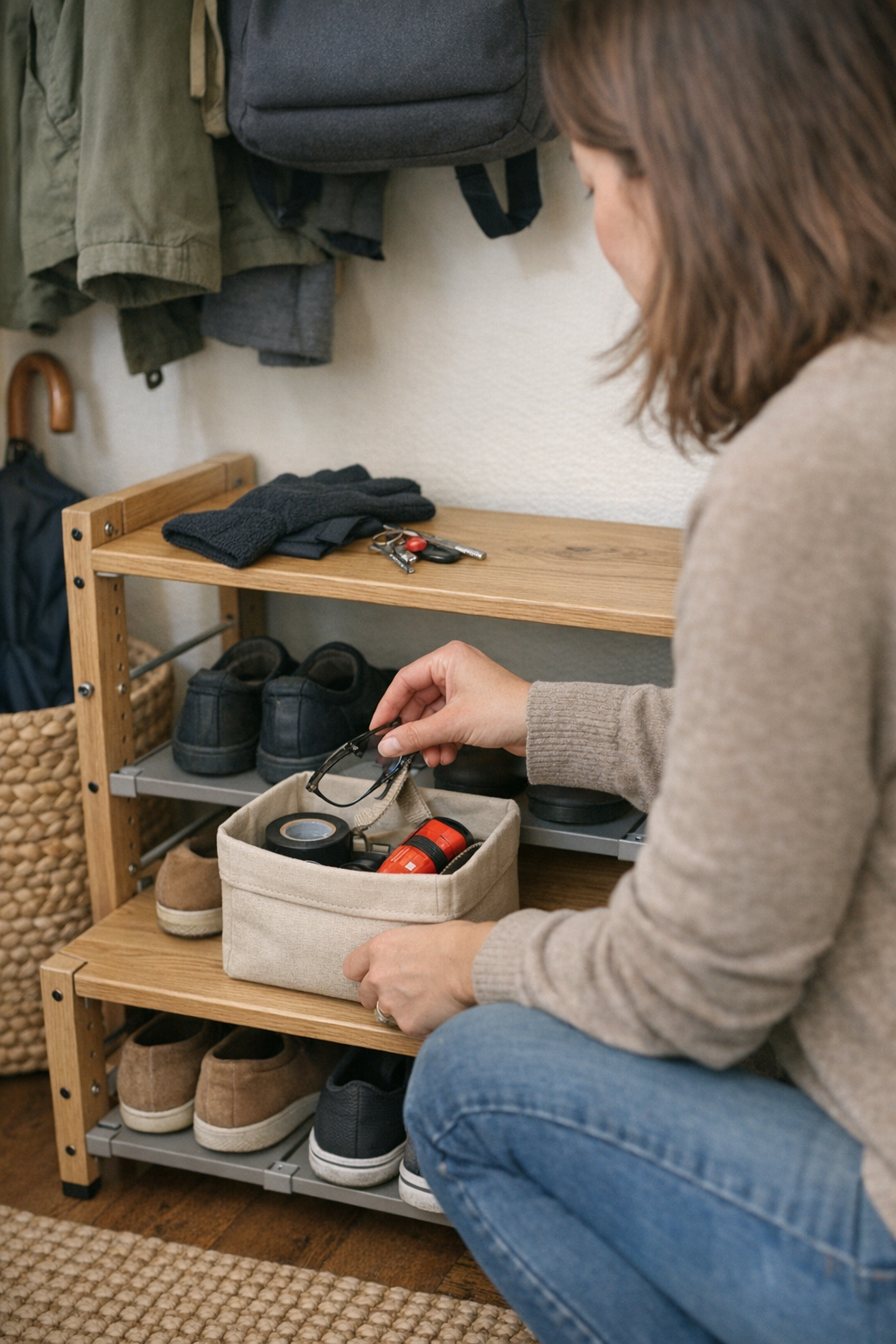
There’s a particular kind of relief in dropping something broken by the door and trusting you’ll get to it soon. At first, the idea of a “repair later” box feels simple—a contained promise to return, fix, resolve. But after a few weeks with one living quietly in a transition space, I began to notice that the box didn’t just hold things. It shaped how the entry felt, invisibly stretching or shrinking with every arrival.
How More Becomes Too Much
You don’t notice right away. Day after day, small repairs—gloves with split seams, a loose flashlight cap, or even a bent house key—find their way into the box made to hold them. It works well until the space fills. Then, almost without warning, overflow begins.
Shoes spread further across the mat. The bench edge holds more than it should. A repair box that once felt accommodating starts to press outward, nudging into the path and growing heavy with half-finished intentions. The visible clutter is one thing, but the more subtle impact was how these small postponements made resets feel harder.
Finding the Right Kind of Containment
I tried shrinking the box—making it half the size with no extra basket for overflow. Suddenly, every unfinished repair was exposed right away. Only three or four items could rest there, no more. The category stayed narrow: only what might be fixed this week was allowed space. Anything that couldn’t be tackled soon had to move elsewhere, out of daily reach.
A smaller container didn’t erase the repairs; it made them pass through faster. If something waited too long, it blocked new things from landing, quietly demanding a decision—either fix it, or find a real place for it. There was less build-up, and even the mess felt temporary by comparison.
A Space That Pushes Back, Softly
After a while, the entry changed. Movement became easier. The bench cleared faster. It wasn’t just neatness—the energy shifted. Limited boundaries made unresolved tasks harder to ignore, but also easier to clear away.
What surprised me most was how quiet the change felt, not dramatic but persistent. Less blended backlog meant the transition space regained its rhythm—a place to move through, unburdened, almost automatically restored after each day’s arrivals and departures.
If you’re curious where these observations might take you next, they continue here: http://www.betweenry.myshopify.com



