When Light Becomes a Barrier in Shared Spaces
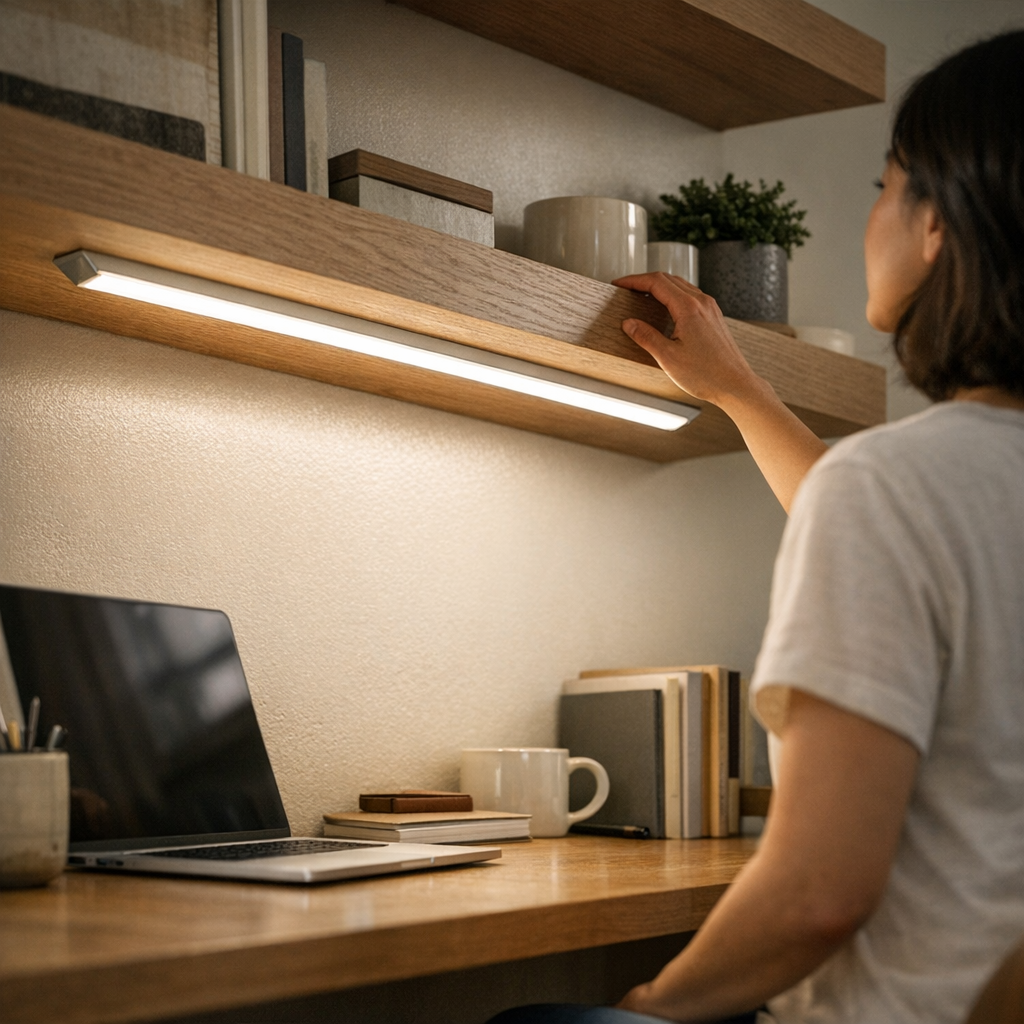
Slim, low-profile lighting with good cable management prevents clutter and disruption, keeping workspaces clear and lighting steady over time.
There’s a particular atmosphere that settles in after a few weeks with a new lighting setup. At first, everything seems bright, maybe even a little too crisp—each fixture promising clarity, every cable tucked neatly in place. But I kept finding myself distracted not by the quality of the light itself, but by the growing clutter just outside my peripheral vision. The intersection between work and light suddenly felt less about illumination and more about all the hardware gathered around it—brackets, wires, awkward plugs gradually softening into familiar routines.
You don’t notice it immediately. But you feel it.
When Clarity Turns Cluttered
I remember letting a chunky, bracketed desk lamp settle in for a month. Day one, everything looked resolved: strong angle, confident beam, no visible mess. But by the third week, that certainty faded beneath a drifting scatter of tangled cords and dust building behind the base. Every new plug became another small obstacle, and before long, the edge of the desk—once open and generous—felt barricaded by hardware, harder to wipe clean, and strangely less inviting.
That was the part I kept coming back to. Not just how the fixture looked, but how it physically changed the way the space behaved. Slight snags, awkward reaches, the gentle annoyance of realizing a shelf could only partly open because of the lamp’s swing arm. These weren’t dramatic revelations, just tiny, tactile interruptions—enough to make me want less physical baggage between myself and the work surface.
The Quiet Value of Slim and Low-Profile
Eventually, I swapped that thick lamp for a slim LED bar running quietly along the back edge of the desk. The change wasn’t loud or showy. Instead, there was this surprising absence—a feeling that nothing imposed itself, nothing dangled in the way or demanded attention. Cables stayed flat, tucked discreetly behind the scene, making it easier to drop a notebook or laptop wherever needed. No more constant sidestepping around the lamp, or knocking against brackets with a coffee mug.
Mornings and evenings blurred together a bit more comfortably. There was a stillness to the space, a freedom to rearrange with barely a thought. The whole room felt a shade calmer, usefully so—the light remained, while the background weight of hardware and cable simply faded.
You don’t always choose slim and low-profile lighting just for how it looks (though it’s tidy)—sometimes, it’s the steady usefulness and nearly invisible presence that makes the difference after months of daily use.
Signs You Can Feel Instead of See
On busy shared surfaces, the slow build-up of visual noise becomes physical—a cord snag, a book blocked by a clamp, or the routine of brushing dust from corners crowded by mounts. None of this is troubling on day one. But after a season, it shapes how a room gets used: how lightly people sit down, how quickly a desk can be cleared, how tense or calm the space feels night after night.
What caught me off guard was how much time I’d spent working around these details instead of with them. The simplest practical shift was realizing that even a slim fixture benefits from proper cable care—channels and clips made the whole arrangement quieter and less intrusive, even after regular use.
It’s not about obsessing over minimalism for its own sake. Sometimes the easiest kind of comfort is just not having to think about your lighting at all.
There’s more to explore in quiet, practical setups—the kind that get easier to live with over time: http://www.lightsupport.myshopify.com