When Light Fixtures Shift: The Quiet Strain at Home
Weight ratings determine if fixtures stay stable or loosen under use, ensuring safe, reliable lighting without constant upkeep.
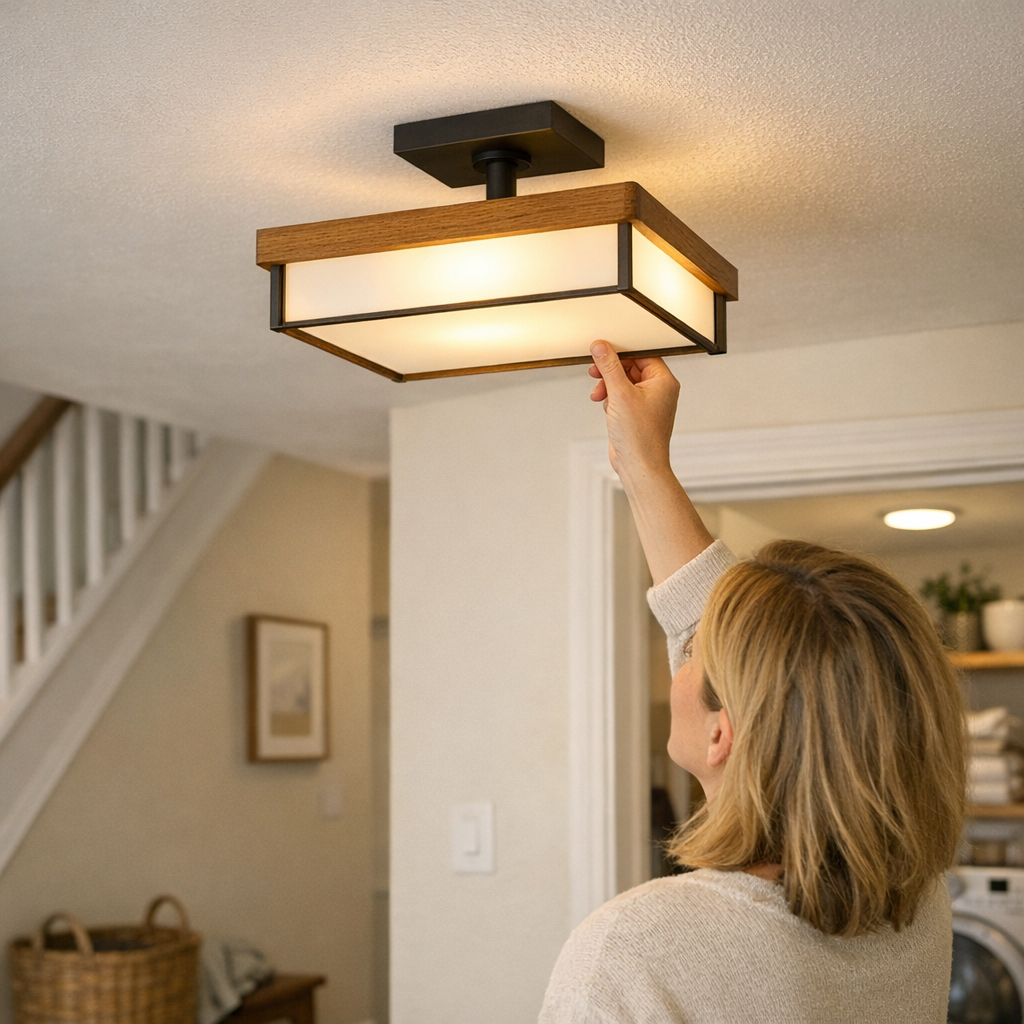
It starts with something so small you almost miss it—a flush mount ceiling light that shifts just enough when you wipe it down, or a wall sconce that moves subtly enough to catch your eye. You pause, maybe push it gently back into place, and then carry on. Still, the sensation lingers. There’s a thin line between comfort and a silent kind of doubt—especially with the kinds of indoor fixtures you count on not to move.
I never thought much about weight ratings or mounting specs until these little interruptions became routine. Indoor lighting like hallway and stairway fixtures, bathroom-rated lighting, or vanity and mirror wall lighting should be reliable background—not sources of friction. But the more lived-in a corridor or stair landing becomes, the more it exposes fixtures that aren’t built to hold steady. It’s not about how a light looks in a catalog; it’s how it holds together after months of sleeves brushing past, door slams, cleaning cycles, or humidity in damp-rated spaces.
In those often-used zones, a subtle looseness in a ceiling panel light or hardwired wall light shifts from a quirk into something that changes the feel of a room. Shadows shift unpredictably, edges develop dark lines, and glare can flicker as fixtures lose their angle. It’s a quiet tension you don’t notice at first—but it shapes your experience over time.
When the Basics Stop Blending In
There’s an odd moment when you realize you’re working around your own lighting. Perhaps a fixture leans just enough so a shadow line along the ceiling appears only from certain angles, or a semi-flush mount ceiling light vibrates gently with footsteps on the stairs below. You barely catch it at first.
But you feel it.
I remember switching a hallway light for one with a higher weight rating—not because I planned to, but because the old one loosened every few weeks. Same shape, same neutral color. What happened over the next months was quiet relief. The harder fixture stayed put through cleaning, bulb changes, and everyday touches. Shadows stayed consistent. The seam between the fixture and ceiling stayed tight instead of flickering with every bump or sleeve drag.
The fixture no longer asked for attention, and that absence made routines smoother—almost unnoticed, but unmistakable once you stop to think about it.
Small Shifts Become Small Defeats
Long corridors and stairwells have a way of remembering these things. Repeated contact, the drag of a coat sleeve against a wall sconce, or faint vibrations carried through older walls can slowly loosen ordinary indoor lighting. In bathrooms or laundry rooms, where humidity stresses a fixture more, a poorly mounted light changes how the space feels. Sometimes you find yourself cleaning less enthusiastically or adjusting your reach, because you’ve learned what happens when you rush or push too hard.
These aren’t major failures—just persistent, nagging reminders that something at the edge of your daily routines isn’t quite right. That was the part I kept coming back to.
A Light That Stays Put
The practical difference is clear: one well-mounted fixture with proper weight capacity, designed for repeated use and the room’s specific conditions, noticeably reduces the times you find the mounting plate loose or the cover tilted. It’s not dramatic, but steadying.
Shadow lines align, the fixture’s edges stay close to the ceiling or wall, and cleaning no longer feels like a negotiation with instability. Even the corners of the room you rarely look at feel calmer. From stair-turn visibility to cabinet-run lighting and work area clarity, a fixture that holds steady supports how you move in the space, not how you adapt to it.
If you’re curious about fixtures built for these realities—whether flush mount and semi-flush mount ceiling lights, wall sconces, vanity and mirror lighting, bathroom- and laundry-rated options, or fixed task lighting—take a look at the kinds of durable indoor lighting designed for repeated daily use.