When Light Fixtures Start to Sag: A Quiet Home Struggle
Lighting support accessories ensure stable, tidy setups by preventing cable drift and fixture sag through daily use and movement.
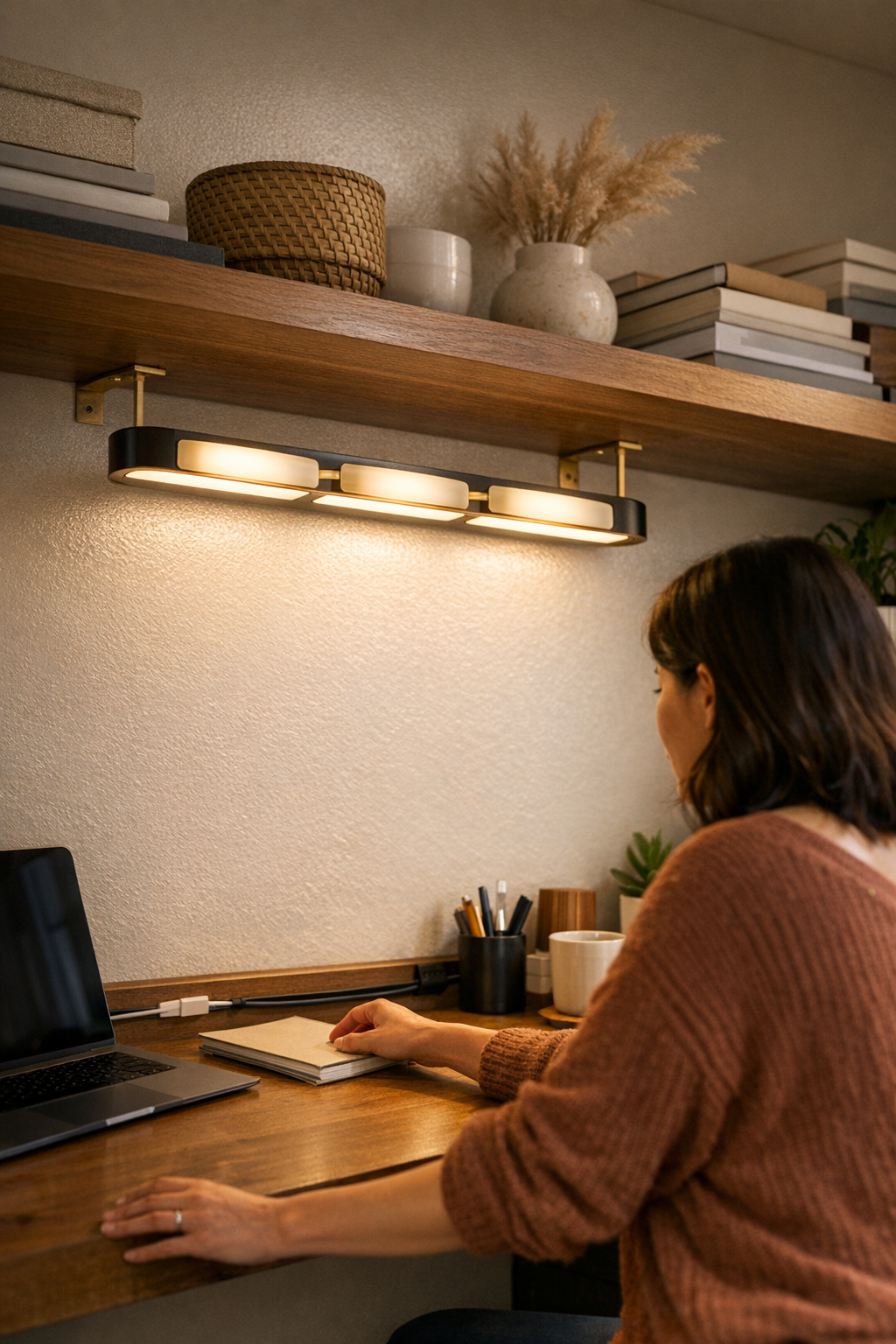
It’s interesting how certain details in a room only start to announce themselves after a little time has passed. At first, everything feels settled—the new work light, the tidy angles, the impression that this might finally be a lighting arrangement that doesn’t demand constant adjusting. Sitting down at the same desk the next evening, though, a cable’s edge catches in my peripheral vision. The light that seemed perfectly aligned has started to tilt at a small, nearly invisible slant. It’s not dramatic, but it begins to feel like the room is resisting being lived in.
The Unseen Tilt
You don’t notice it immediately. The support elements of a lighting setup—brackets, cable guides, mounting decisions—start out as background details. For a day or two, the space holds its shape; shelves catch soft LED light, cables disappear behind panels.
But each routine exposes a new angle. A laptop nudges forward, a phone charger pulls a cord just far enough to test the adhesive. By the third day, an under-shelf light sags or throws extra glare across the bookshelf. The illusion of order lasts right up until someone lives with it.
That was the part I kept coming back to.
The Real Test Is Repetition
There’s a common pattern: stick-on strips or adhesive panels look sleek at first. I remember moving a stack of papers and seeing the cable slowly migrate across my work surface, sliding out of that perfect sightline. Loose cables, once hidden, eventually become visible distractions.
The routine grows familiar—readjust slightly, nudge a fixture, re-stick the edge. Each is minor on its own. Yet these frustrations linger; they keep pulling attention back to something that was supposed to run quietly in the background.
Switching from adhesive to slim brackets on a shelf felt a bit fussy at the time. The result was quietly restorative. Cables stayed anchored, no longer drifting into shared corners where laptops and tablets crowd compact desk areas. Light kept its reach where it mattered, instead of chasing shadows along crooked fixtures.
When Living With Light Feels Different
Sometimes the real test comes in the handful of ordinary days after installation. A setup that looks clean on day one isn’t always the one that feels resolved by day four. My desk, a source of low-level irritation, slowly stopped demanding half a minute of nightly tidy-up.
The difference was straightforward: a setup able to stand up to smaller, repeated movements—brackets that held their line, cable guides that kept visible edges clear. Not perfectly invisible, but far less demanding.
It’s a quiet thing—how a room stays easy if basics like support and cable management don’t loosen their grip over time. Sometimes, that lived-in stability is more satisfying than any seamless install ever was.
For anyone curious about these quieter fixes, I kept looking here: http://www.lightsupport.myshopify.com



