When Light Meets Routine: The Quiet Shift in Daily Focus
Fixed task lighting improves focus by targeting light to work surfaces, reducing shadows and glare where general lighting fails during real tasks.
There’s something reassuring about a room that looks bright the moment you step in. Light pours across the hallway, flush mount ceiling lights reach every corner, and the kitchen counter feels ready for any task. At first, it seems like this general illumination is enough to support everything you do.
But over time, daily use reveals small problems—often in the spots you barely notice. That’s what I kept coming back to.
Where Brightness Starts to Miss
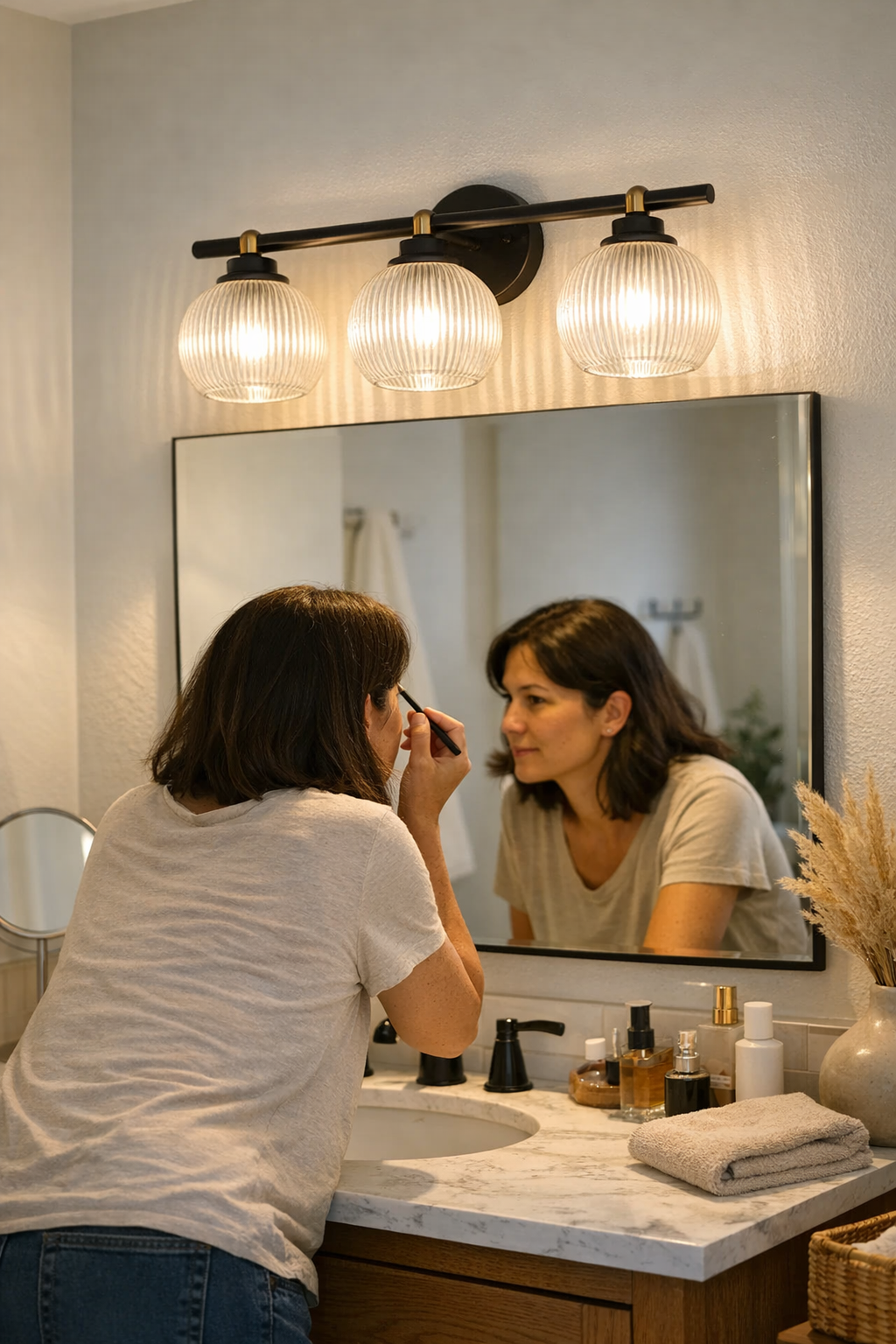
At first, the issues are subtle. Shadows appear at the edges of the kitchen counter just as you reach for the measuring cup. Overhead bathroom lighting creates sharp glare when you lean in to shave or check details in the mirror.
You don’t notice it right away.
It creeps in slowly, week after week, as small adjustments become routine: tilting your head to find better light, wiping the same spot on the counter again, or quietly frustrated by a dim laundry room corner where shirts never look truly clean. Suddenly, the brightness that made the room feel welcoming isn’t enough. You begin to feel the difference between a space that looks lit and one that actually lets you see all the details you need.
The Pattern Hiding in Plain Sight
General lighting—whether ceiling-mounted panels, semi-flush mounts, or wall sconces—carries most of the load. It keeps the spaces cheerful, and mostly, it does its job. But as you work closer to surfaces, its limits appear in familiar ways: shifting shadows under cabinets, half-lit faces in the bathroom mirror, or a persistent sense that details slip away as you fold clothes or prepare food.
I kept coming back to this problem.
At first, I thought brighter bulbs were the solution. But increasing overhead brightness only heightened glare. Shadows clung stubbornly to cabinet edges or corners. The key wasn’t how much light there was, but where it landed—in the precise zones where daily tasks happen.
The Small Change That Held Its Ground
The difference was subtle but lasting: adding fixed, under-cabinet task lights angled just above main work surfaces steadied the entire kitchen counter. Glare softened, and shadows faded from routine use almost as if by accident.
It wasn’t about pumping more light into the room, but about directing it carefully. Surfaces stayed evenly lit. The space stopped feeling like something you needed to work against. Over days and weeks, the idea of a “well-lit” space shifted for me. It became less about brightness in general and more about task-specific visibility.
Sometimes the answer lies in careful placement of fixtures like under-cabinet lighting, bathroom-rated vanity lights, or fixed task fixtures in laundry and utility rooms. These support repeated use by controlling glare, balancing light around mirrors, reducing dark edges along cabinet runs, and clearly illuminating work surfaces. In tight or low-ceiling spaces—hallways, stairways, and narrow corridors—the right fixture type (a semi-flush mount, entryway ceiling light, or wall sconce) can improve visibility and reduce shadow at key movement points.
The light that works for daily routines doesn’t just look bright—it helps you see the task clearly, every time.
If you want a sense of what else quietly supports a lived-in space, you might find it here: http://www.lighthelper.myshopify.com.