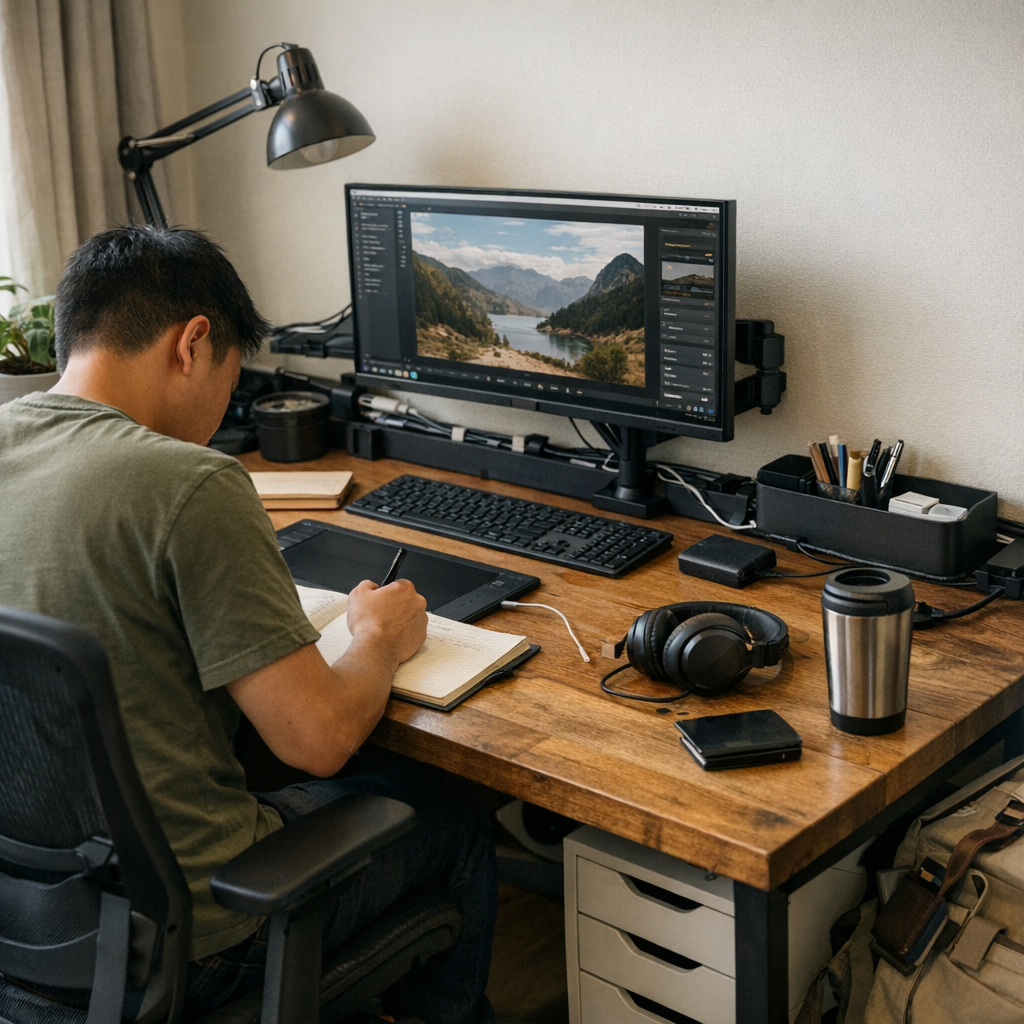
When Light Shapes the Rhythm of Everyday Work
A functional work area depends on lighting and support choices that withstand daily routines, avoiding glare and distraction.
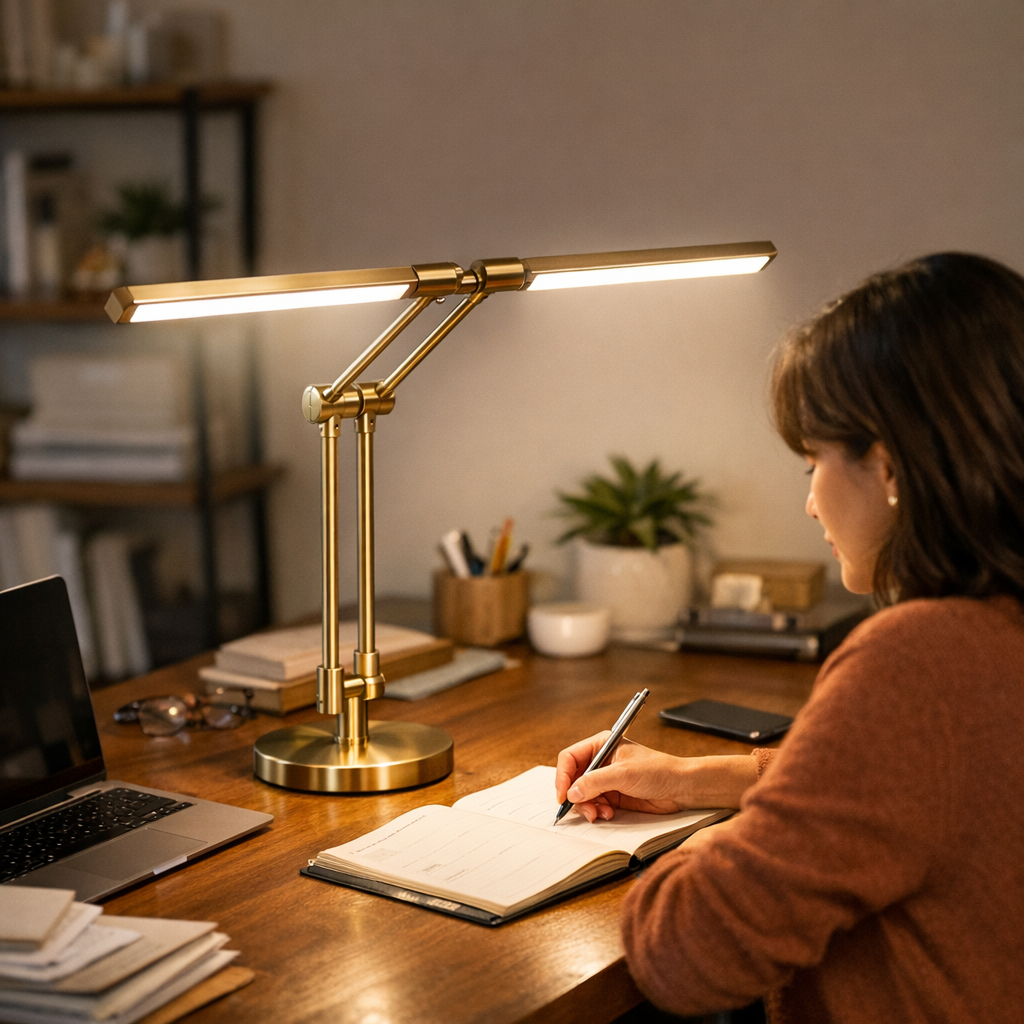
It’s strange how a desk can look completely sorted—the lines neat, the surfaces uncluttered—while something subtle under it all quietly nags at your focus. You sit down in the evening, ready to finish a few tasks, and there it is again: a slight shadow falling where you write, faint glare rolling off the edge of your tablet, or the urge to slide a document further into the spill of light. At first, you feel it more than you see it.
I’ve found that work area lighting only really shows its true colors after a few weeks of daily use. For a while, I supplemented with a slim LED bar, carefully tucking cables out of obvious sight. It looked sharp at first—nothing messy, not a wire out of place. But as days passed, little frustrations piled up. The beam was too shallow on one side, and an unplanned cable route kept slipping loose whenever I moved my chair. You don’t notice these issues immediately—but you feel them.
A Place for Everything Except the Light
It’s surprisingly common to treat light as a design flourish—a row of low-profile LEDs under a shelf, or a cool panel mounted flush to the wall. These setups photograph well, yet in daily use the neatest installations don’t always reach the exact spot where you work.
I started noticing how often I’d catch my hand casting a shadow right where I needed to write. Glare on glossy planners became routine. When I moved the lamp closer, its cables snaked across the surface or draped awkwardly over my lap. The promise of a “streamlined” desk quickly gave way to daily negotiations with mismatched light beams and fussy brackets.
That was the part I kept returning to—how something could look so close to perfect, yet never quite let you settle.
The Tension Between Looks and Living
There’s a difference between order that’s real and order that’s just for show. Each evening, I made small adjustments: scooting papers into better-lit spots, angling the lamp again, trying not to notice the cable that grazed my leg every time my chair rolled back.
My desk serves multiple routines. Through the day, it’s a place for calls, bills, note-taking, and the occasional cup of tea. Over time, these subtle lighting flaws shaped how I moved, how often I re-sorted things, and even what work I postponed until morning. Practicality wins out. Directing light exactly where it’s needed, and keeping cables discreet—fixed along inner desk legs with small clips and tucked out of sight—did far more to make the surface feel like a continuous workspace. The improvement wasn’t dramatic, but it lasted.
Sometimes, the thing that works best isn’t the most subtle or the most beautiful out of the box. An old-school, bendable desk lamp with a well-designed bracket cleared more space than anything else I’d tried. Suddenly the whole desk was available again—not just a lit patch in the center.
When the Edges Stop Distracting You
I think the shift happened when I realized good lighting support isn’t really about style at all. Not for work areas, anyway. It’s about the absence of distraction. Once the light and its cords receded into the background, the desk settled in. No more tiny negotiations about lamp placement, no catching the edge of my keyboard in reflections, no guessing where the best light might fall.
It’s a quiet kind of improvement—the sort you only notice when you stop thinking about the setup altogether and just work, read, or sit for a minute. What began as a marginal irritation became a lasting change that finally let the whole space breathe.
These thoughts usually come to me in the quieter stretches of the week. I’m not the only one thinking about these details—there’s a bit more, here, if you want to see what else is possible: http://www.lightsupport.myshopify.com