When Light Shifts, What It Means for Your Home’s Safety
Lighting fixtures with flexible metal sag and shift over time; choosing sturdy, rigid fixtures ensures safe, even, and reliable lighting daily.
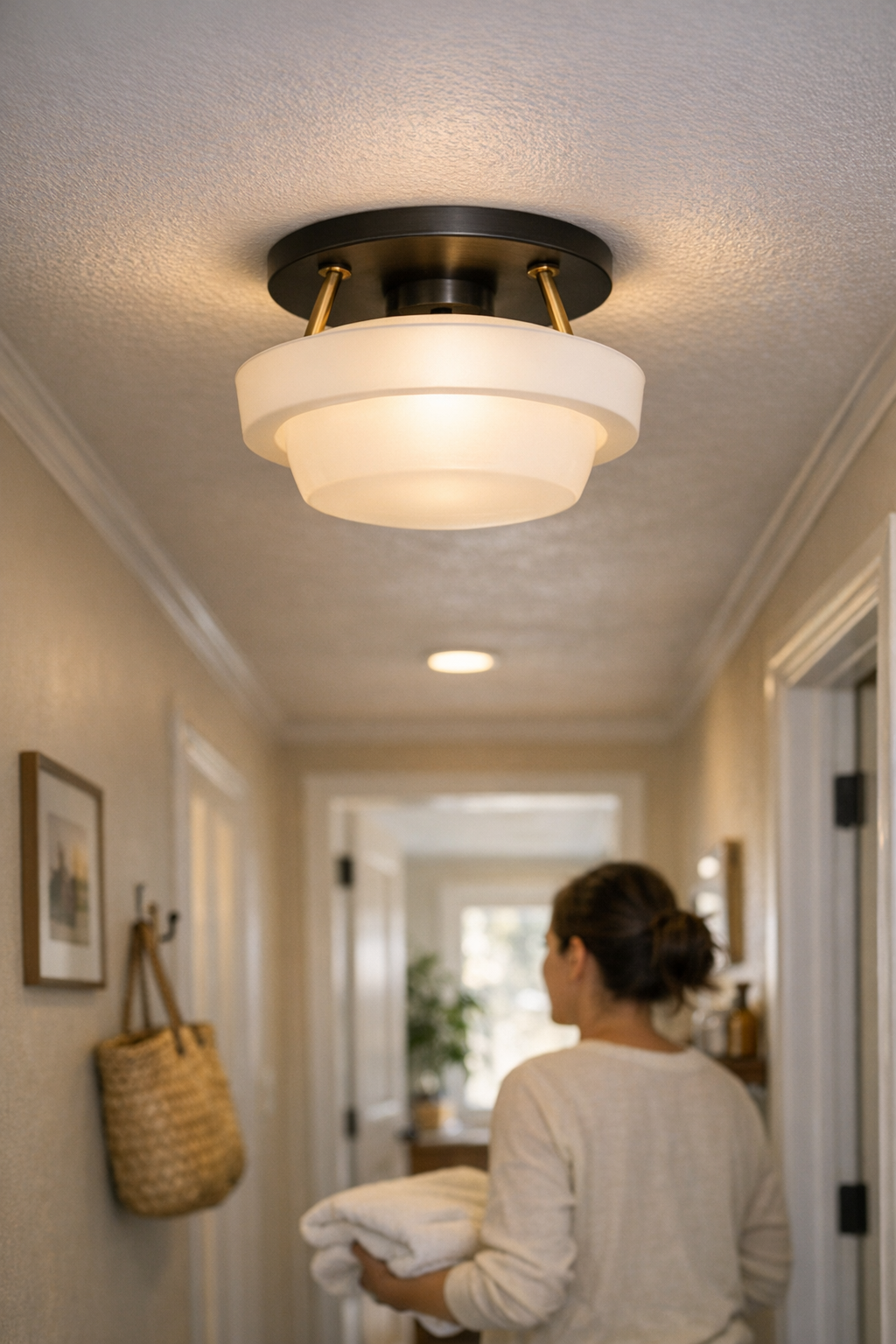
The most ordinary indoor spaces reveal their quirks gently, over time. I started noticing it in the hallway—a subtle shift that nags at the edge of vision but never announces itself. At first, the new flush mount ceiling fixture looked fine, gleaming under morning light and unremarkable after dark. But somewhere between daily trips carrying laundry and the soft closing of doors, its presence began to wobble, quite literally. There’s a unique frustration that settles in when something as simple as a hall or corridor light—meant to make daily life easier—becomes the source of a small, repeated discomfort.
Where Things Begin to Shift
These weaknesses emerge through repeated use. A wall sconce or semi-flush mount ceiling light feels solid in the hand at first, especially in the moment between unboxing and installation. Modern lighting hardware often looks more robust than it is. If you press along the metal frame or mounting bracket, there might be a subtle give—barely noticeable, just a hint of tension under the palm. For a while, you trust that screws and brackets will hold fast.
But real life works the metal like a worry stone. Doors vibrate in their frames, washers hum, and steam rises in utility rooms. Fingers brush against the rim while wiping dust from vanity or bathroom-rated fixtures. What was once a securely mounted fixture begins to sag, just by degrees: a shadow thickens along one side, a beam of light falls where it never landed before. That subtle flex is no longer abstract—it becomes a crooked shadow underfoot or a glare that wasn’t there last month.
Light That Won’t Stay Put
Day after day, a slightly loose fitting turns into a fixture that seems perpetually half a turn off. The hallway’s brightness feels diminished. Passing beneath the ceiling light, I caught my own shadow in places it didn’t belong. In bathroom mirrors, reflections grew murkier, edged with faint shadows. At night, stairways lost definition—not quite dark, but never clear enough for confident footing through stair turns or narrow landings.
Swapping the fixture for one with denser, unmoving metal hardware brought relief that went unnoticed but was undeniable. Everything sat flush, stayed in place through routine bumps and dusting. The light once again acted almost like it should: surfaces visible, stairs clearly defined, hallways reliably illuminated. There’s a steady sense of balance restored.
You feel it less as a visual change and more as a release from the small, accumulated doubts about where to step next.
The Real Test of Lighting
I kept thinking: the difference isn’t in how a fixture looks in the box or on day one. It’s in how it lives with you—how it handles footsteps and routines: the reach behind under-cabinet lighting in work areas, the clarity of vanity and mirror wall lighting for grooming, the hallway and stairway lighting that makes nighttime movement safe. Thin metal trims and mounting brackets aren’t just cost-saving—they determine whether a fixture keeps serving its purpose over time or quietly fails, spreading uneven light, deepening shadows, and disrupting visibility.
Sometimes, pressing gently along a fixture’s mounting points can reveal how well it will handle real life on the ceiling or wall. There’s quiet reassurance in hardware that doesn’t flex, even when real life bumps into it again and again—through steam, vibrations, touch, and time.
These are just reflections I returned to after seeing those same unsteady shadows gather, day by day.