When Light Turns Warm: The Hidden Strain of Indoor Bulbs
Bulb choice affects indoor comfort—incandescents create heat buildup, while LEDs reduce stuffiness in small, low-ventilation spaces.
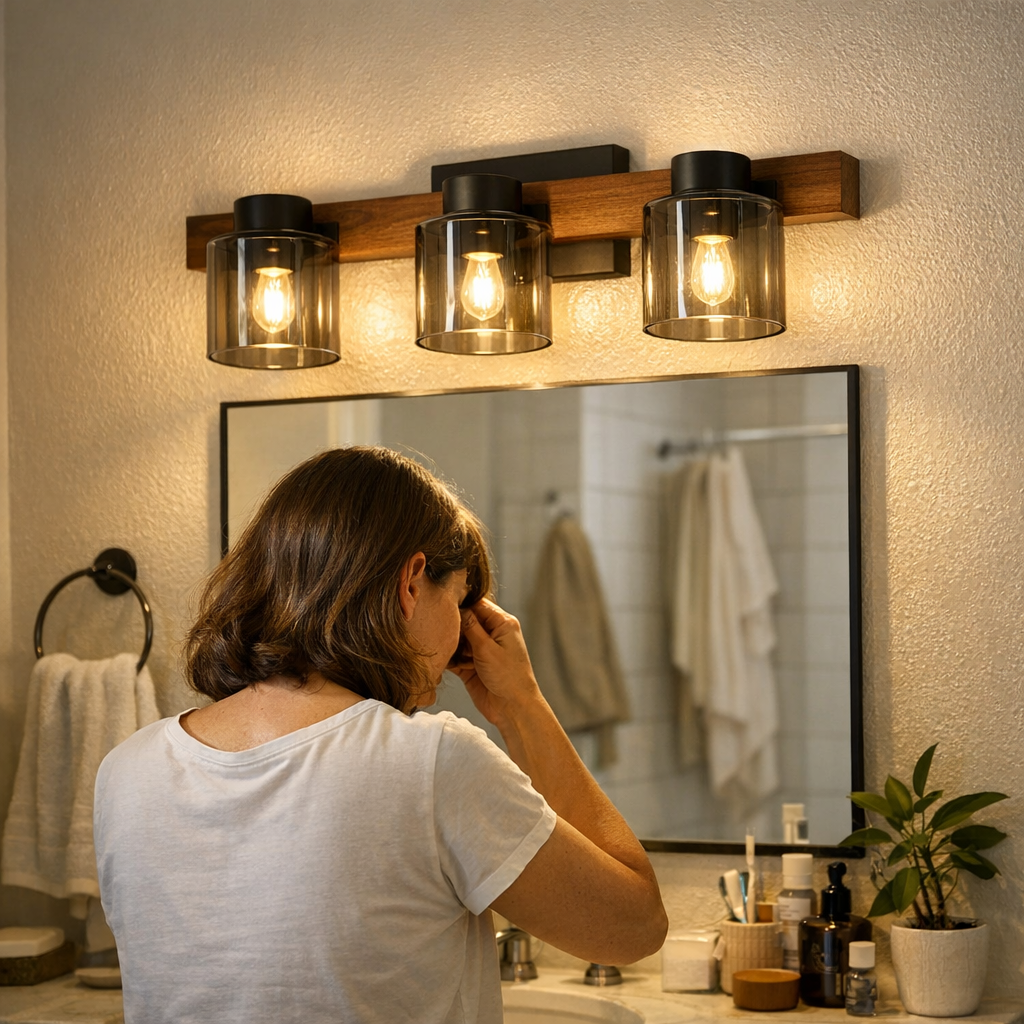
It crept in slowly, the way small discomforts do. In tight indoor spaces—hallways, bathrooms, narrow laundry rooms—you expect lighting to be precisely where you need it, brightening a mirror or guiding your steps up a stairway. I thought matching wattage and color temperature would be enough. It should have been that simple. But after a few days, moving through these rooms felt just a little heavier, as if the air was holding onto something invisible.
Lighting does more than fill a space with brightness. It can change how a room actually feels—how it holds warmth, how the air moves (or doesn’t), and how everyday routines add up through repeated use.
The Quiet Weight of Heat
At first, you only notice the light itself: a flush mount ceiling light in the bathroom, a stairway fixture left on through another busy evening. It’s bright, maybe even a bit harsh at the edges, but it works.
Then, over time, the difference settles in. The corners by the mirror fog up sooner than before. You touch the wall below the fixture and feel subtle warmth lingering—not uncomfortable but persistent. In the laundry room, the closet door feels slightly damp when the overhead light has been running awhile.
You don’t notice it immediately. But you feel it.
Repetition Makes It Obvious
Real-life routines reveal where lighting falls short—where heat builds up after a few trips through a narrow hallway or lingers in a bathroom that gets heavy use. You wipe the mirror and see fog before water even runs. You open a door, hoping for cooler air, surprised it feels warmer near the light.
Switching a 60-watt incandescent bulb to an LED didn’t seem like a big change at first. But after a week, a stair landing felt less like a pocket of trapped warmth. Even with frequent movement, there was no urge to hurry through or reach for ventilation. The new fixture looked the same, but it let the room breathe again.
Where Lighting Becomes Comfort
There’s a quietly important difference between a room that simply looks bright and one that feels comfortable to use repeatedly. It’s not just about color rendering or brightness; it’s about how much heat lingers between uses. In spaces with low ceilings or narrow corridors, even a little trapped warmth makes daily routines more tiring.
Rooms with the right fixtures and bulbs stay comfortable—no creeping haze, no heavy air, just clear, even visibility. If a flush mount, semi-flush mount, wall sconce, vanity light, or bathroom-rated fixture warms the ceiling or walls noticeably after being on for a while, or if the air feels heavy in a small laundry or utility space, the solution isn’t more output or prettier light. It’s about choosing fixtures and bulbs that run cooler, controlling glare and shadow, and balancing light over mirrors or task surfaces.
Most days, I’m still surprised at how much lighter a hallway or bathroom feels simply by turning down the heat at the bulb itself.



