When Lighting Feels Right in the Spaces You Live
Plug-in accessories enable quick lighting upgrades by solving cable clutter and access issues, improving usability where daily tasks occur.
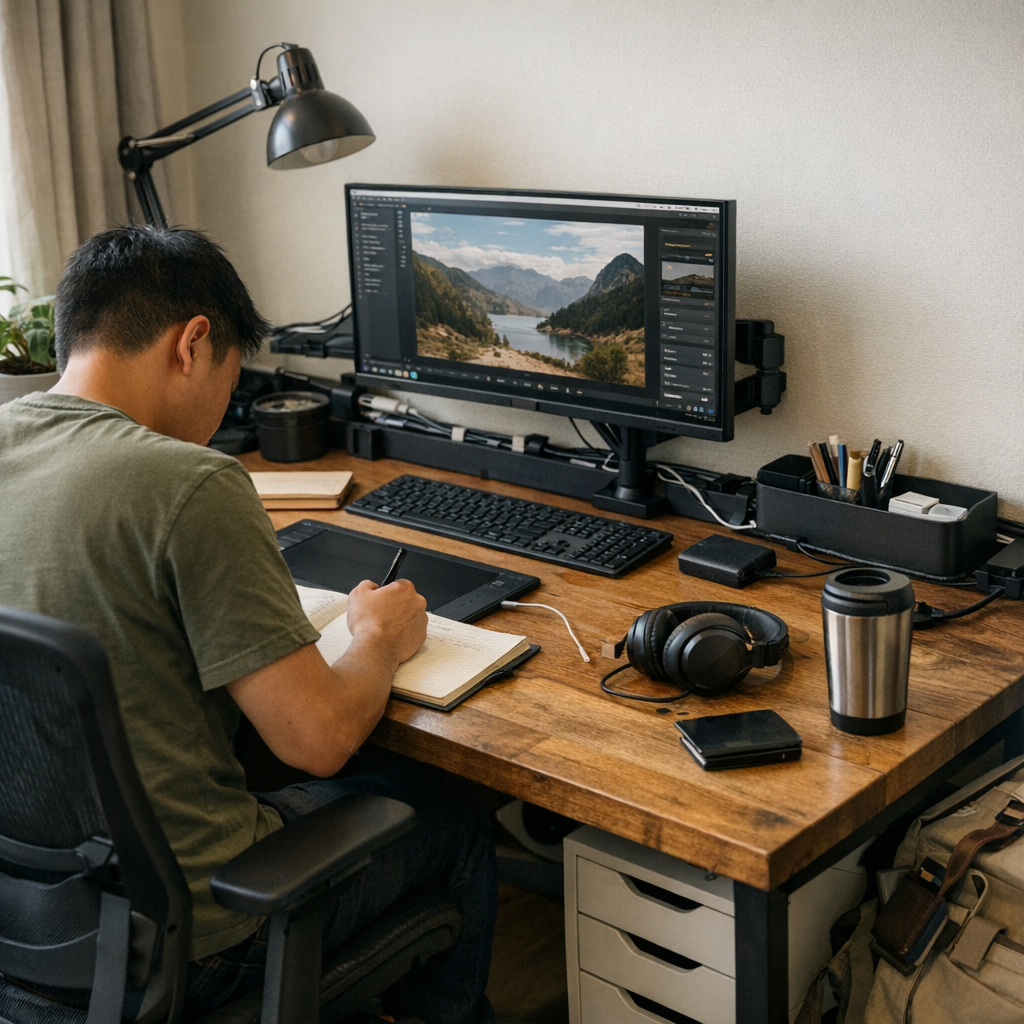
It’s easy to live with a lighting setup every day without noticing what’s quietly wearing you down. That was how it was with the desk lamp, the task lights along the wall, and the cables trailing just at the edge of vision. The setup looked fine in daylight. But night after night, subtle frictions began to accumulate. Needing to reach blindly behind the desk to switch off a light, or feeling the drag of a cord catching your foot as you moved your chair—none of it dramatic, just background noise that’s easy to ignore at first.
You won’t see these details in product photos or even in most homes after a quick tidy-up. The truth, especially in the corners of my own routine, is that lighting support often looks settled long before it actually feels that way. It’s only when you live in the space, adapting small habits around awkward lamp angles, exposed cable runs, or stubbornly placed plugs, that the real gaps reveal themselves.
Rearranging Illusions
It’s surprising how organized a desk or table feels after a quick cable tuck. For a while, I believed everything had improved—the clean lines, clear floor. But by the third or fourth time I had to unwind a cord to move a lamp, or fish around for an out-of-reach power button without looking, the illusion faded.
You don’t notice it immediately. But you feel it.
The surface wasn’t any easier to use—it was only easier to look at. There’s a real difference between neat cables and cables placed where you actually need them.
Distance Makes the Routine
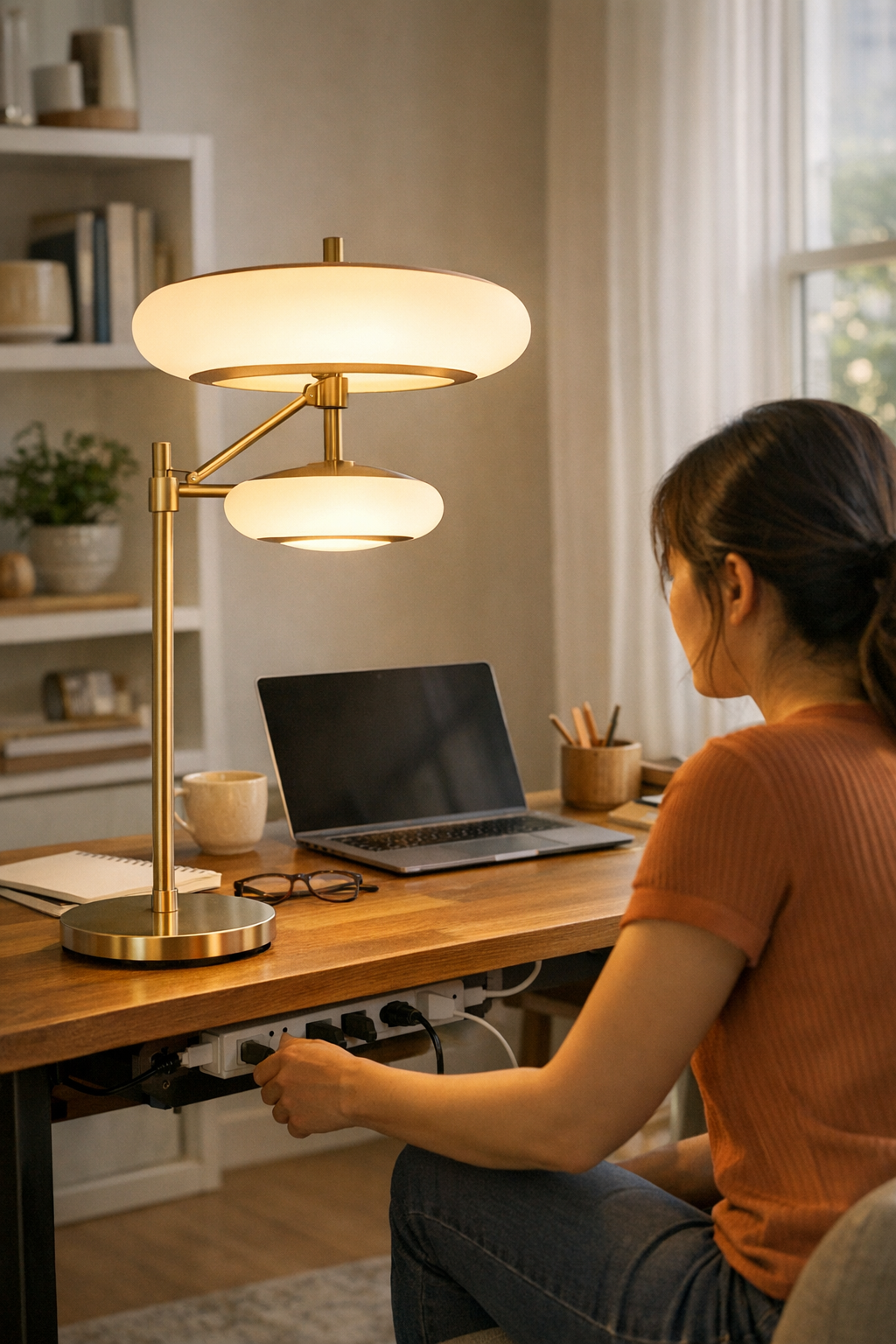
One detail kept coming back: the position of outlets and adapters makes far more difference than which cord or lamp you pick. Moving a power strip just a few inches—mounting it beneath the front edge of a table instead of hiding it against the wall—quietly shifted everything.
Suddenly, there were no knotted cords across the floor, no more fishing with both hands to find switches. Adjusting lamps and chargers became almost a single, thoughtless motion. It didn’t seem like much at first, but after weeks without complaints—no stretching, no accidental unplugging from bumping into cords—the impact was clear.
The best lighting support is the kind you hardly notice at all.
Where Things Actually Work
Some setups, especially shared ones, only hold together as long as you don’t need to change anything. Two people at a small table can manage with lamps angled just so, but if moving a cord means crawling under the surface or disturbing everything else, frustration steadily grows. There’s a quiet relief in having plugs within reach, brackets mounted close to where hands actually go, and cables following arm’s length paths instead of vanishing behind shelves or dangling across busy floor space.
It starts out subtle. You finish a week without dodging cable snags, and the next week, adjusting a light mid-task is easy—no new annoyances stacking up. Real improvement didn’t come from finding a new fixture or clever cable clip, but in letting the setup move naturally with how the table was used.
After a while, the whole room feels a little easier to live in—less about neatness and more about fit. Sometimes it’s the smallest changes that let you settle back in.
If you find yourself thinking about how support fits into your own space, you might quietly appreciate what’s over here: http://www.lightsupport.myshopify.com