When Lighting Interrupts Your Daily Flow
Panel and linear ceiling lights differ after weeks as weak cables, loose brackets, or uneven light create daily distractions, needing precise mounting and cable management.
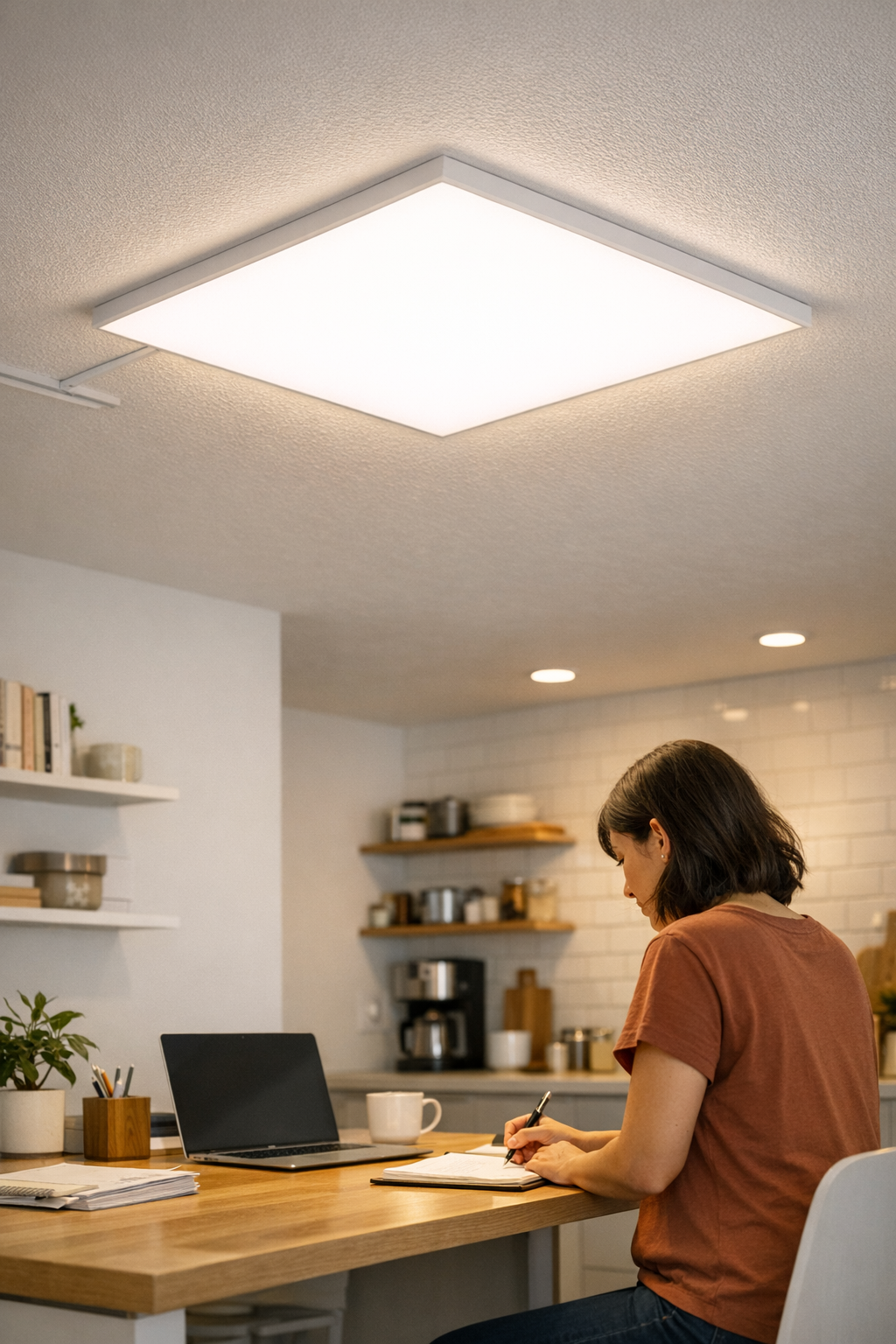
Sometimes it takes a few days before you realize which part of the room’s lighting feels off. The light is there—bright, even, and supposedly resolved—but your attention keeps snagging on something small. Maybe a cable arches down when you sit, or a subtle uneven shadow stretches across the counter at dusk. It isn’t urgent, just quietly persistent.
That’s what happened for me watching the difference between LED panel and linear lights unfold over a few weeks. It looked simple at first: just pick a shape, mount it up high, and the space would fall into place. But daily routines expose these edges—where the light is too sharp or where the fixture’s support starts to slip just enough to be noticed.
You don’t notice it immediately. But you feel it.
Where the Light Misses
Panel lights really do fill in the surface—no awkward dark spots at the center of the desk or deep shadows against the wall. But their soft, even glow draws your eye to everything around them, especially if a cable isn’t fully hidden. It’s the sort of thing that fades into the background until you settle into the same chair each evening.
Linear fixtures, meanwhile, neatly skim the workspace in a tidy line—but the light rarely reaches all the way to the corners, and a bracket or cable can interrupt the sightline if not anchored tightly.
You move, chasing comfortable routines. Every time you reach for a switch or shift a chair, your eye catches a cable drooping or a shadow out of place. The ideal setup—something invisible—keeps slipping just out of reach.
The Drift That Builds Up
After a few weeks, what should have stayed background starts to demand attention. A mount that wiggles slightly, or an exposed cable run that wasn’t obvious on day one but now nags every time the light buzzes or flickers. The physical space doesn’t change; it’s the relationship with the light growing more familiar—and more revealing.
That’s the part I kept coming back to: a panel just a little off-center, or a long light bar whose cable always hangs at the wrong angle. Fully functional, technically, but not fully resolved.
Most days, these details don’t stop you working. But they keep pulling your attention.
When the Solution Disappears
The shift happened when I finally fixed the cable—running it flat along the ceiling inside a rigid channel, not just at the endpoints but along the whole length. That small adjustment stopped the cable from pulling your eye every time someone moves. The errant shadows at the edge of the desk finally faded out for good.
It was a small, practical change, but it mattered more than any first impression of clean lines or a low profile. I stopped thinking about the lighting and settled back into the space itself.
Some things stay quiet, even as the room gets brighter.
If you want to keep the idea going, I kept a record here: http://www.lightsupport.myshopify.com