When Lighting Shapes the Feel of Home Movement
Real-world lighting issues highlight how fixture type and placement matter more than looks, improving safety and comfort daily.
It happens so quietly that it almost escapes notice. A room can feel bright enough, or a hallway might seem fine when glimpsed from another space. But true lighting patterns emerge during everyday routines—the slow return after dark, a hand reaching for something half in shadow, that sudden flicker of glare crossing a bathroom mirror. It isn’t dramatic, more like a mild, repeated discomfort following each movement. Indoor lighting, I learned, is rarely about brightness alone.
When the Edges Aren’t as Clear as They Look
Most of the time, overhead fixtures like flush mount or panel lights seem to do their job. A flush mount in the entryway, a panel light above the laundry, the expected semi-flush in a corridor—all look complete on paper and for the first few days. But the more I moved around—carrying a basket through a hallway, stopping at the mirror, crossing a threshold with eyes still adjusting from dusk outside—the less settled the lighting felt.
You don’t notice it immediately. Shadows accumulate at corners and along baseboards, especially during transitions. This subtle issue kept drawing my attention. It wasn’t about what the room looked like from the doorway, but how it performed—or hesitated—when I actually used it.
How a Small Change Alters the Routine
A single ceiling fixture provides a general wash of light that looks fine from afar. Then, as you climb stairs at night or adjust your grip near a door, some details slip away into half-shadow. I used to dismiss the inconvenience, but eventually, it added up—one misstep on a dim stair, persistent squinting at the end of a narrow hallway, the unreliable shape of a laundry pile in fading light.
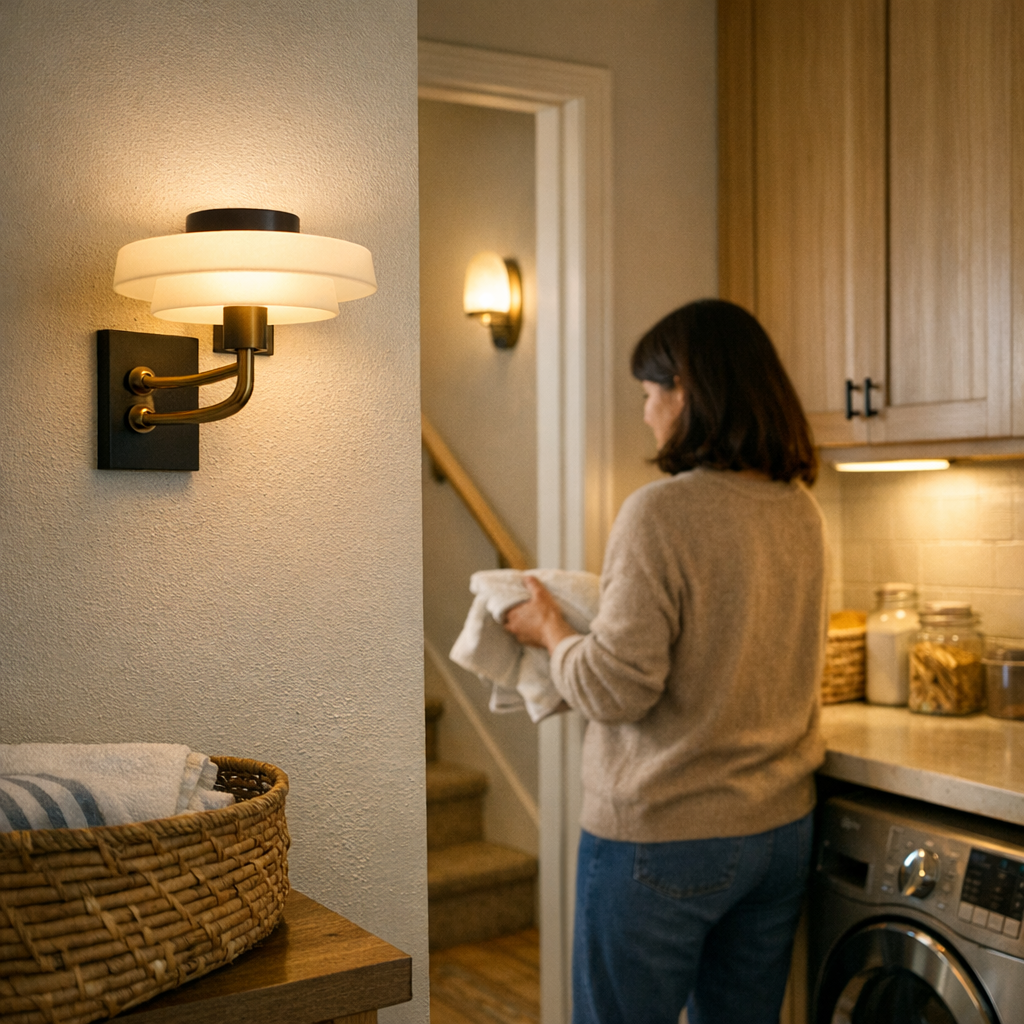
One evening, I installed a wall sconce about a meter from a stairway turn. It wasn’t a design choice, just a practical fix for the way the light failed along those last steps. The difference wasn’t dramatic, but it was immediate: softer shadows, clearly defined edges on each tread, a natural rhythm to movement that no longer demanded extra attention.
Less glare, fewer missed details. Night after night, it became one of those unremarkable improvements that quietly made the space work better.
When Rooms Stop Trying and Just Make Sense
Looking back, it never mattered if fixtures matched perfectly or pulled the room together stylistically. The real relief came from not having to second-guess where I was moving, or what might not be visible. Under-cabinet lighting over work surfaces, hallways lit halfway with simple wall sconces, mirrors fully illuminated without harsh glare or shadowed faces—each setup promised less friction in repeated use.
Sometimes it’s not about how a room looks when the light is on, but the quiet ease of small details being simply, reliably visible.
There’s a certain comfort in noticing these things—when a space truly remembers how it’s used.
If you’re curious where this line of thought led, here’s a place I kept returning to: http://www.lighthelper.myshopify.com