When Lighting Shapes the Way We Move at Home
Lighting that looks bright may still leave shadows and glare, hindering safe movement; well-placed, spaced lights ensure clear, navigable paths.
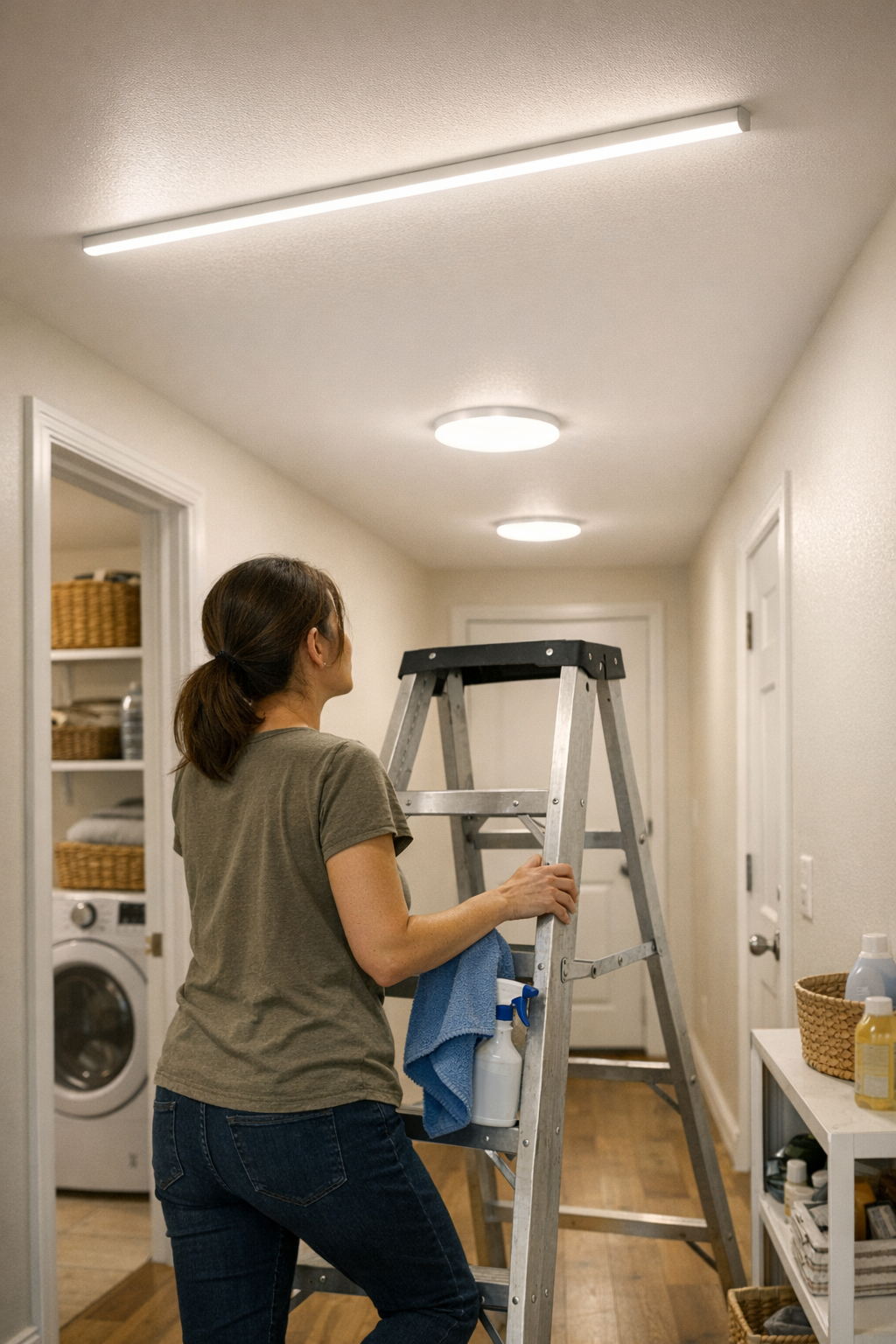
It’s easy to be lulled by the feeling of a bright, empty room. That quiet relief when the switch flicks on and everything appears new, clean, and open. But that clarity thins out almost imperceptibly once real life rushes in—when you’re balancing a laundry basket, angling a ladder around a corner, or trying not to bark your shin on an unseen box at dusk. This isn’t really about decorating; it’s about whether you’re stepping into the dark or walking straight ahead without hesitation.
I started seeing this in my hallway of all places—the way a single flush mount ceiling light, centered neatly, left soft shadows pooling right at the edges. Not obvious at first. But when I tried moving an awkwardly long package through, every step meant guessing where the end would land, the rest of the route receding into dimness that only appeared when something (or someone) blocked the light. You don’t notice it immediately. But you feel it.
When One Fixture Isn’t Enough
A strong ceiling light sets a bright stage for empty rooms. It’s when the day demands more—dragging a suitcase, vacuuming in fits, wrangling kids back upstairs—when small failures get exposed. The shadows on stair treads flattening depth perception, the glare that follows you instead of lighting your path, or the patch beside the washer that stays dim no matter how you angle yourself.
These flaws are persistent. A single flush mount beams a cone of light onto the floor, but widen your step and your own shape interrupts the spread. Wall sconces offer warm side lighting but demand clear paths, rarely possible in utility spaces or busy hallways. I found the inconvenience stacking up—little hesitations, a dropped sock, a step retraced to check for obstacles near closet doors or stair turns.
Clarity, Not Just Brightness
The difference between a room that feels lit and one that’s easy to live in became clear after several tries. Rearranging, dusting corners, or trying to position a stepladder so every rung felt secure—the light consistently fell short where movement mattered most. All the bulbs in the world couldn’t fix that.
It wasn’t about increasing wattage or swapping every fixture. What helped was spacing—adding one more flush mount, with enough distance at each end to prevent parts of the hallway from trailing into shadow. That was the key: lighting that follows your stride, instead of settling in the center, means no more guessing where a box will land or when shadows begin. The light needs to move with you, not just illuminate for you.
More Than a Look
Spacing fixtures just right—never too close, never leaving the ends dark—changed everything. No extra glare over your shoulder and no flicker of nerves about what you might trip over next. It felt less like lighting a space, more like quietly making it workable every day. If you can walk a hallway at night with your arms full and your mind elsewhere, never glancing down for obstacles—that’s when the setup does its real work.
Rooms have a way of revealing when something isn’t working. Sometimes, all it takes is noticing the moment you hesitate and letting that shape what comes next.
If you want to see how fixture choices and real movement play out in rooms—whether flush mount ceiling lights, semi-flush mounts, linear and panel ceiling lights, wall sconces, hardwired wall lights, vanity and mirror lighting, or damp-rated indoor fixtures for laundry and utility spaces—there’s a quiet set of ideas over here: http://www.lighthelper.myshopify.com