When Lighting Shifts, Comfort Fades at Home
The true value of lighting supports and install accessories appears over weeks, preventing drift, cable mess, and uneven light in daily use.
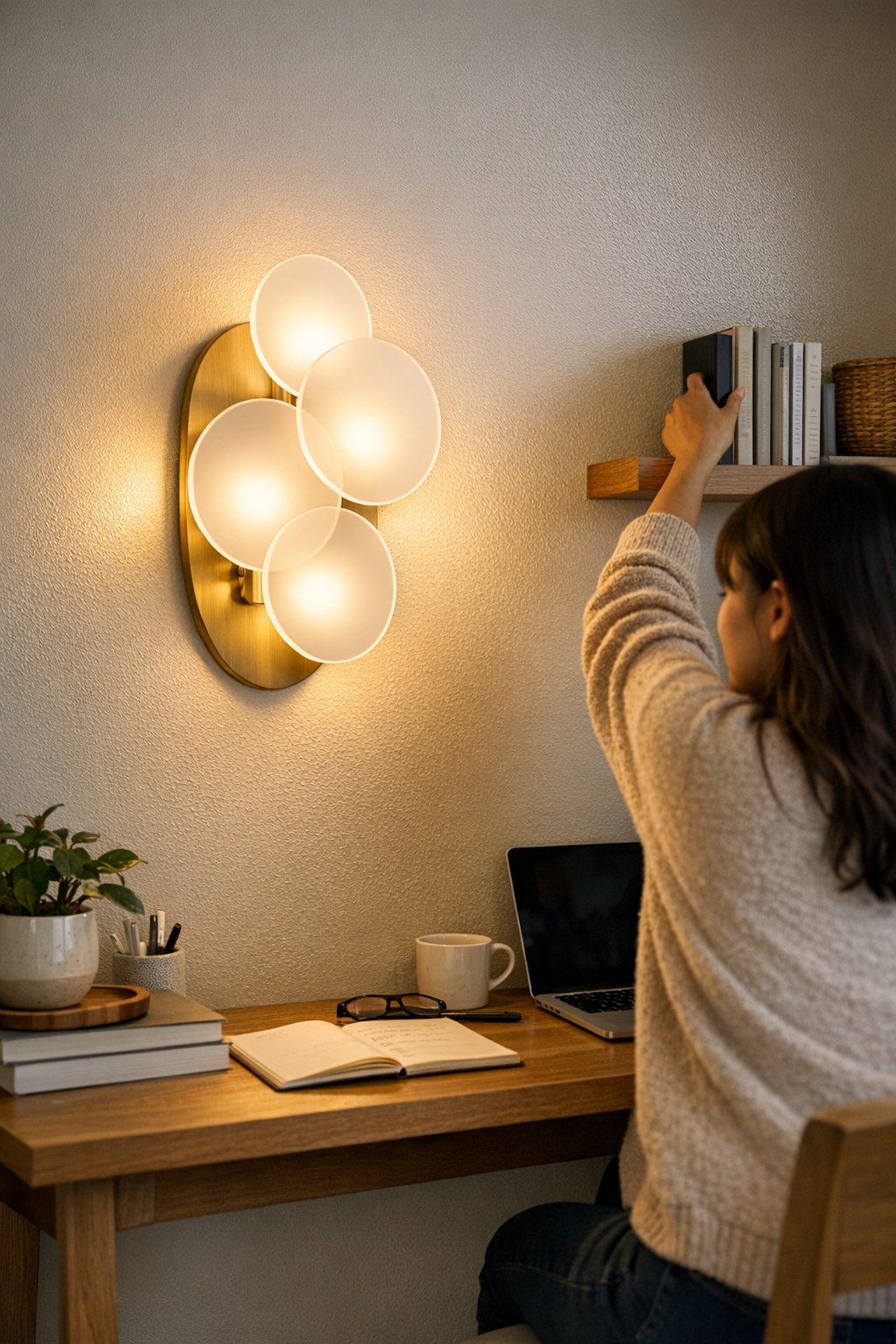
It’s funny how something can look finished one day, and the next it starts to feel just a little off. I first noticed it when a cable line had slowly crept down the wall by my desk—such a small shift, yet suddenly I couldn’t stop seeing it in the evenings. The edge of my task light, barely leaning, casting shadows where there hadn’t been any before. It became clear: a lighting setup that looks right initially can unravel when the support behind it isn’t truly there.
This isn’t about picking the prettiest fixture. It’s about noticing, days or weeks after installation, what keeps order and what slowly, almost invisibly, drifts out of place. At first, I thought a low-profile desk lamp would solve everything—no fuss, no clutter. But light has its own way of reminding you when it’s not fully anchored. You don’t notice it immediately. You feel it.
A Slippery Line Between Order and Everyday Mess
A cable tucked neatly against the wall in the morning can start to bow by evening—especially in compact desk areas or shared room edges where daily use invites small disturbances. One book nudged aside, a hand brushing the shelf, a laptop shifted over slightly. Then something sags, or a cable sleeve creeps into view. Visual clutter follows close behind.
You realize it’s more than untidiness. As the support weakens, so does the comfort of the space. Unplanned glare hits your eyes, corners go dim, and a desk lamp or under-cabinet light that doesn’t hold its angle becomes a restless distraction. The difference between a bracket that’s secure and one held only with tape suddenly matters, even if only you notice it.
Where Good Enough Stops Working
Some setups seem resolved on install day. Under-shelf LED strips, flush against plywood or tile, can make you think the job is done—until you start actually using the space: reaching for items, plugging in devices, sliding a chair under the table. Micro-movements add up. An adhesive clip works until it doesn’t, and then the clean, low-profile line is broken.
That was the detail I kept returning to. What seemed like background hardware—support brackets, cable channels, small mounting pieces—turns out to be what separates lighting that drifts away from your work area and lighting that holds its position quietly. The day my under-shelf light stopped drooping because a proper wall bracket held it firm, the whole space felt different to live in.
Living With the Edges
A room isn’t just shaped by what’s visible when the lights turn on. It’s defined by unseen decisions: a concealed screw, cables neatly tucked behind a raceway, a sturdy bracket that keeps a slim LED panel exactly where it belongs. Stability lets light do its job cleanly and quietly—without drawing attention or reminding you of a shortcut you took in mounting or cable management.
There’s a simple satisfaction in walking into a room and finding the light exactly where you left it, day after day. You begin to appreciate which setups quietly hold up under real, repeated use—and how much smoother life feels with that reliability.
For those who often find themselves readjusting the same leaning lamp or chasing sagging under-cabinet strips, I found a collection designed for spaces that get used every day, not just staged: www.lightsupport.myshopify.com.



