When Lighting Shifts: The Quiet Struggle of Unsteady Fixtures
Scanning twice, slowly, with a stud finder ensures lighting anchors to real support, preventing movement, shadows, and irritation for steady fixtures.
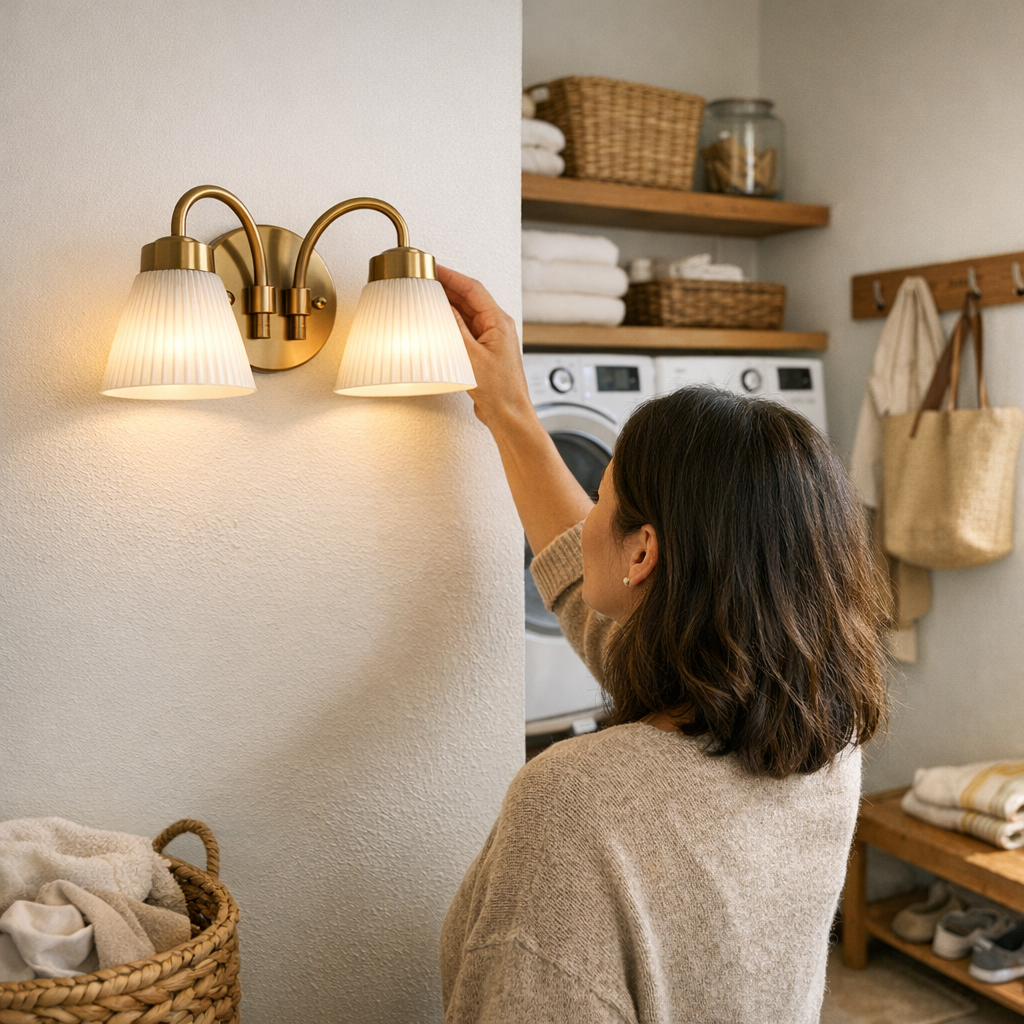
Some things start out just right. A new wall sconce, finally in place; ceiling lights giving off an even glow—everything sharp and clear after installation. At first, I didn’t notice what would change. Only later did a subtle sense of something unsettled creep in, usually during the busiest hours: baskets swinging through the laundry room, doors closing, footsteps on the stairs. The fixture I’d hung with such careful precision began to tilt, then buzz, eventually casting odd, slanting shadows that felt out of sync with the room itself.
It’s the kind of thing you don’t notice immediately, but you feel it. One careless stud reading, one hurried pass across drywall, and the anchor isn’t quite in the right place. For a while, it’s invisible. Then the light starts drifting—first a few millimeters, then enough to catch your eye at just the wrong moment. The small mistakes behind the paint don’t matter on day one, but after weeks, they show up every time you walk through.
The Subtle Cost of Getting It Almost Right
Flush mount ceiling lights, semi-flush mounts, linear panels, wall sconces, hardwired wall lights, vanity and mirror lighting—these aren’t just decorative touches. When you use the same hallway path every evening, lean into a bathroom mirror, or reach above a work counter repeatedly, the smallest slip in stability becomes obvious.
At night, a hallway feels different if a fixture buzzes or shifts as you pass beneath it. Shadows bend, doors snap, and the light itself seems to respond—not always in a way you want. Sometimes it’s a faint rattle overhead, masked by the thud of shoes on wood floors. Sometimes it’s glare where you don’t want it—catching on a stair tread, bouncing off a faucet, or throwing uneven light across a cabinet run. These issues seem minor, but they linger.
The feeling of light being just a bit off—more chaotic than comforting—lingers in the background, easy to overlook until one day it’s all you can notice.
Finding What Keeps Light Steady
Over time, I started rethinking how I used stud finders and selected mounting points. Running a scanner once, in haste, was never enough. To keep the distribution of light steady—especially through weeks of repeated movement—I needed more certainty.
It was a small shift. I slowed down, scanning left and right until the stud center revealed itself. I began marking where readings overlapped. I noticed how a bracket set even a quarter inch off center held solid at first but started to give with every nearby door slam. The smallest adjustments—measuring from a fixed edge, double-checking before committing screws—kept the light from drifting and the shadows from multiplying.
Simple routines became easier. That was what I kept coming back to.
The Difference Between Light That Just Works and Light That Demands Attention
When a fixture is anchored well, you rarely think about it again. Evenings move smoothly. The pull of the hallway doesn’t trip your step. The entryway feels quietly ready every time you come home—not just bright, but welcoming in a way you notice only when it’s missing.
There’s something quietly satisfying about seeing fixture edges hold steady, light fading evenly across a corridor, or spreading evenly over a mirror without glare or distracting shadows. No more subtle tilts to correct, no overhead rattle when the laundry door swings. A space that feels settled—reliable in small, daily ways—starts and ends with these hidden, solid anchors. Sometimes the weight we don’t have to feel matters most.
These thoughts often come back late at night, walking the house in the blue hush—wondering how much of calm is built on what holds steady where we can’t see.
If you’re curious to see more of the world I’m describing, you’ll find it here: lighthelper.myshopify.com



