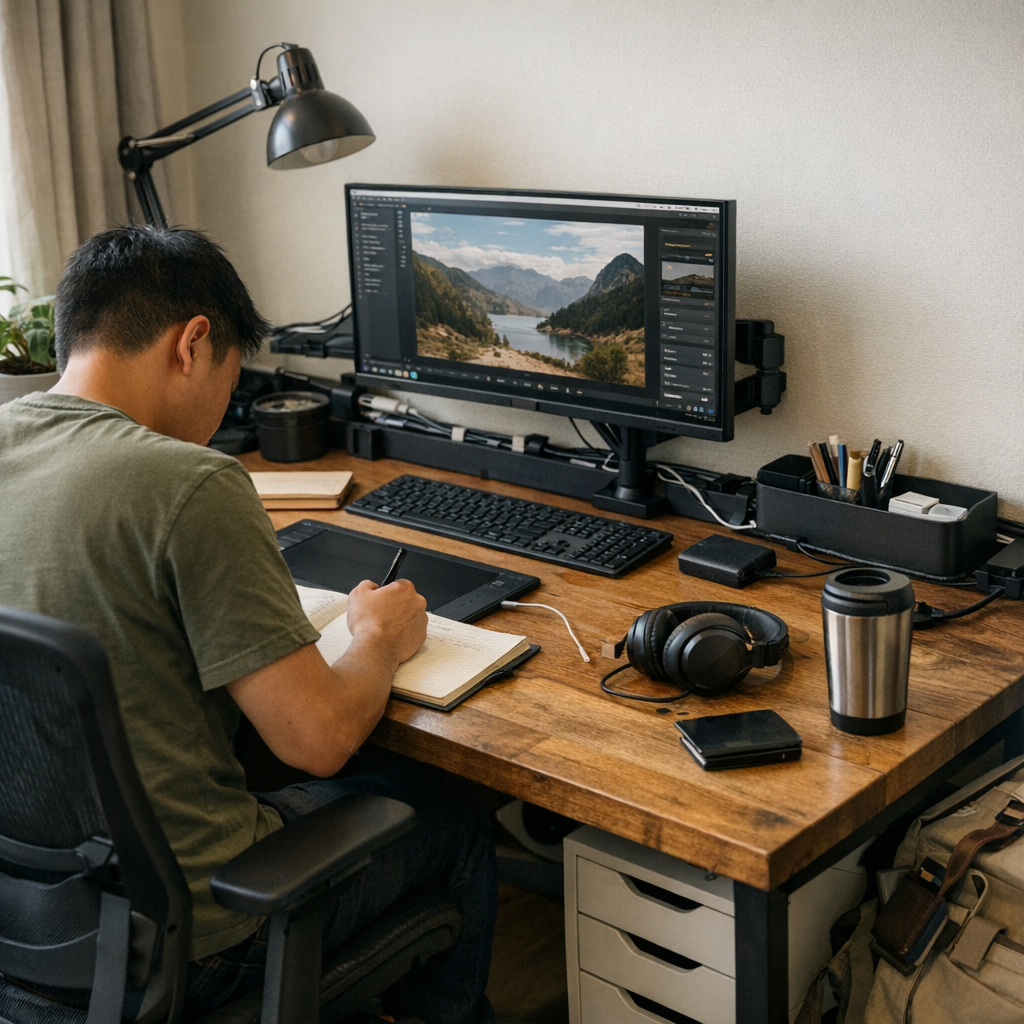
When Lighting Turns Against Your Workspace Comfort
Screen glare and reflections from ceiling or desk lights lower comfort and productivity; under-shelf, cable-managed lighting improves daily use.
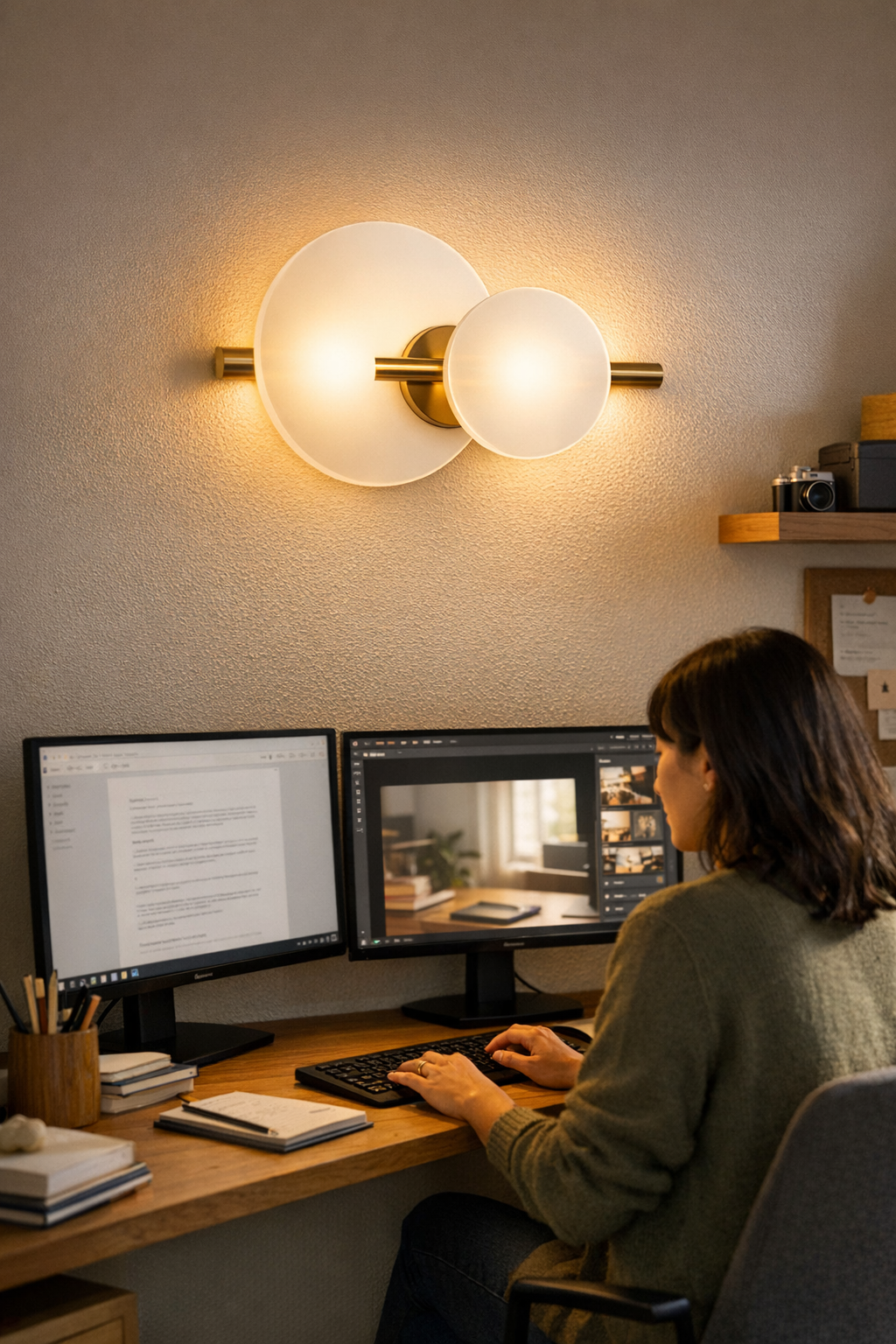
The room always looked finished at first glance. The new desk lamp, an overhead panel—everything in its right place, promising a sense of order after the scramble of unpacking. But that promise lasted only until I sat down to work. The difference between looking good and functioning well seems subtle but becomes clear in quieter, recurring ways. Glare across the monitor, sharp reflections you try to ignore, shadows hovering on a stack of papers… I didn’t notice them immediately, but I felt it—how the lighting setup kept pulling my focus back to the light itself instead of letting it fade into the background.
How Light Finds Its Way Into Your Work
It’s surprising how persistent a thin line of glare can be. A single overhead fixture covered the whole space, yet the light landed right where it shouldn’t: stretching across icons or just at the top edge of a video call. Every time I turned my head, the reflection moved with me, refusing to disappear. It was a small frustration, caught in the repetition of days.
Sometimes, the issue wasn’t just the light but a faint awareness of cables—barely visible yet always asserting themselves in my sightline. I ended up moving a lamp or angling a monitor, hoping for an easy fix, but usually the problem just shifted a little further down the desk. Shadows gathered on the periphery. The experience was less about major flaws and more an ongoing hum of small adjustments.
The Subtle Distance Between Tidy and Usable
The clean, minimal look is easy to understand—one bright panel overhead, uncluttered surfaces, cords tucked away. Yet in practice, a neat ceiling fixture meant the desk stayed evenly lit only in theory. In reality, glare was nearly guaranteed. The paradox was that the tidier the space looked, the less resolved it sometimes felt.
What changed things was adding an under-shelf LED strip, clamped quietly to the rear bracket—about 15 centimeters back, so the light fell only on the desk in front of the monitors, not into the screens themselves. There was no grand reveal. Just a steady absence of streaks and fewer small readjustments during long stretches of work. Cables retreated out of view. Typing after dark, the light seemed to hold its place, not demanding attention. That steady calm was the detail I kept coming back to.
Living With Light That Adapts
Shared corners made the difference even clearer—two desks, two users, each screen collecting the same bright band by late afternoon. We both noticed the moment one stopped using that end of the table. Shadows and white bars weren’t dramatic, but their persistent presence wore thin over time. When the overhead panel was replaced with a slimmer, adjustable under-shelf LED, the sudden stillness on the work surface became apparent, like background noise disappearing. Screens stayed usable for hours. Paperwork, reading, quick check-ins—none required contorting or relocating.
This quiet solution came down mostly to where the light stopped, not just where it started. Some setups can’t solve everything, but paying attention to how and where the light hits the work area made a consistent difference day after day. Glare mattered less; routine felt just a little easier.
Leaving these thoughts here, for anyone tracing cable lines of their own: sometimes a small adjustment in light placement, made closer and more precise, is what makes a work space quietly dependable.