When Masonry Drilling Turns Rough: The Hidden Struggle with Heat
Bit overheating during masonry drilling appears after repeated holes; using carbide-tipped bits and controlled pacing reduces damage and downtime.
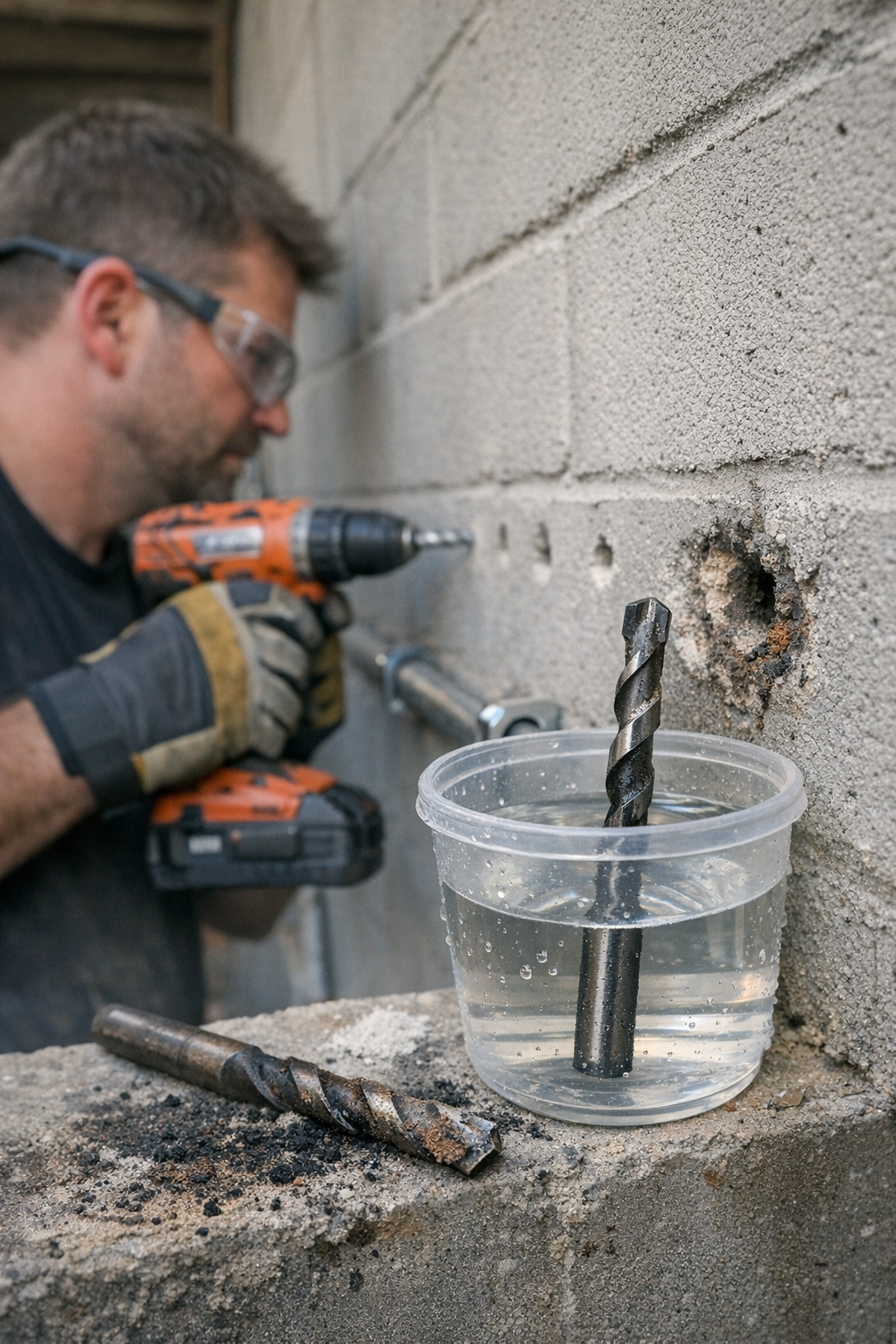
I never really notice how tools perform until something interrupts me. The experience is quiet—almost invisible—until suddenly it isn’t. With masonry drill bits, the real problem doesn’t announce itself right away. Only after a few holes do the edges wear down, the drill stutters, and I find myself pausing mid-task. It’s funny how a simple thing—bit overheating—can rearrange an entire afternoon.
Masonry walls look solid and predictable, but working with them is an exercise in patience. I’ve spent afternoons lining up neat rows of holes, feeling the first few go smoothly, barely thinking about whether I picked the right bit. There’s comfort in early momentum. But with each successive hole, something shifts. Resistance rises. The dust feels gritty and carries a faint burnt smell—barely obvious, yet impossible to ignore. You don’t notice it immediately.
But you feel it.
Small Differences, Big Impact
At a glance, steel and carbide-tipped masonry bits could pass for twins. Their labels promise similar outcomes; their edges shine fresh out of the box. The truth reveals itself in repetition, drilling the fifth or fifteenth hole. Steel bits heat up, edges go dull, and suddenly, every new hole takes more effort. The drill whines, the wall pushes back, and the tidy circle you expected turns ragged at the edges.
By contrast, a carbide bit keeps its composure. Even after a dozen holes, it feels steadier, the dust lighter, the sound less strained. There’s a sense of relief in simple consistency. The difference is mostly invisible until it’s not.
The Slow Fade of Precision
One afternoon, I set out to anchor conduit brackets in an old painted block wall. The job was repetitive—mark, drill, anchor, repeat. The first holes were satisfying: crisp edges, no drama. But ten holes in, the drill was fighting me, the wall seemed to repel progress, and the dust darkened with a burnt tinge. I realized the bit was overheating or just tired. The paint flaked. Anchors stopped fitting cleanly.
Mid-job, you wonder if it’s you or the bit. But swapping in a carbide tip and dipping it in water after every few holes—it was like turning a corner. The drill became quieter, holes neater. Work went on, less interrupted. There’s something quietly reassuring in slowing down and listening to the sound change. Sometimes, what feels like wasted time—pausing to cool the bit, clearing dust—saves you from undoing and redoing messy holes.
Rethinking How Progress Feels
The right drill bit, used gently, can almost disappear into the job, freeing you to focus on rhythm—not repairs. Over time, I’ve learned that the difference between a project that flows and one that stalls often comes down to small acts: picking the right bit, letting it cool, respecting limits. It’s not about rushing; it’s about noticing when things start to drag, then making a quiet adjustment.
Masonry is unforgiving if you ignore it. But it responds, almost gratefully, when you let the tools breathe. Matching the right bit to the job and allowing heat to dissipate can turn a frustrating slog into a quiet rhythm—one where each new hole carries less doubt and more ease.
I find these lessons come back to me on longer days, where every small interruption adds up. Masonry work, it turns out, is a reminder that small details matter—maybe more than we notice, until everything goes right for a change.
These reflections gathered themselves during a slow afternoon, drilling quietly into a painted old wall. (More thoughts and quiet details live here.)



