When Mealtime Predictability Brings Peace to the Kitchen
Consistent portions and timing reduce food-watching by removing negotiation, helping dogs settle quickly after eating for easier routines.
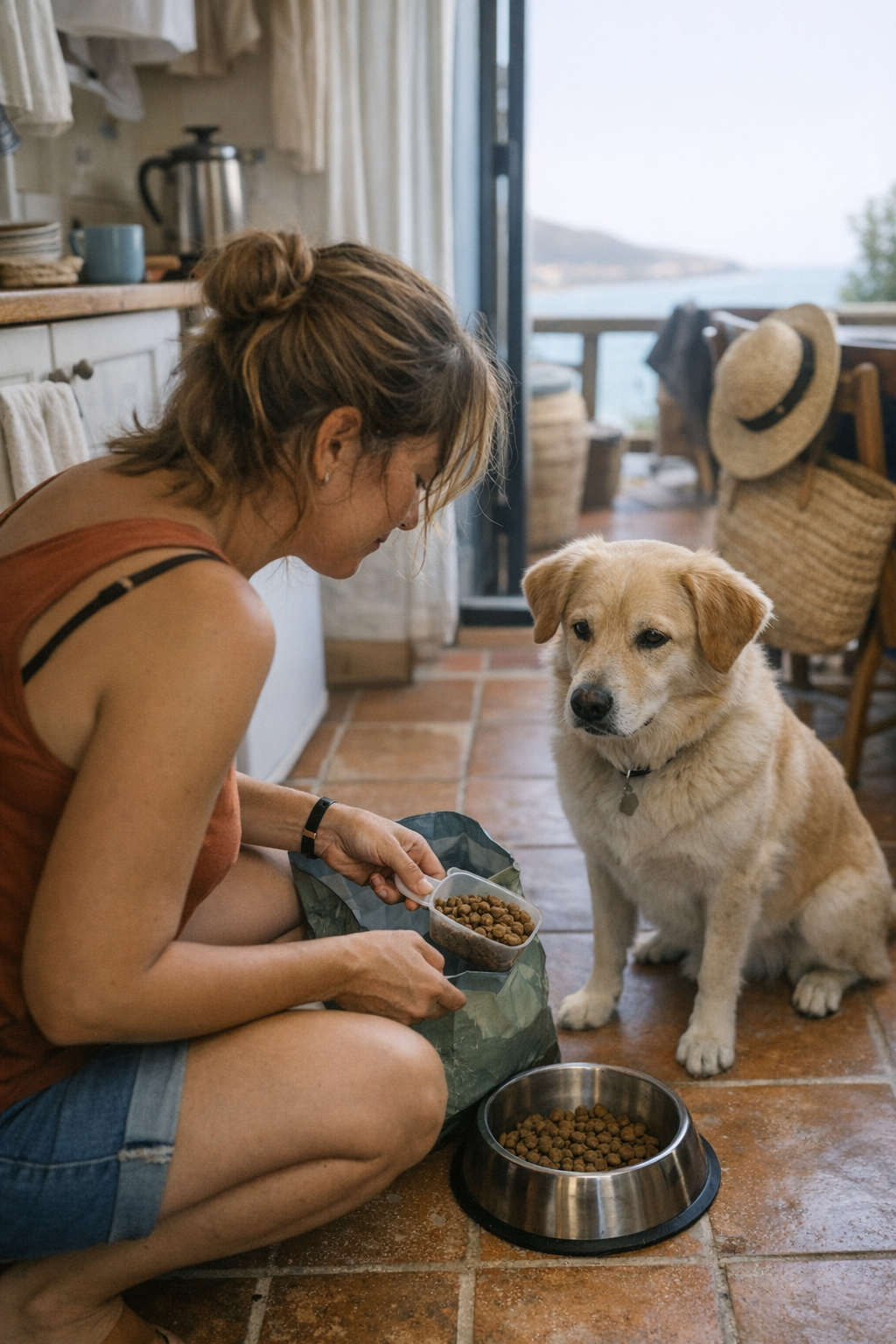
There’s something subtle that happens almost invisibly right after your dog finishes eating. For a while, I kept finding mine circling back to the food corner—checking, waiting, sometimes pretending to sniff just in case I’d missed a step. It looked harmless enough. A quick glance back at the bowl. A slow meander across the kitchen. But after several mornings in a row, the routine didn’t fade. Instead, lingering became part of mealtime.
Those small hesitations started showing up around other parts of the morning routine, too. Breakfast took longer. Cleanup got delayed. The kitchen—already narrow with traffic between the fridge, coffee maker, and door—felt tighter with a dog parked in anticipation. I began to wonder if the tension of mealtime had less to do with hunger, and more to do with quiet changes I barely noticed: a handful more kibble here, a late start there, the bowl moved five inches to the side. The small inconsistencies wore on the ritual more than I expected.
Morning Signals in the Kitchen
You notice it after a few mornings.
There’s the eye-roll moment, the soft shuffle of paws. You set the bowl down, but the dog doesn’t settle; instead, there’s a pause, a look back, maybe a tentative drift away—then a return. I could pretend it meant nothing, just part of sharing space in a too-busy kitchen, but the rhythm became familiar. Bowl goes down. Eat, check, wait. On days when I rushed through or pushed for a faster start, that pattern only sharpened: my dog treating every meal like a cliffhanger.
At first, I thought it was about keeping things tidy or finding the right spot for the dish. But the bigger trigger was portion size. Sometimes I’d scoop by eye, sometimes by calculation—rounding up, skipping, or “making up for” a treat earlier. The bowl looked full, but the dog noticed every change. If the scoop was heavier yesterday, a lighter portion today bought me another round of tense waiting.
Space overlaps, too. In a kitchen where the feeding spot is right in the path between the door and refrigerator, any hesitation stretches out cleanup, reset, and the transition to whatever comes next. It’s not dramatic, but it slows things down, turning what should be a quick feed-and-move into something stickier.
When Repetition Starts to Mean Something
That was the part that kept coming back.
Dogs rely heavily on routine, far more than we often admit. Inconsistent actions keep alive a quiet hope for exceptions—if the bowl’s a little fuller one day, or meals come a bit out of sync, they hold space for what might be different tomorrow. I saw how my small deviations invited another round of hovering and checking, and how quietly, a feeling of unfinished business settled into our mornings.
It’s easy to miss how small mismatches shift the whole flow. A lingering dog shrinks the kitchen space; a dish out of place blocks the walkway; cleanup delays because someone’s parked just where you need to work. It’s not obvious at first, until every reset takes longer, every move feels like a negotiation, and you catch yourself sighing at your own lack of patience. There’s no one dramatic moment, just a gradual buildup of micro-interruptions changing how the room feels.
One week, I started keeping the scoop level—no more rounding up, no compensating for yesterday, just the exact same amount every meal. The bowl landed exactly where it always had, never creeping toward the door or further into the walkway. After a few days, the lingering nearly stopped. Post-breakfast cleanup went faster. The dog still watched, but the glances faded to nothing within a minute. The difference showed up in smaller ways than I expected: less tension in the air, fewer shuffles I had to step around.
Quiet Shifts, Lasting Ease
Living with a dog isn’t about perfect displays—the right number of toys stacked by the bed, bowls gleaming on a mat, everything looking neat enough for a photo. It’s about those repeated moments that either get smoother or wear you down. The friction you only notice after a few cycles—when you’ve moved the water bowl again to clear the walk path, or you have to reach awkwardly for the towel after a muddy walk, or the grooming routine breaks down because the crate is blocking your reach.
Feeding is a simple example: sameness in portion and place does more than tidy up a routine. It signals a clear finish line to the dog, and—just as important—a starting point for what comes next. No promise of more, no half-open window for “maybe one more scoop.” By closing that loop every time, I found I got my kitchen back sooner, the dog settled faster, and the morning felt less crowded.
These small returns build quietly across weeks. The feeling of a home that knows its own pace. The clean line between one thing ending and the next beginning. It’s easier to let the bowl mean “done” when everything around it means the same thing every time.
Sometimes, the smallest daily rituals carry the biggest weight.